





Slot Game Idea and Theme Definition
Every slot game starts with a concept. This stage defines the creative foundation of the entire project.
What happens at this stage:
- Slot theme selection (fantasy, pirates, horror, luxury, seasonal, sci-fi, etc.)
- Target audience definition (casual vs premium, mobile-first vs desktop)
- Emotional tone (fun, dark, cinematic, playful, high-end)
- Market and competitor research
- Reference collection (games, movies, art styles)
Key questions:
- What emotion should players feel?
- Is the theme recognizable at first glance?
- Will the theme read well on small screens?
- Does it fit current casino trends?
Visual Research and Art Style Direction
Once the theme is approved, artists define the slot art style.
This stage includes:
- Mood boards (color palettes, lighting, materials)
- Shape language (rounded vs sharp, simple vs complex)
- Art style decision (cartoon, semi-realistic, realistic)
- UI style references
- Detail-level definition (important for mobile optimization)
Output:
- Clear visual rules
- Consistent art direction
- Defined complexity limits
Why it matters:
Slot art must look rich without losing readability. Over-detailed styles often fail in real gameplay.
Slot Game Concept Art and Key Visuals
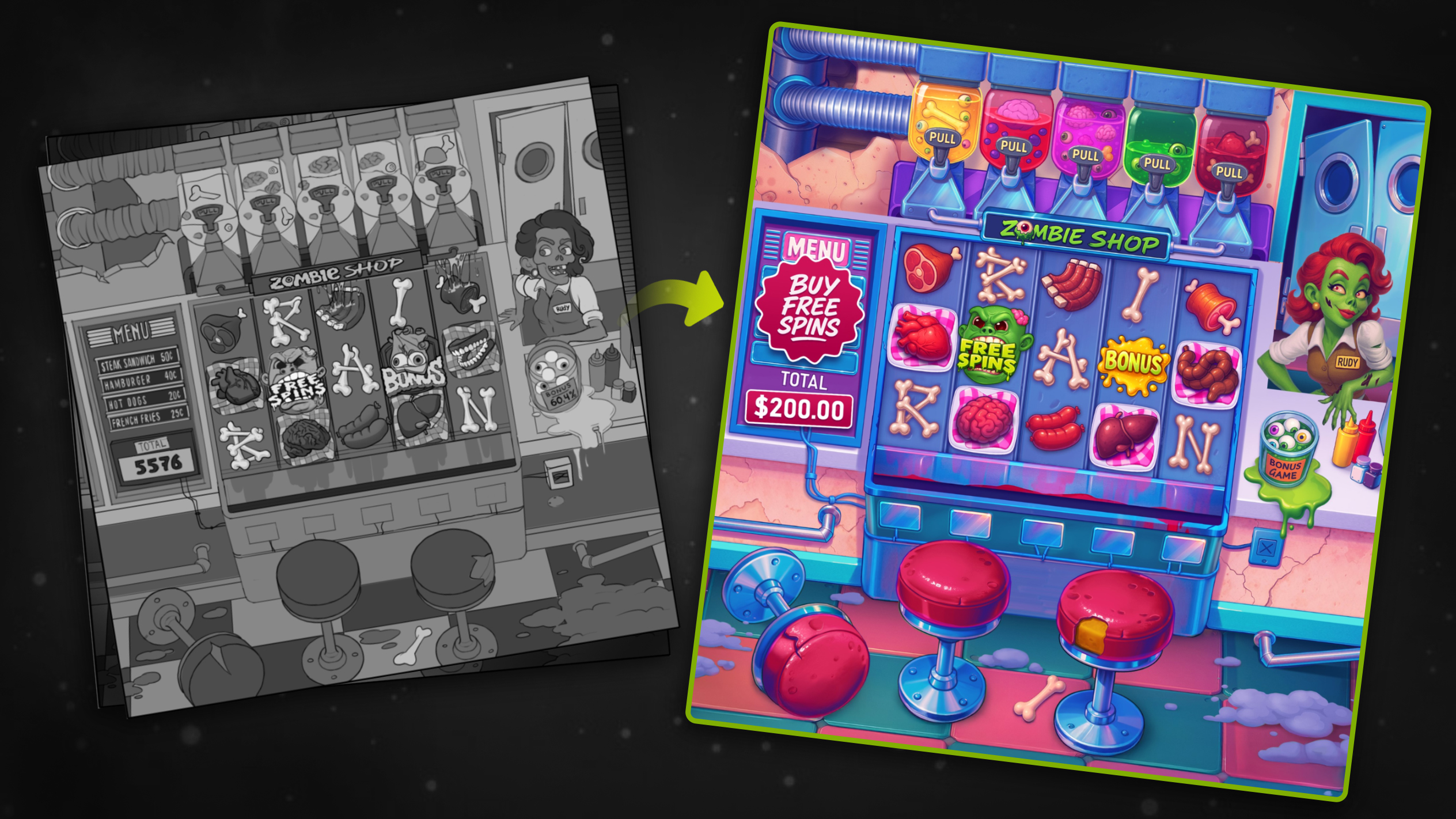
Concept art translates ideas into visuals.
Typical concept assets:
- Slot symbol sketches
- Wild / Scatter / Bonus concepts
- UI frame roughs
- Background composition concepts
- Optional character or mascot sketches
Concept art focuses on:
- Silhouette clarity
- Color balance
- Value contrast
- Visual hierarchy
This stage aligns the team before full production starts.
Slot Symbol Design Pipeline
How Slot Game Art Is Created - ArtHouseLabs
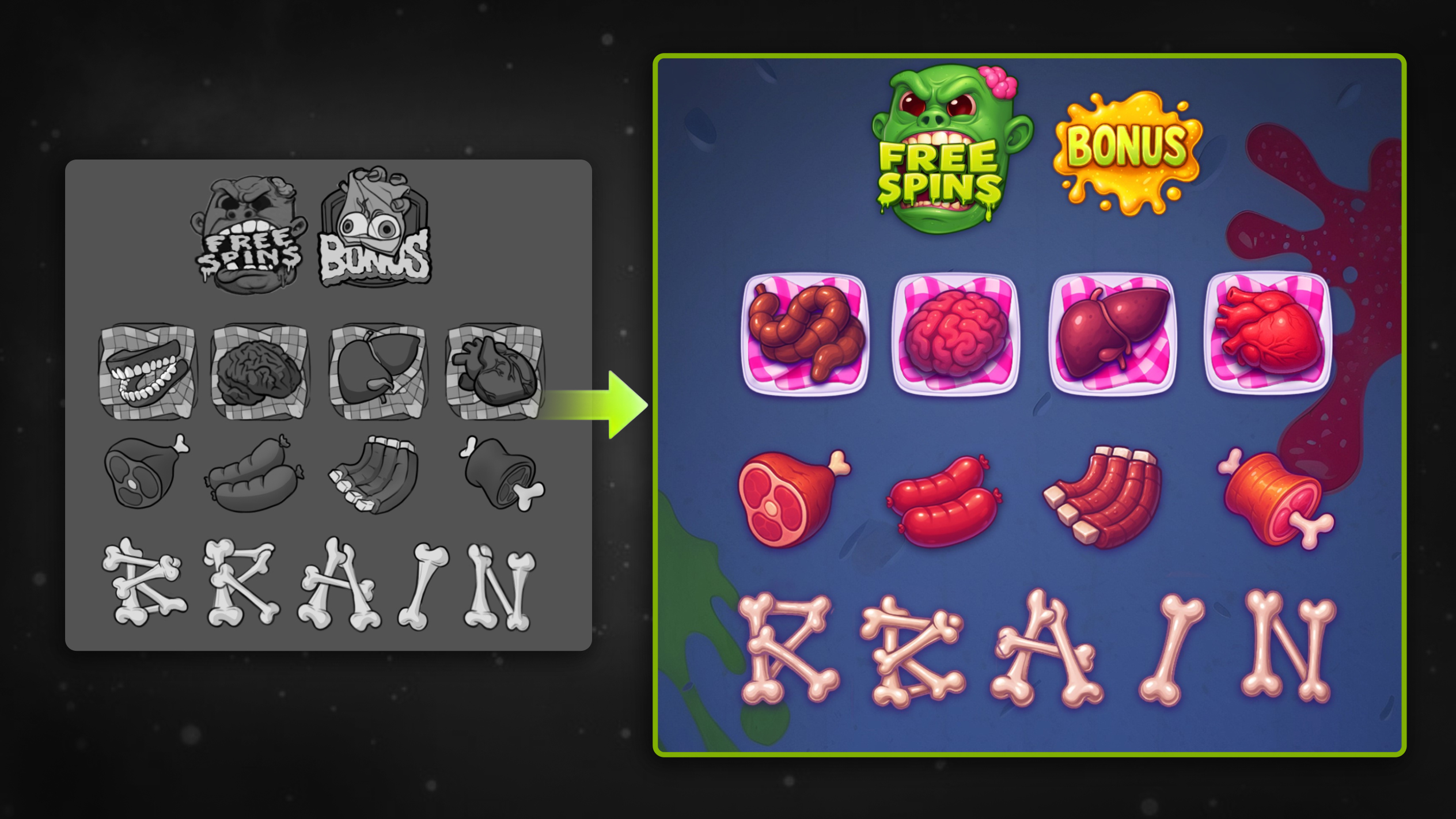
Slot symbols are the core gameplay assets. They must be instantly readable, even at small sizes.
Symbol production process:
- Low-value symbols (simpler shapes)
- High-value symbols (more detail and highlights)
- Special symbols (Wild, Scatter — highest priority)
- Consistency and readability pass
What artists focus on:
- Strong silhouettes
- Clear value separation
- Consistent lighting direction
- Controlled detail level
- Visual priority (Wild & Scatter stand out immediately)
Common mistake:
Symbols that look great in isolation but fail inside spinning reels.
Slot UI Design (Frames, Buttons, Panels)
.jpg)
UI design determines whether a slot feels professional or amateur.
Common UI assets:
- Main slot frame
- Spin button (primary interaction)
- Secondary buttons (auto, settings, info)
- Balance / bet / win panels
- Feature UI placeholders
UI best practices:
- Spin button must dominate visually
- UI should not overpower symbols
- Space for numbers, currency, localization
- Mobile-first readability
Slot Game Background Design and Layering
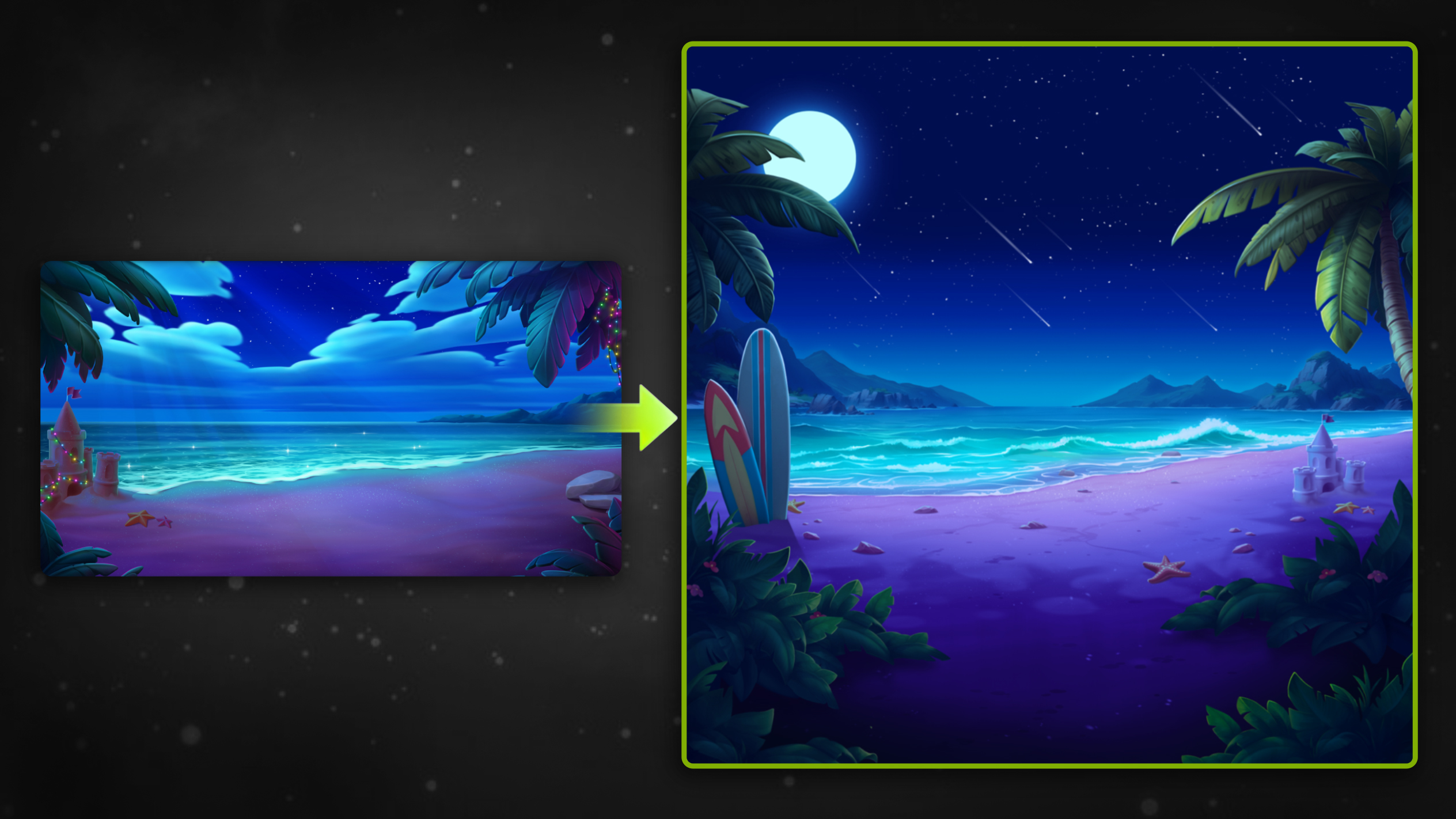
Slot backgrounds support immersion but must never distract from gameplay.
Background creation includes:
- Main environment illustration
- Foreground / midground / background layers
- Atmospheric effects (fog, glow, particles)
- Optional mood variations
Key checks:
- Strong contrast behind reels
- Clear focal area
- Space for UI
- Depth without visual noise
Best practice:
Layered backgrounds allow fast upgrades (lighting changes, subtle animation).
Optional Slot Assets (Characters & Feature Screens)
.jpg)
Depending on the project scope, additional assets may include:
- Characters or mascots
- Bonus / free spins screens
- Jackpot visuals
- Feature overlays
- Decorative UI elements
These assets:
- Increase perceived quality
- Support feature-based gameplay
- Improve marketing visuals
Slot Art File Preparation (PSD + PNG Delivery)
High-quality art must be delivered correctly.
Production-ready delivery includes:
- Layered PSD source files
- Exported PNG assets (transparent, optimized)
- Logical folder structure
- Consistent naming conventions
Why PSD files matter:
- Easy customization
- Fast reskins
- Color and material swaps
- Future updates without full redesign
Industry standard: PSD for editing + PNG for engine integration.
Testing Slot Art in Real Gameplay
Before final delivery, assets are tested:
- At real mobile resolution
- Inside reels and UI
- With feature overlays
- Under different lighting conditions
Testing reveals:
- Readability problems
- UI scale issues
- Over-detailed backgrounds
- Contrast errors
Final Polish and Optimization
The final stage includes:
- Minor visual adjustments
- Mobile optimization
- Export verification
- Style consistency check
This step ensures the slot art is production-ready.
How Slot Art Packs Fit into This Pipeline
Many studios now optimize this entire pipeline using ready-made slot art packs.
A professional slot art pack already includes:
- Complete symbol sets
- Slot UI kits
- Background scenes
- PSD + PNG delivery
- Consistent art style
Studios then customize packs to:
- Match brand identity
- Add feature UI
- Adjust color palette and mood
Final Thoughts
Slot art creation is a structured pipeline — not random illustration. Each stage builds on the previous one, and skipping steps almost always leads to quality or production issues.
Understanding this pipeline helps studios:
- Plan budgets accurately
- Avoid costly mistakes
- Communicate better with artists
- Launch faster with confidence
If speed and budget matter, starting with a production-ready slot art pack and customizing it is often the smartest choice.


.svg)


