





What Is a Slot Game Graphics Technical Brief?
A slot game graphics technical brief is a structured document that defines:
- visual style and art direction
- asset scope and priorities
- animation requirements
- technical constraints
- production workflow
Unlike general design briefs, a slot graphics TBR is tightly connected to:
- game engines (HTML5, Unity, Cocos)
- performance limits
- casino and aggregator standards
- UX and math warning zones
Why a Technical Brief Is Critical in Slot Game Development
In professional slot production, graphics are not created in isolation. Every visual decision impacts performance, UX, and player retention.
Based on our experience, missing or weak technical briefs lead to:
- misaligned art direction
- excessive revision cycles
- integration issues
- delayed releases
- increased production costs
A clear technical brief allows teams to predict outcomes, control scope, and scale production efficiently.
Our Experience with Slot Game Graphics Production
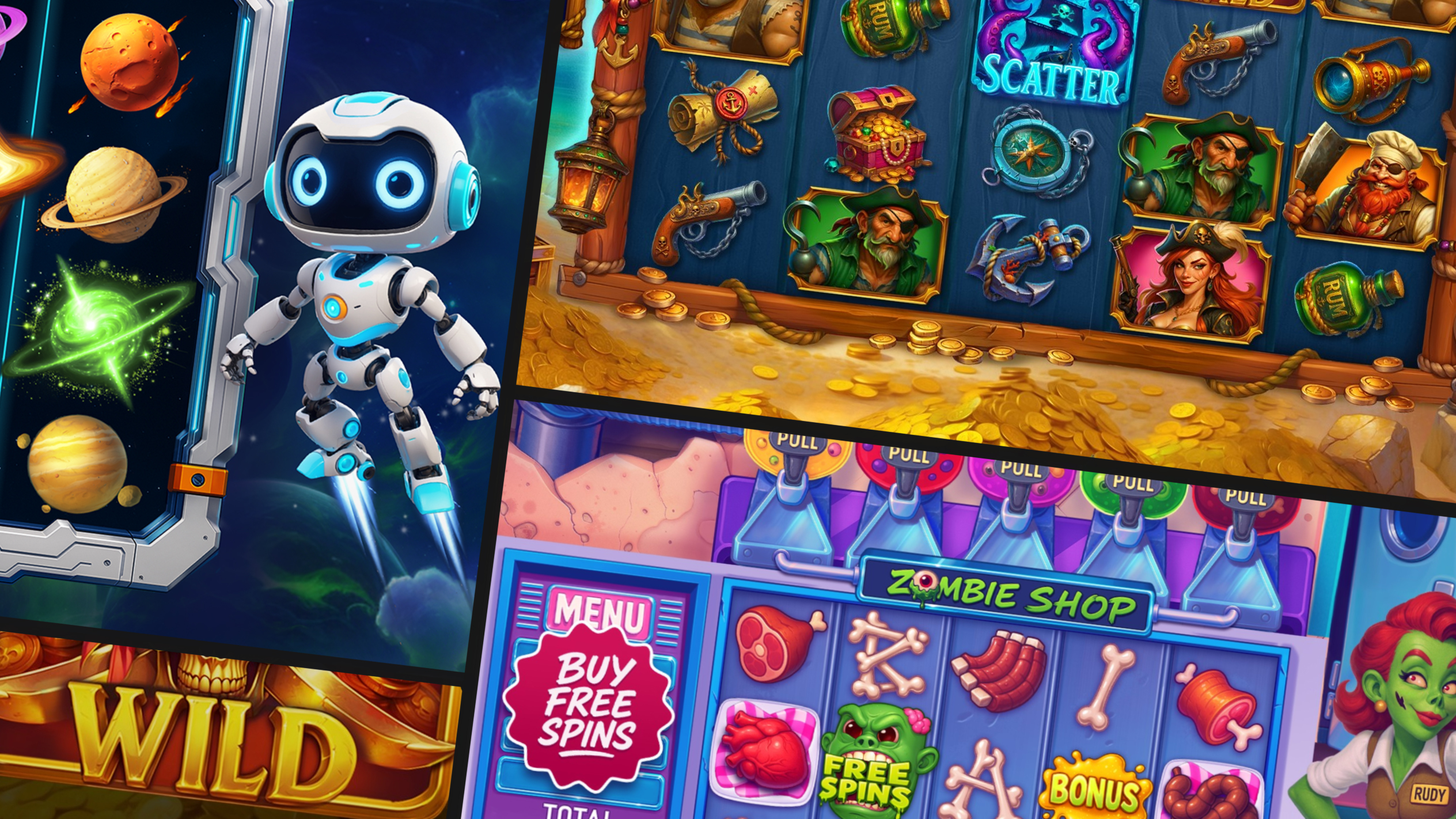
ArtHouseLabs is a game art studio specializing in slot game graphics and iGaming UI.
We have produced:
- slot symbols and backgrounds
- UI/HUD systems for casino games
- character-driven slots
- Spine and sprite-based animations
This guide reflects workflows used in real-money slot projects where technical accuracy, performance optimization, and visual clarity are non-negotiable.
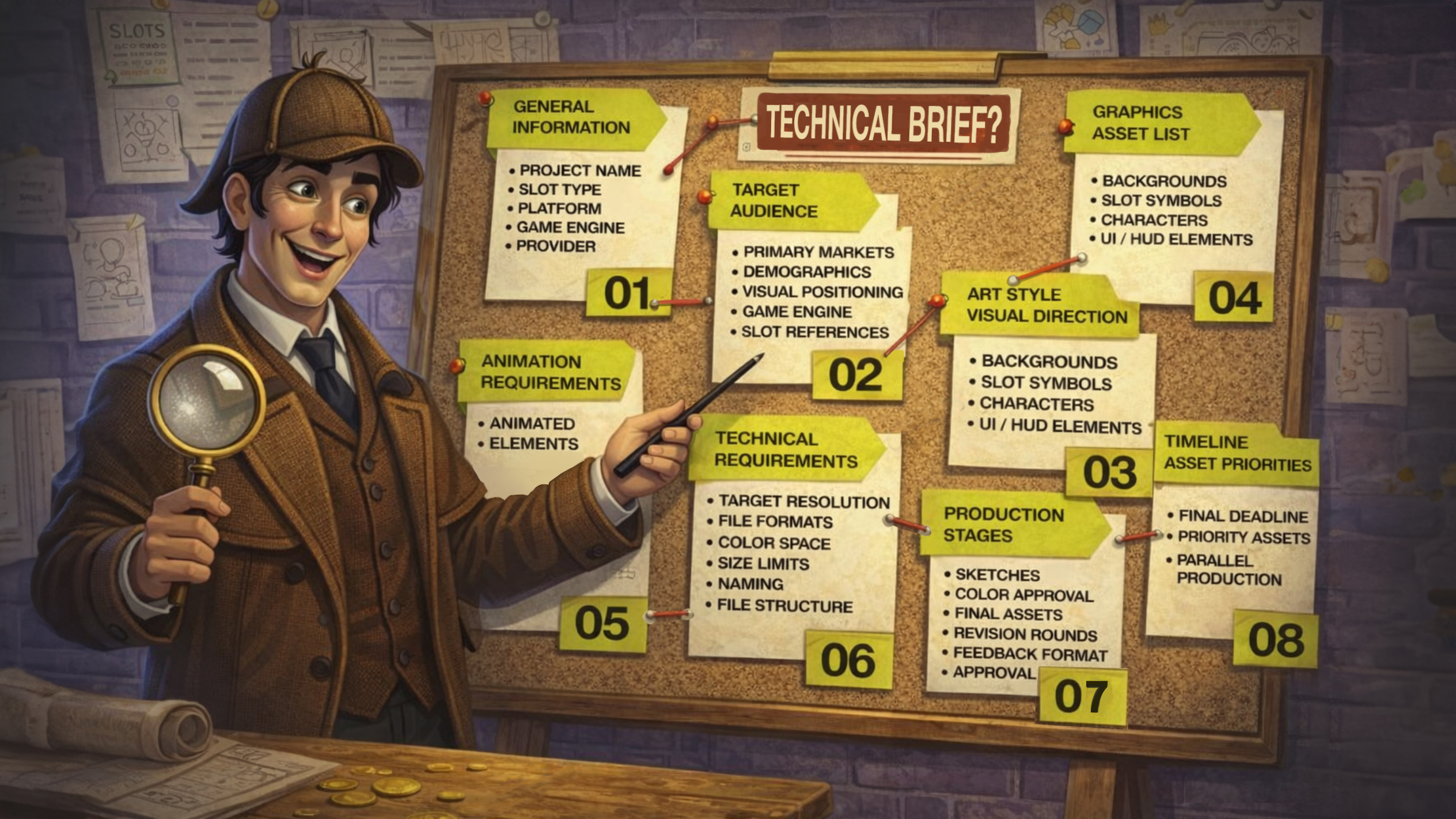
Slot Game Graphics Technical Brief: Complete Structure
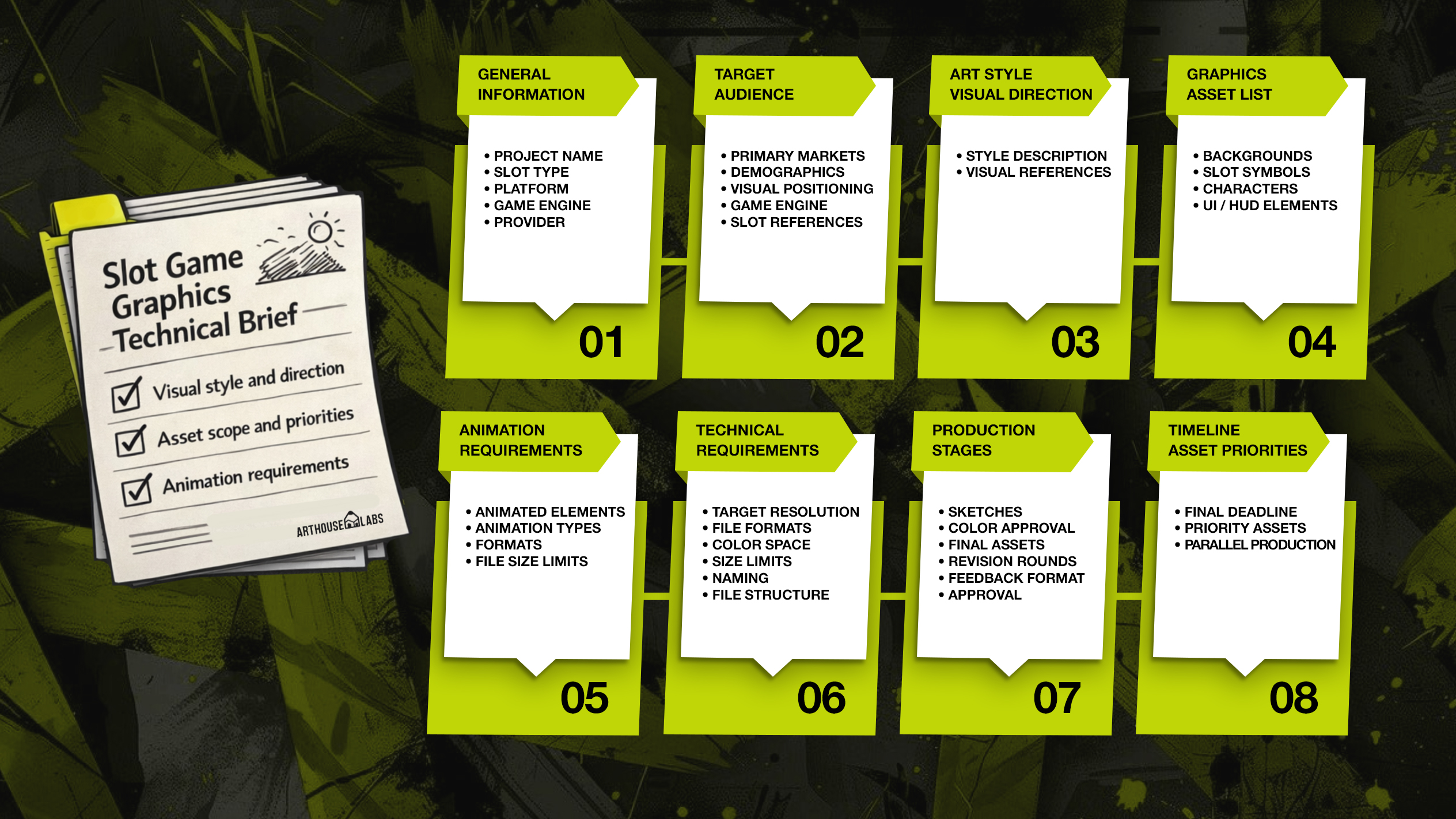
Below is a production-proven structure for a slot game graphics technical brief.
1. General Project Information
This section sets the production context.
Include:
- Project name
- Slot type (Video Slot, Hold & Win, Classic Slot, etc.)
- Platform (Desktop, Mobile, Cross-platform)
- Game engine (HTML5, Unity, Cocos)
- Provider or aggregator (if applicable)
Project overview:
A concise description of the slot theme, setting, and core idea.
2. Target Audience and Market
Understanding the audience defines visual complexity and tone.
Specify:
- Primary markets (EU, Asia, LatAm, Global)
- Player demographics
- Visual positioning (casual, premium, luxury, hardcore)
- Competitor slot references
3. Art Style and Visual Direction
This section defines the visual identity of the slot.
Art Style Description
- 2D / 2.5D / pseudo-3D
- Cartoon, realistic, retro, dark, luxury
- Level of detail
Visual References
Provide links to:
- existing slot games
- concept art
- films, games, or illustrations
Strong references reduce subjective interpretation and speed up approvals.
4. Slot Game Graphics Asset List
Clearly defining asset scope is critical for accurate production planning.
Backgrounds
- Main background
- Bonus / free spins backgrounds
- State variations
Slot Symbols
- Low-value symbols
- High-value symbols
- Special symbols (Wild, Scatter, Bonus)
For each symbol:
- visual style
- approximate size
- animation requirements
Characters (If Applicable)
- personality and role
- emotions and poses
- static or skeletal animation
UI / HUD Elements
- slot frame
- buttons (Spin, Auto, Bet)
- panels and icons
5. Animation Requirements
Animation affects both player experience and performance.
Define:
- animated elements
- animation types (idle, win, loop, transitions)
- formats (Sprite Sheets, Spine, DragonBones)
- FPS and file size limits
6. Technical Requirements for Slot Game Graphics
One of the most critical sections.
Include:
- target resolution and safe zones
- file formats (PNG, PSD, SVG)
- color space (sRGB)
- size limits
- naming conventions
- source file structure
Clear technical requirements reduce integration risks.
7. Workflow, Revisions, and Production Stages
Define how production will be managed.
Typical stages:
- sketches
- color approval
- final assets
Also specify:
- number of revision rounds
- feedback format
- approval checkpoints
8. Timeline and Asset Priorities
Include:
- final deadline
- high-priority assets
- parallel production opportunities
This allows realistic scheduling and resource planning.
Slot Game Graphics Technical Brief Template
1. General Information
Project name:
Slot type:
Platform:
Engine:
2. Game Description
Theme, setting, and core idea.
3. Target Audience
Market:
Visual style:
References:
4. Art Style
Style description:
Visual references:
5. Graphics Assets
Backgrounds:
Symbols:
Characters:
UI:
6. Animation
Animated elements:
Format:
7. Technical Requirements
Resolution:
File formats:
Limitations:
8. Timeline and Revisions
Iterations:
Deadline:
Common Mistakes in Slot Game Technical Briefs
- vague visual descriptions
- missing references
- undefined technical limits
- unclear asset scope
- ignoring engine constraints
Avoiding these mistakes significantly improves production efficiency.
Conclusion
A slot game graphics technical brief is not documentation for formality — it is a practical production tool. Based on real project experience, a clear brief reduces revisions, improves visual consistency, and accelerates slot game launches.
If you’re planning a new slot game or scaling production, working with an experienced slot game art studio ensures predictable, production-ready results.


.svg)


