






Why Slot Game Background Design Matters
In modern slot games, the background is more than decoration. It creates the visual context for the entire game.
A strong casino game background design helps to:
- establish the game’s theme and narrative
- support visual hierarchy around the reels
- increase player immersion
- reinforce emotional pacing during gameplay
- enhance bonus features and win states
However, background design must always serve gameplay first.
If the environment competes with symbols or UI elements, it becomes a usability problem rather than a visual enhancement.
Core Principles of Slot Game Background Design
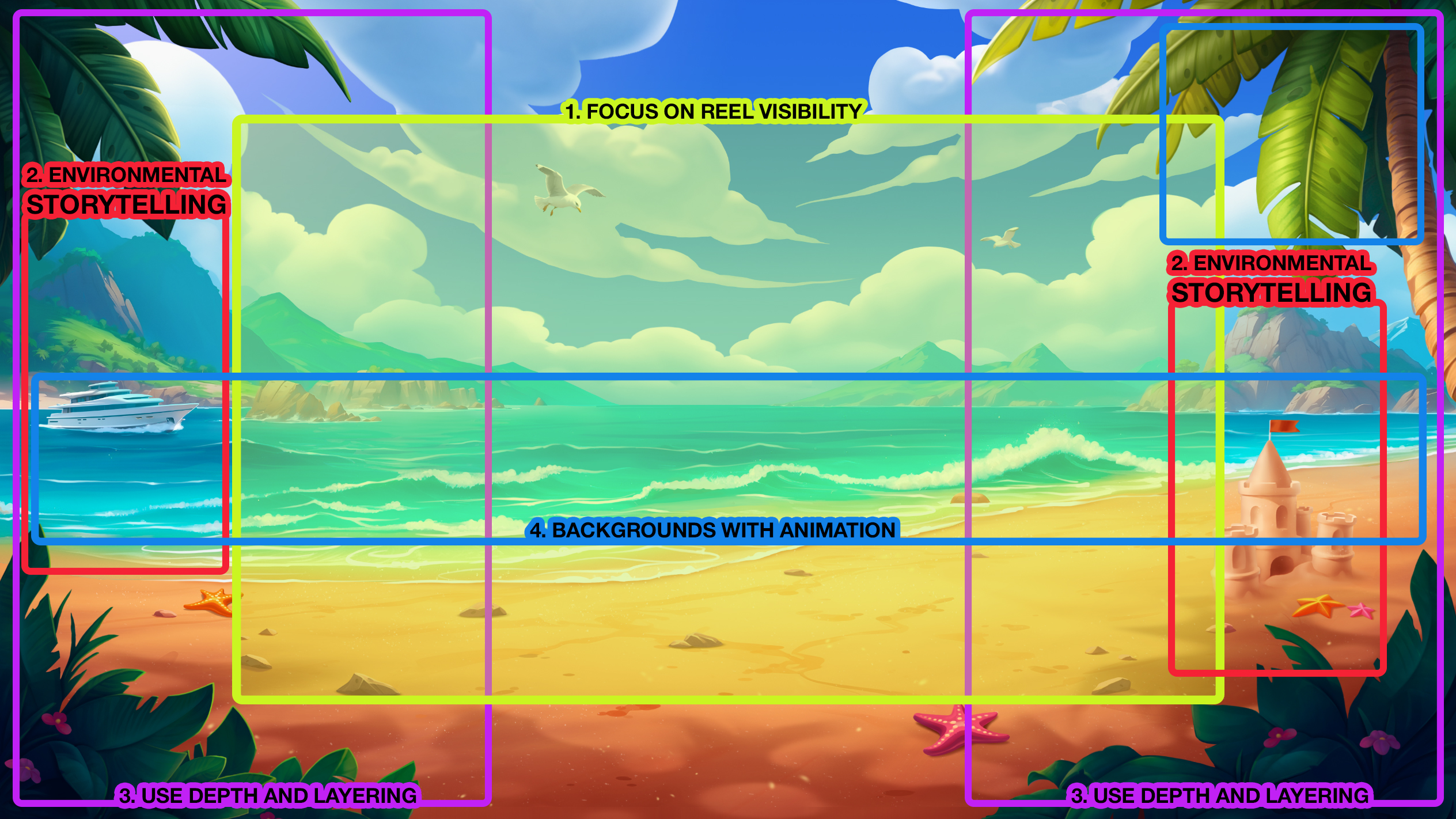
Professional slot game background artists follow several key design principles to maintain clarity and performance.
1. Focus on Reel Visibility
The reels are the center of attention in every slot game.
Backgrounds should guide the player’s eye toward the reels rather than compete with them.
Best practices include:
- lower visual contrast behind the reels
- controlled lighting near symbol areas
- avoiding detailed textures directly behind gameplay elements
The goal is to frame the reels, not overshadow them.
2. Establish Strong Environmental Storytelling
Backgrounds help communicate the theme of the slot.
Common slot themes include:
- ancient civilizations
- fantasy worlds
- adventure settings
- luxury casinos
- mythological environments
A well-designed slot game environment provides visual storytelling that supports symbols, UI, and animation.
For example:
A pirate slot may include:
- a ship deck
- ocean horizon
- storm lighting
- treasure elements in the environment
These visual cues strengthen the overall theme.
3. Use Depth and Layering
Professional slot backgrounds often use multiple layers to create depth.
Typical background layers include:
1. Foreground elements
2. Midground environment
3. Distant background scenery
This layered approach allows subtle animation such as:
- parallax movement
- lighting shifts
- atmospheric particles
These effects increase immersion while keeping gameplay readable.
4. Design Backgrounds With Animation in Mind
Background animation adds life to the game environment.
Examples include:
- moving clouds
- flickering torches
- flowing water
- ambient particles
- lighting pulses during wins
However, background animation must remain subtle.
Too much motion creates visual noise and distracts from the reels.
Related: Slot Game Animation Pipeline Explained
5. Optimize for Mobile Performance
Most slot games are played on mobile devices. This means slot background design must be performance-aware.
Important considerations include:
- limiting texture size
- avoiding excessive transparency layers
- compressing large environment textures
- minimizing animated elements
Heavy background assets can significantly reduce performance in HTML5 slot games.
Slot Game Background Design Workflow
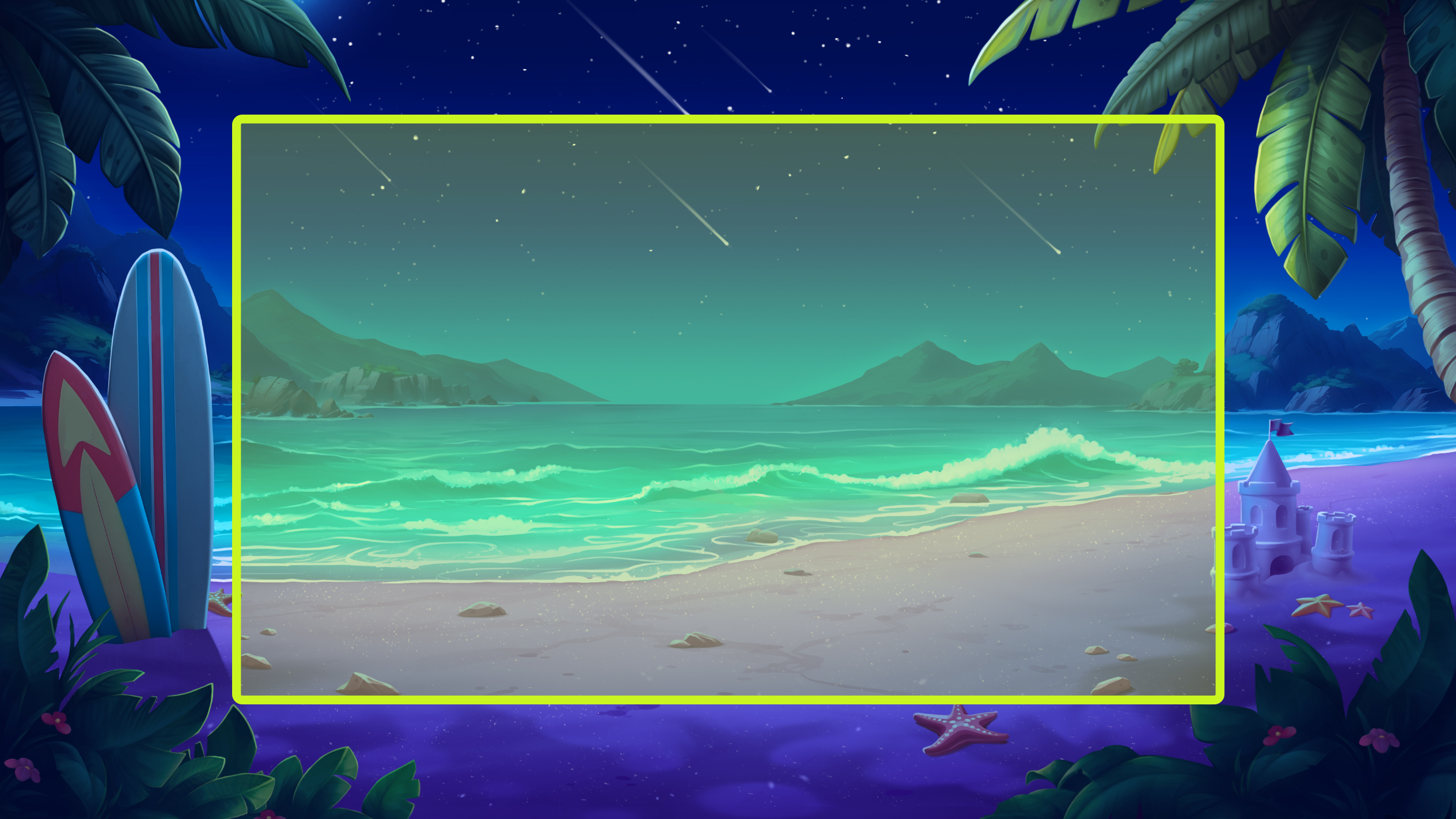
Professional studios follow a structured production process when designing slot backgrounds.
Step 1: Theme & Art Direction
Before painting the background, artists define:
- game theme
- color palette
- lighting mood
- composition
This stage usually includes concept sketches and mood boards.
Related: Slot Game Art Production Workflow
Step 2: Composition & Layout
The background layout must support gameplay.
Artists define:
- reel placement
- ui areas
- safe zones for mobile screens
- depth layers
This ensures the environment integrates smoothly with the interface.
Related: Slot Game UI Design for Casino Games
Step 3: Rendering the Final Environment
Once the composition is approved, artists create the final background artwork.
This stage includes:
- lighting design
- material textures
- atmospheric effects
- depth enhancement
At this stage, the environment must still maintain low visual competition with the reels.
Step 4: Animation & Integration
After rendering, background elements may be prepared for animation.
Common animated background elements include:
- environmental fx
- ambient lighting
- background loops
These elements are then integrated into the animation pipeline.
Related: Slot Game Animation Pipeline Explained
Common Slot Game Background Design Mistakes
Even visually impressive backgrounds can fail if they ignore gameplay requirements.
Here are common mistakes seen in slot production.
Overly Detailed Backgrounds
Too much detail creates visual clutter and makes symbols harder to read.
High Contrast Behind Reels
Strong highlights behind symbols reduce readability.
Ignoring Mobile Safe Zones
Background compositions designed for desktop can break on mobile screens.
Excessive Environmental Animation
Too much motion distracts players and impacts performance.
Background Design and the Technical Brief
A professional slot game graphics technical brief should always define background requirements.
Typical specifications include:
- resolution
- safe zones
- animation requirements
- lighting direction
- integration with ui
Without these details, background production becomes inconsistent.
Read: Slot Game Graphics Technical Brief Guide
The Role of Backgrounds in Slot Game Immersion

When done correctly, slot backgrounds support the entire visual experience.
They provide:
- context for symbols
- depth for animations
- atmosphere for gameplay
The best background designs feel immersive without drawing attention away from the reels.
Players should notice the environment emotionally — not consciously.
Conclusion
Professional slot game background design combines art direction, gameplay clarity, and technical optimization.
A strong background:
- enhances immersion
- supports reel visibility
- integrates with ui and animation
- maintains mobile performance
When integrated into a structured slot game art production workflow, background design becomes a powerful tool for creating engaging and scalable slot experiences.


.svg)


