






Players React Emotionally Before They React Logically
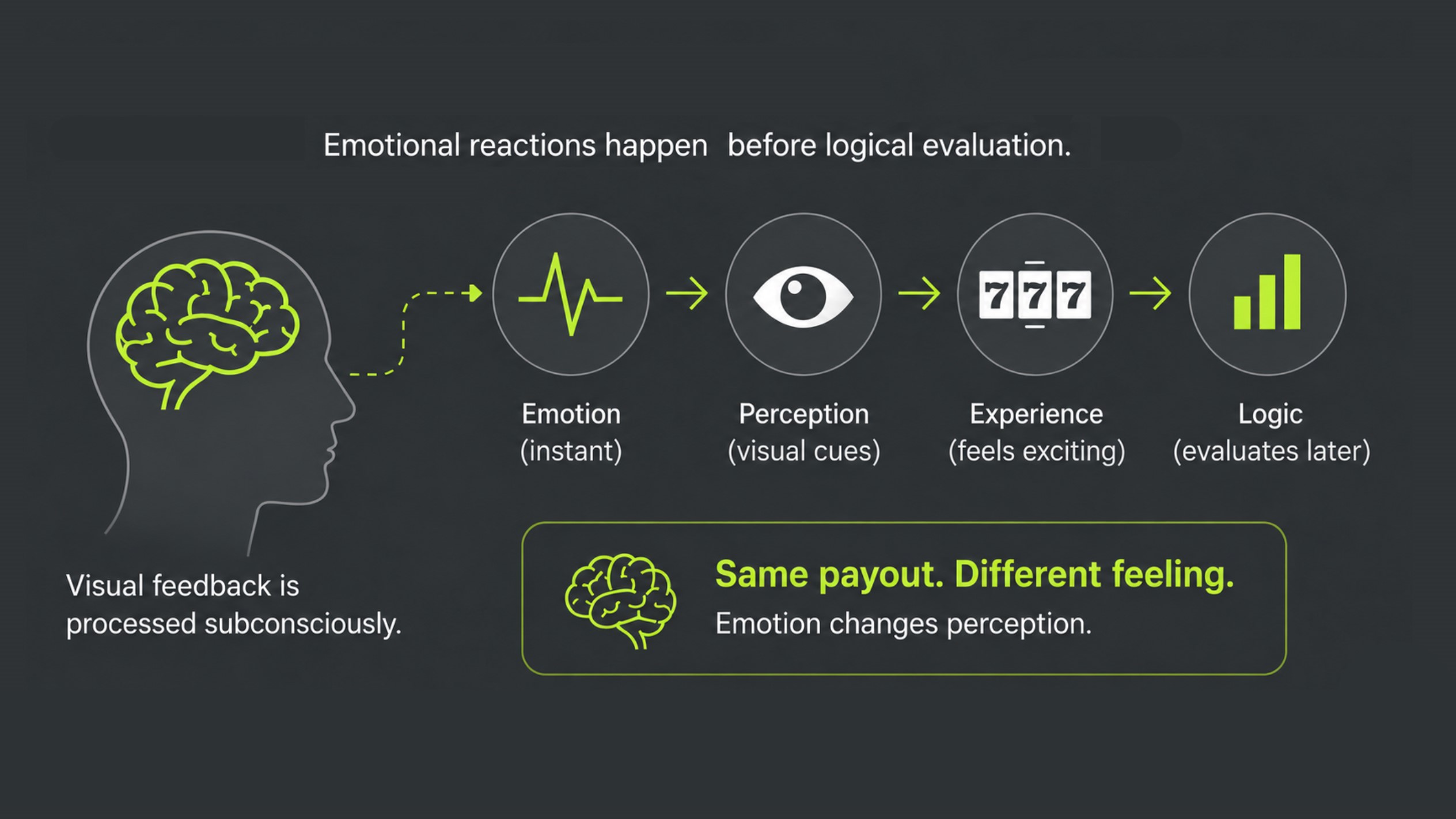
Most visual feedback in slot games is processed subconsciously.
Players do not stop to analyze animation timing or UI hierarchy while spinning. Instead, their brains react automatically to motion, rhythm, contrast, sound synchronization, and reward signals.
This creates emotional responses before rational evaluation happens.
A slot can mathematically deliver the same payout as another game while feeling dramatically more exciting simply because the feedback system around the reward is stronger.
The emotional layer changes perception.
Anticipation Is One of the Most Important Feelings in Slots
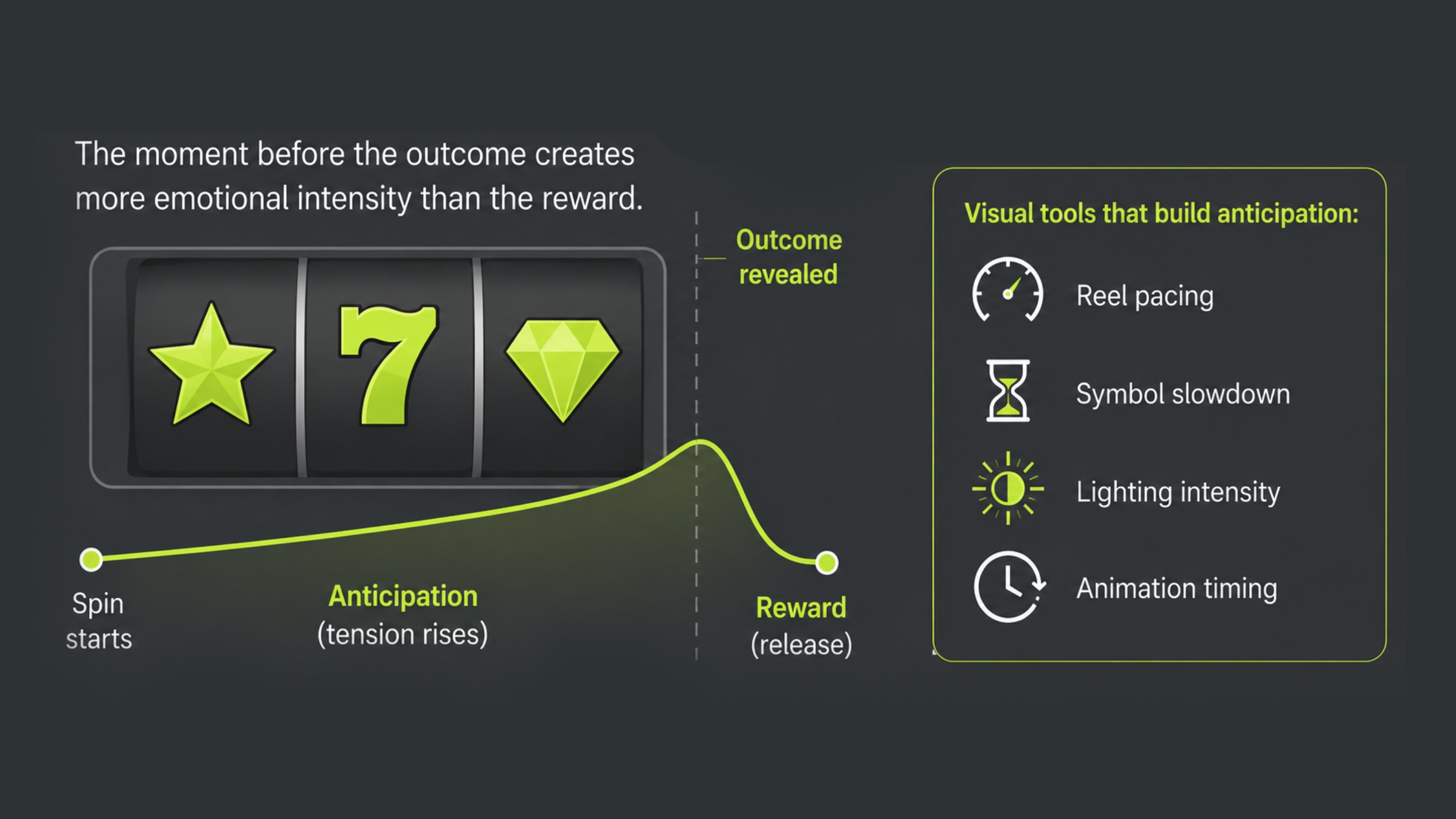
One of the strongest emotional states in slot games is anticipation.
This moment happens before the outcome is revealed, when the player feels that something valuable might occur.
Visual design plays a major role in building this tension.
Small changes in reel timing, symbol pacing, lighting intensity, or animation slowdown can significantly increase emotional engagement. The player begins focusing more intensely on the screen, even before any reward is confirmed.
Interestingly, anticipation often creates more emotional intensity than the reward itself.
Strong slot games understand this balance very well.
Motion Creates Psychological Focus
Human attention is naturally drawn toward movement.
Slot games use this constantly.
Reel motion, symbol animation, particle effects, and UI reactions all direct the player’s focus toward specific moments inside the experience. But emotional feedback becomes much stronger when motion is controlled carefully rather than applied everywhere at once.
If everything moves simultaneously, nothing feels important.
Strong emotional design relies on hierarchy. The game selectively increases motion intensity during moments that matter most:
- near wins
- bonus triggers
- large payouts
- feature activations
This creates emotional contrast.
Without contrast, excitement disappears.
Timing Is Often More Important Than Animation Quality
A common misconception is that emotional feedback comes from “bigger” animation.
In reality, timing usually matters more than visual complexity.
A small pause before the final reel stops can create enormous tension. A slight delay before reward feedback appears can increase perceived impact. Even the pacing of symbol flashes influences how rewarding the outcome feels.
This is why emotionally effective slot design often feels rhythmic.
The game controls emotional tempo through carefully timed visual events.
Players rarely notice this consciously, but they react to it constantly.
Near-Wins Create Emotional Momentum
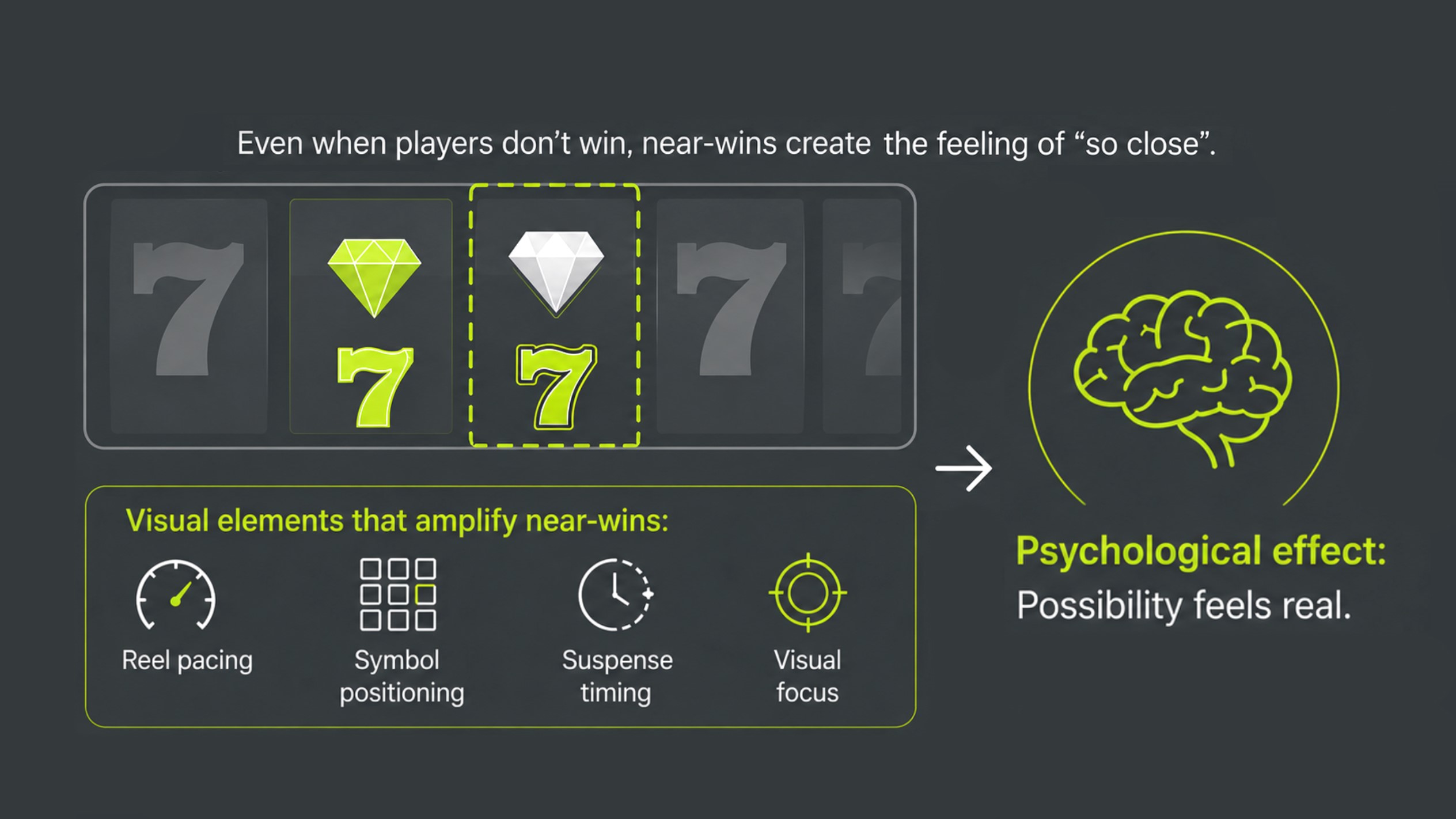
Near-win moments are particularly important in slot psychology.
Even though the player technically loses, the visual system often communicates:
“you were close.”
This effect is amplified through:
- reel pacing
- symbol positioning
- suspense timing
- visual focus
The emotional response is not the same as a normal loss. The player remains psychologically engaged because the game created a sense of possibility.
This is one reason why visual pacing matters so much in slots.
The interface is not only showing results. It is shaping emotional interpretation.
Reward Perception Is Highly Visual
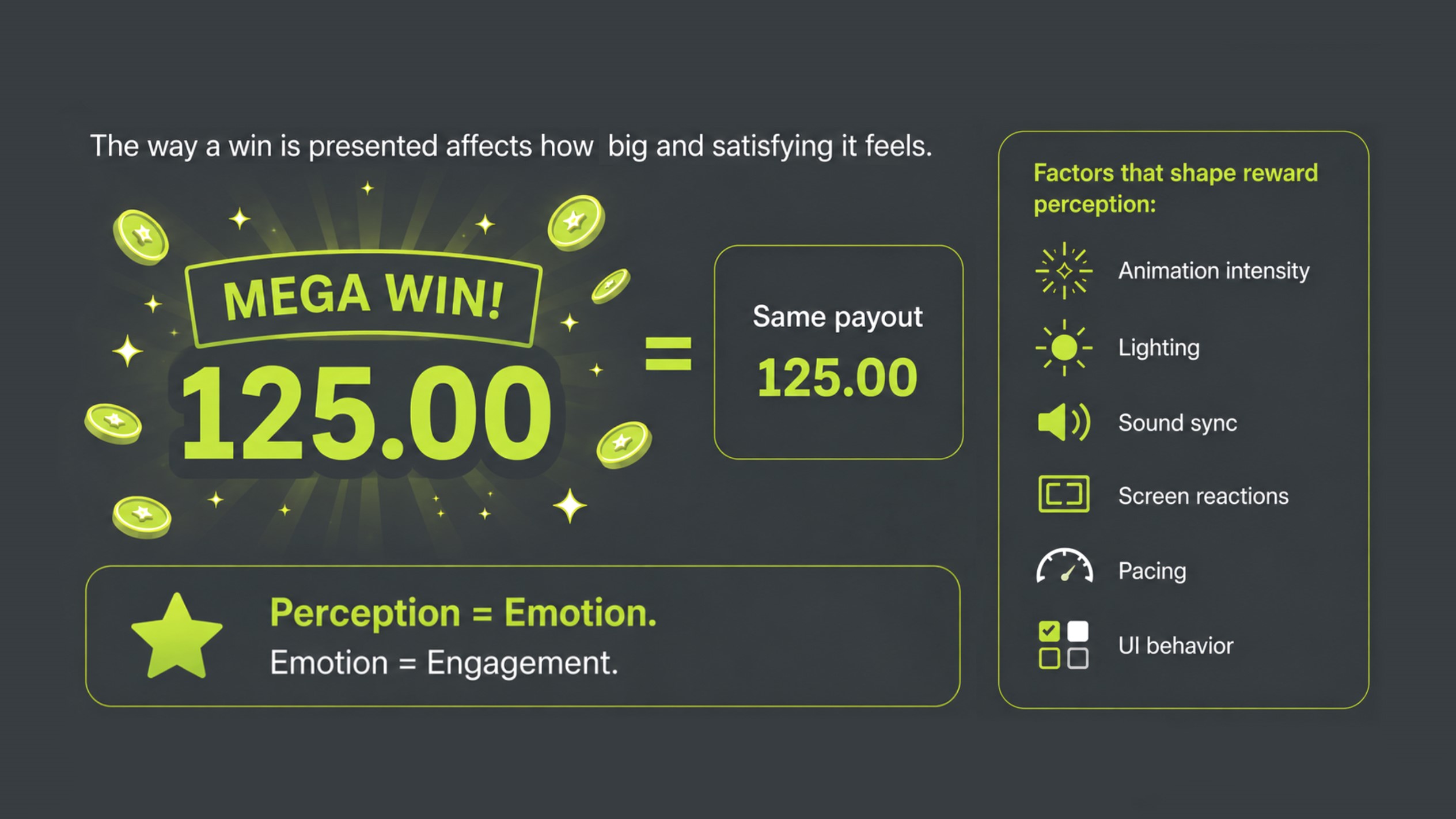
Players do not perceive rewards only through numbers.
They perceive rewards through presentation.
Two identical payouts can feel completely different depending on:
- animation intensity
- lighting
- sound synchronization
- screen reactions
- pacing
- UI behavior
This is why some wins feel “small” even when the payout is objectively good, while other wins feel satisfying at lower values.
The emotional framing around the reward changes its perceived value.
Strong slot design understands that perception matters as much as payout size itself.
Color and Lighting Influence Emotional Tone
Visual tone affects how the player emotionally experiences the game.
Warm colors and glowing highlights tend to increase energy and excitement. Darker palettes often create tension or mystery. Controlled contrast helps direct focus and increase clarity during important moments.
Lighting also affects perceived reward intensity.
A bright visual burst during a win creates a completely different emotional reaction than subtle UI feedback.
But stronger is not always better.
When visual intensity stays high constantly, players adapt to it quickly. Emotional spikes become less effective because the game no longer creates contrast between normal and special moments.
This is why pacing matters so much.
Emotional Feedback Depends on Clarity
One of the biggest mistakes in slot visual design is confusing intensity with effectiveness.
When interfaces become overloaded with effects, particles, and constant motion, emotional feedback often becomes weaker instead of stronger.
Players stop understanding what is important.
Good emotional design relies on clarity. The player should immediately recognize:
- when tension is building
- when a reward is significant
- when attention should shift
Without this clarity, emotional pacing breaks down.
Sound and Visual Synchronization Changes Perception
Emotional response becomes significantly stronger when visual and audio feedback work together.
A reel stop synchronized with sound feels more impactful. Reward flashes combined with audio accents increase perceived value. Even subtle timing mismatches can weaken emotional intensity.
This synchronization creates a sense of responsiveness and physicality.
The game begins to feel more “alive.”
Strong slot experiences rarely separate visual design from audio behavior. They function as one emotional system.
Mobile Players Experience Emotion Differently
Mobile sessions tend to be shorter and faster, which changes emotional pacing.
Players process visual information more aggressively on smaller screens, and attention shifts more quickly between interactions. Emotional feedback on mobile therefore needs to become more concentrated and readable.
Subtle visual moments that work on desktop may lose effectiveness entirely on mobile devices.
This is why modern slot art systems increasingly rely on:
- stronger focal points
- simplified hierarchy
- cleaner reward feedback
- more readable animation pacing
Emotional clarity becomes more important than visual complexity.
Why Emotional Design Matters for Retention
Players rarely remember specific UI layouts or individual animations.
What they remember is how the game felt.
Whether the experience felt exciting. Rewarding. Smooth. Tense. Satisfying.
This emotional memory strongly influences:
- session length
- return behavior
- perceived quality
- engagement over time
In many ways, emotional feedback becomes the invisible layer connecting visual design and retention.
The Best Slot Games Control Emotional Rhythm
The strongest slot experiences do not maintain constant intensity.
They alternate between calm, anticipation, tension, and release.
This emotional rhythm keeps the player engaged over longer sessions because the experience feels dynamic rather than visually exhausting.
Games that remain emotionally “loud” all the time often lose impact surprisingly quickly.
Controlled pacing creates stronger emotional peaks.
Conclusion
Slot games create emotional feedback through far more than mechanics alone.
Visual design shapes anticipation, reward perception, tension, pacing, and attention flow throughout the entire experience. Animation timing, motion hierarchy, lighting, readability, and synchronization all contribute to how players emotionally interpret gameplay.
The strongest slot games are not necessarily the ones with the biggest effects or the most complex visuals.
They are the ones that understand how human attention and emotion actually work.
Because in modern iGaming, visual design is no longer just presentation.
It is emotional architecture.


.svg)


