






Why Slot Game Art Needs a System
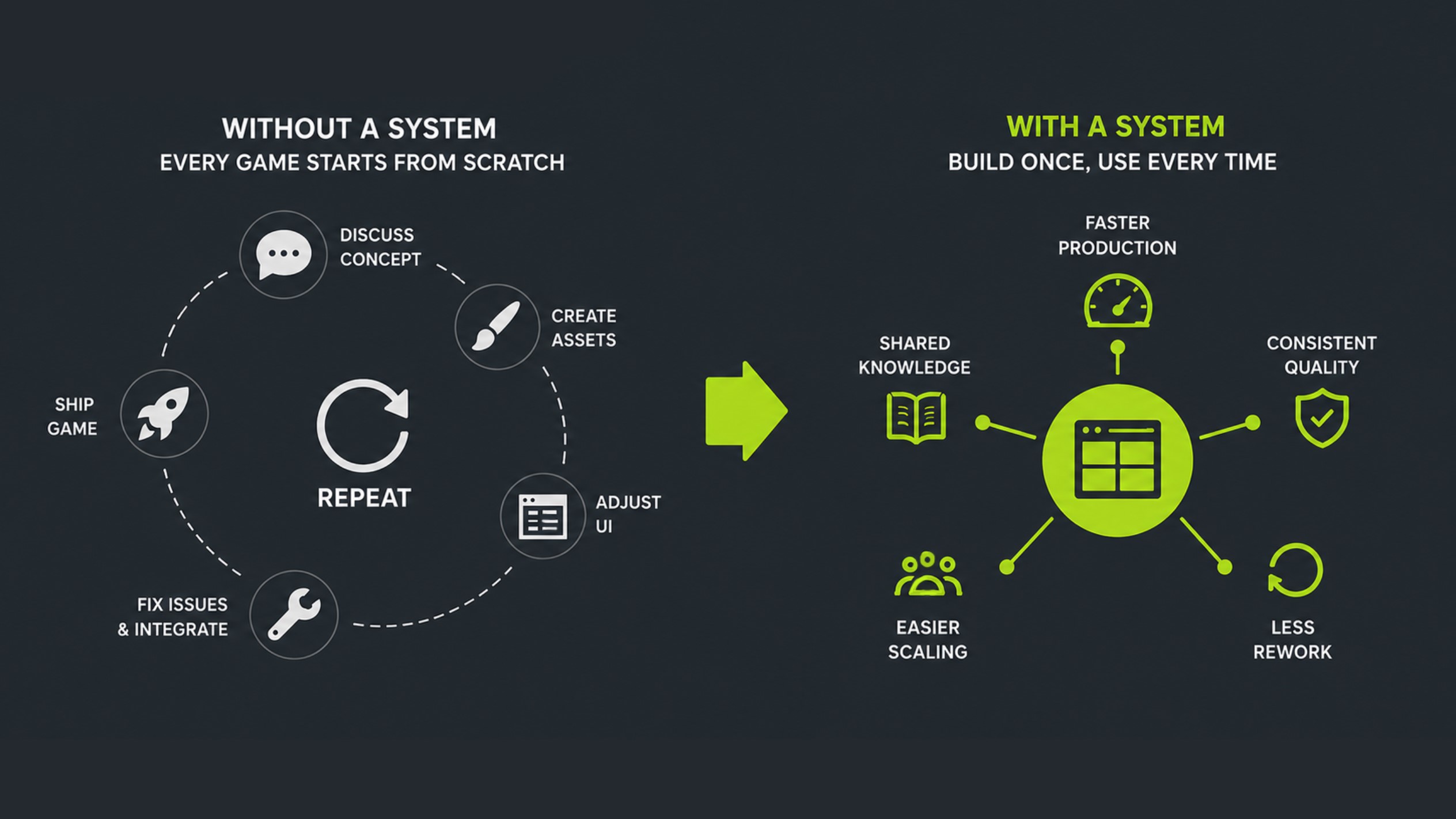
Slot game art is often treated as a project-by-project deliverable. One game has its own symbols, UI, background, animation, and technical requirements. Then the next game starts, and the process repeats almost from zero.
This creates a lot of hidden inefficiency.
The team may already know how buttons should behave, how symbol states should be prepared, how animation layers should be structured, and how files should be exported for the engine. But if this knowledge is not documented and reused, it stays inside individual people instead of becoming part of the production pipeline.
A scalable system turns repeated decisions into reusable standards.
This does not mean every slot should look the same. It means every project should be built on a clear foundation.
Scalability Is Not About Making Generic Art
One common fear is that reusable systems will make games feel repetitive.
In reality, a good slot art system does the opposite.
It removes repetitive production decisions so the team can spend more energy on what makes each game unique: theme, mood, characters, reward moments, and visual identity.
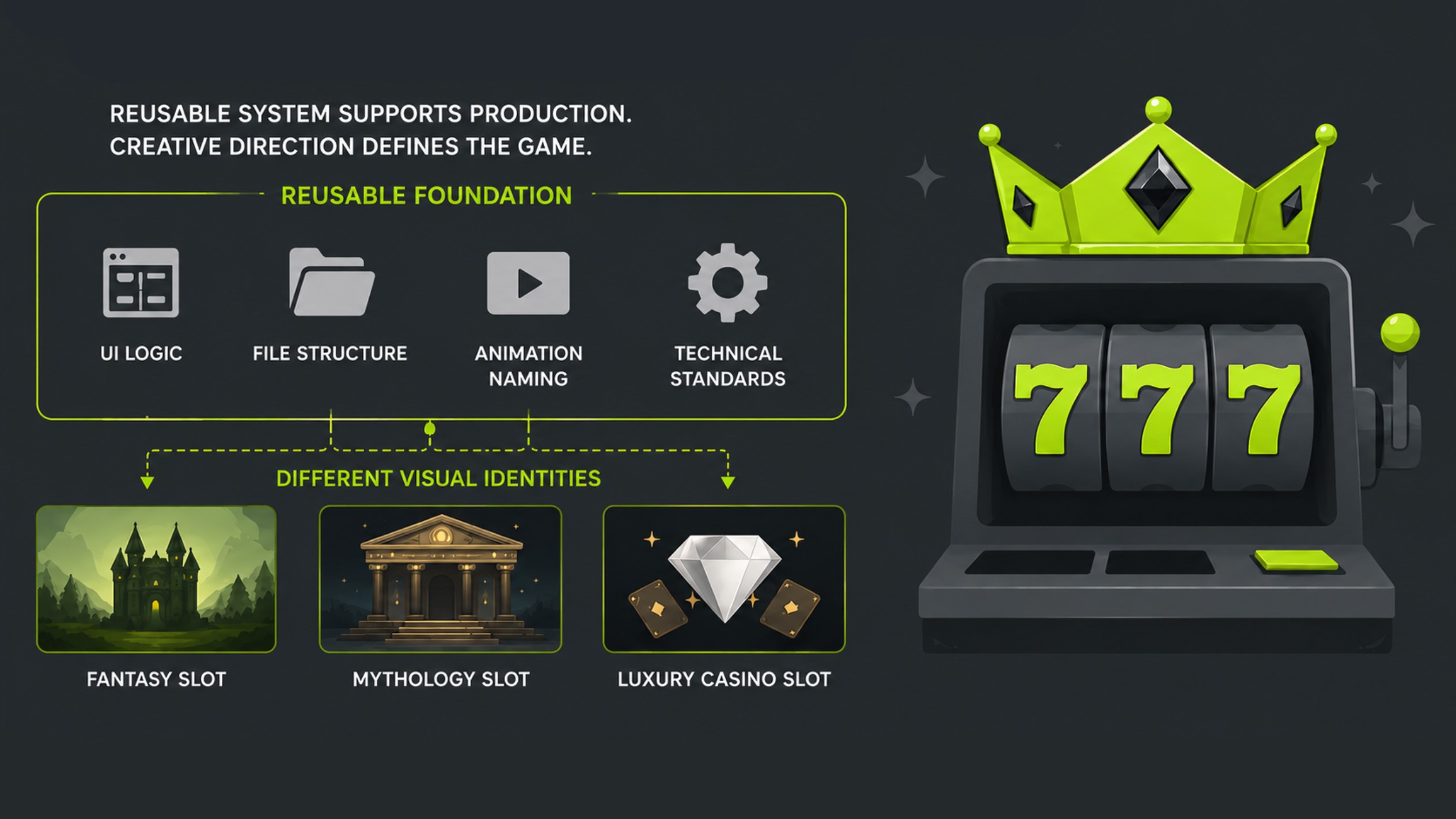
The reusable part should support production. The creative part should define the game.
For example, a studio may reuse UI logic, file structure, animation naming, and technical standards while still creating completely different worlds visually.
A fantasy slot, a mythology slot, and a luxury casino slot can all use the same production system without feeling visually identical.
Start With a Core Visual Framework
A scalable slot art system begins with a clear visual framework.
This framework defines how the game’s visual components should relate to each other. It does not need to be overly restrictive, but it should create shared rules for hierarchy, readability, spacing, lighting, and asset preparation.
Without this framework, every artist or external partner has to interpret the project independently. That leads to inconsistency, extra feedback rounds, and slower approvals.
A strong framework helps answer questions before they become problems.
How detailed should symbols be?
How strong should UI highlights feel?
How should special symbols stand apart from regular symbols?
How much animation intensity is appropriate for different moments?
When these questions are answered once and refined over time, production becomes much more predictable.
Build a Reusable UI System
UI is one of the strongest candidates for scalability.
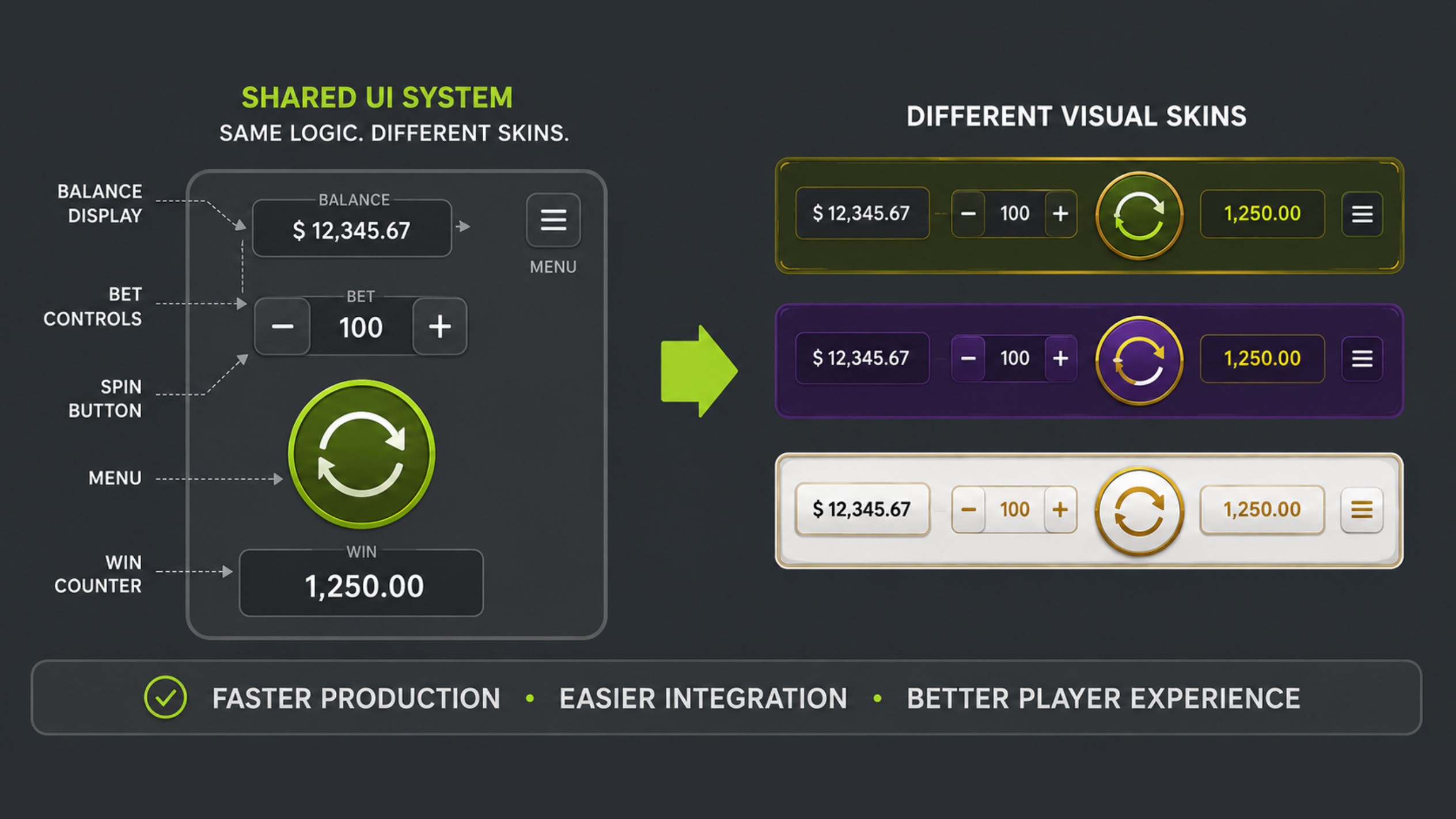
Many slot games require similar interface elements: spin buttons, bet controls, balance displays, win counters, menus, paytables, settings, and reel frames.
If every project redesigns these systems from scratch, production becomes slower than necessary.
A reusable slot UI system can define interaction logic, spacing rules, button states, animation behavior, and technical structure. The visual skin can still change from project to project, but the underlying system remains familiar.
This helps designers move faster and helps developers integrate assets more efficiently.
It also improves player experience because familiar interaction patterns reduce confusion.
Create Symbol Design Standards
Symbols are one of the most visible parts of slot art, but they are also one of the easiest areas to make inconsistent.
A scalable system should define how symbol sets are structured across games.
This includes the relationship between low-value symbols, high-value symbols, and special symbols. It also includes rules for silhouette, contrast, padding, material rendering, and animation preparation.
The goal is not to make every symbol look similar. The goal is to make every symbol set production-ready and readable.
When symbol standards are clear, artists can explore creative themes without losing usability.
This is especially important for mobile, where readability at smaller sizes becomes critical.
Standardize Animation Logic
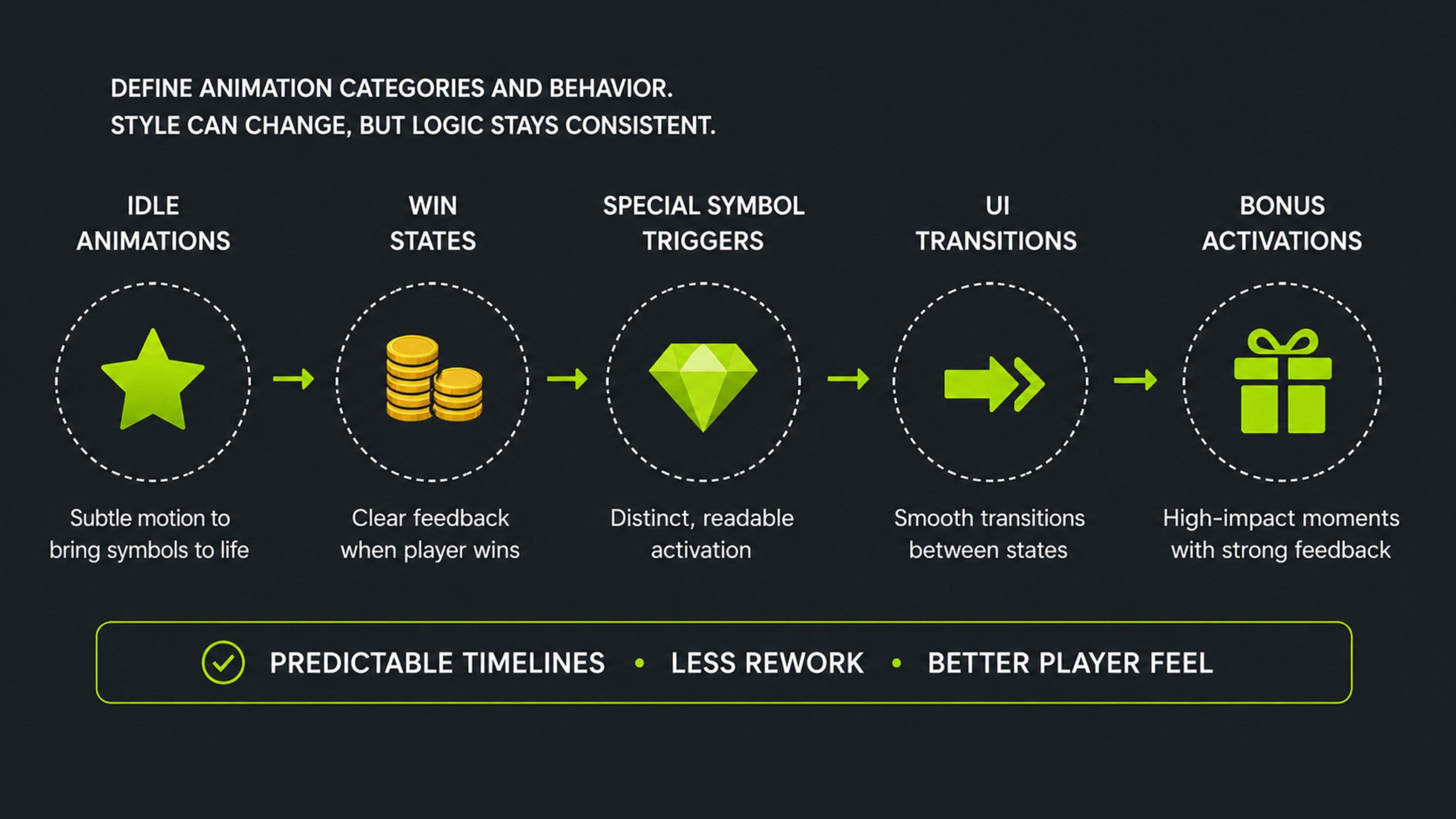
Animation can quickly become one of the biggest production bottlenecks if it is planned separately for every project.
A scalable system should define animation categories and expected behavior.
For example, a studio may create standard logic for idle animations, win states, special symbol triggers, UI transitions, and bonus activations. The actual animation style can change depending on the game, but the production expectations remain consistent.
This makes it easier to estimate timelines, prepare assets correctly, and avoid rework later.
It also helps maintain emotional pacing across games. Players may not notice the system itself, but they feel when feedback is clear, responsive, and well-timed.
Define Technical Standards Early
A scalable art system cannot exist without technical consistency.
File formats, naming conventions, layer structures, resolution standards, safe zones, sprite sheet rules, and export requirements should not be reinvented for every project.
When technical standards are unclear, production slows down during integration. Developers spend time fixing assets, artists re-export files, and producers manage issues that could have been avoided.
Clear technical standards reduce this friction.
They also make outsourcing easier because external teams know exactly how assets should be prepared before delivery.
Use Style Guides Without Limiting Creativity
A style guide is one of the most useful tools in a scalable slot art system.
It helps define the visual language of a game or studio portfolio. This can include color behavior, lighting principles, UI treatment, symbol rendering, typography, animation tone, and quality benchmarks.
The purpose of a style guide is not to restrict creativity. It is to make creative decisions easier to align.
When teams know what “premium,” “casual,” “dark,” or “playful” means visually, feedback becomes less subjective.
This is especially valuable when multiple artists or external partners are involved.
Make Asset Reuse Strategic
Asset reuse can reduce production time, but it needs to be handled carefully.
Reusing assets blindly can make games feel repetitive. Reusing systems strategically can make production faster without weakening identity.
The most useful areas for reuse are usually structural rather than decorative.
Studios can reuse UI frameworks, export templates, animation logic, file structures, technical checklists, and production workflows. These elements do not define the player-facing theme directly, but they make production much smoother.
The visible art can still be unique while the production foundation remains consistent.
Build Around Production Stages
A scalable slot art system should also define how projects move from idea to delivery.
This usually includes concept direction, style approval, asset production, animation, integration support, and final polish.
When these stages are clearly defined, teams know when decisions need to be made and when changes become expensive.
This helps avoid one of the most common problems in slot production: resolving major creative or technical questions too late.
The earlier key decisions are made, the more stable the timeline becomes.
Make the System Useful for External Teams
Scalability often involves outsourcing.
A strong slot art system should make external collaboration easier, not harder.
External teams should be able to understand the studio’s expectations through clear documentation, references, file templates, and delivery standards.
This reduces onboarding time and makes quality easier to control.
Without a system, outsourcing depends heavily on constant explanation and correction. With a system, external partners can plug into the pipeline more efficiently.
Measure the System by Friction Reduced
The success of a scalable art system is not measured by how detailed the documentation is.
It is measured by how much friction it removes.
A good system should reduce repeated questions, shorten approval cycles, improve consistency, prevent technical rework, and make estimates more reliable.
If the system adds complexity without helping production, it needs to be simplified.
The best systems are practical. They help teams move faster without forcing them into unnecessary process.
Common Mistakes When Building a Slot Art System
One common mistake is creating documentation that is too abstract. If the system only describes ideas but does not show practical examples, teams still have to guess how to apply it.
Another mistake is making the system too rigid. If every game is forced into the same visual structure, creativity suffers and the portfolio becomes repetitive.
The strongest systems balance consistency with flexibility. They standardize production logic while leaving enough room for each game to develop its own identity.
Why Scalable Systems Improve Business Performance
A scalable slot game art system affects more than production efficiency.
It can improve time-to-market, reduce hidden costs, make outsourcing easier, and help studios build a more recognizable portfolio.
For growing studios, this becomes a real competitive advantage.
The more games a team produces, the more valuable the system becomes. Every reused standard, every improved template, and every clarified workflow saves time across future projects.
Scalability compounds.
Conclusion
Building a scalable slot game art system is not about removing creativity from production.
It is about removing repeated uncertainty.
When UI logic, symbol standards, animation behavior, technical requirements, and production stages are clearly defined, teams can create games faster and with fewer issues.
Each new slot can still have its own theme, mood, and identity. But the production foundation becomes stronger with every project.
For studios planning to grow, this shift is essential.
Because scaling slot production is not just about creating more art.
It is about building a system that allows good art to be created repeatedly, reliably, and efficiently.


.svg)


