






Launch Readiness Is More Than Visual Completion
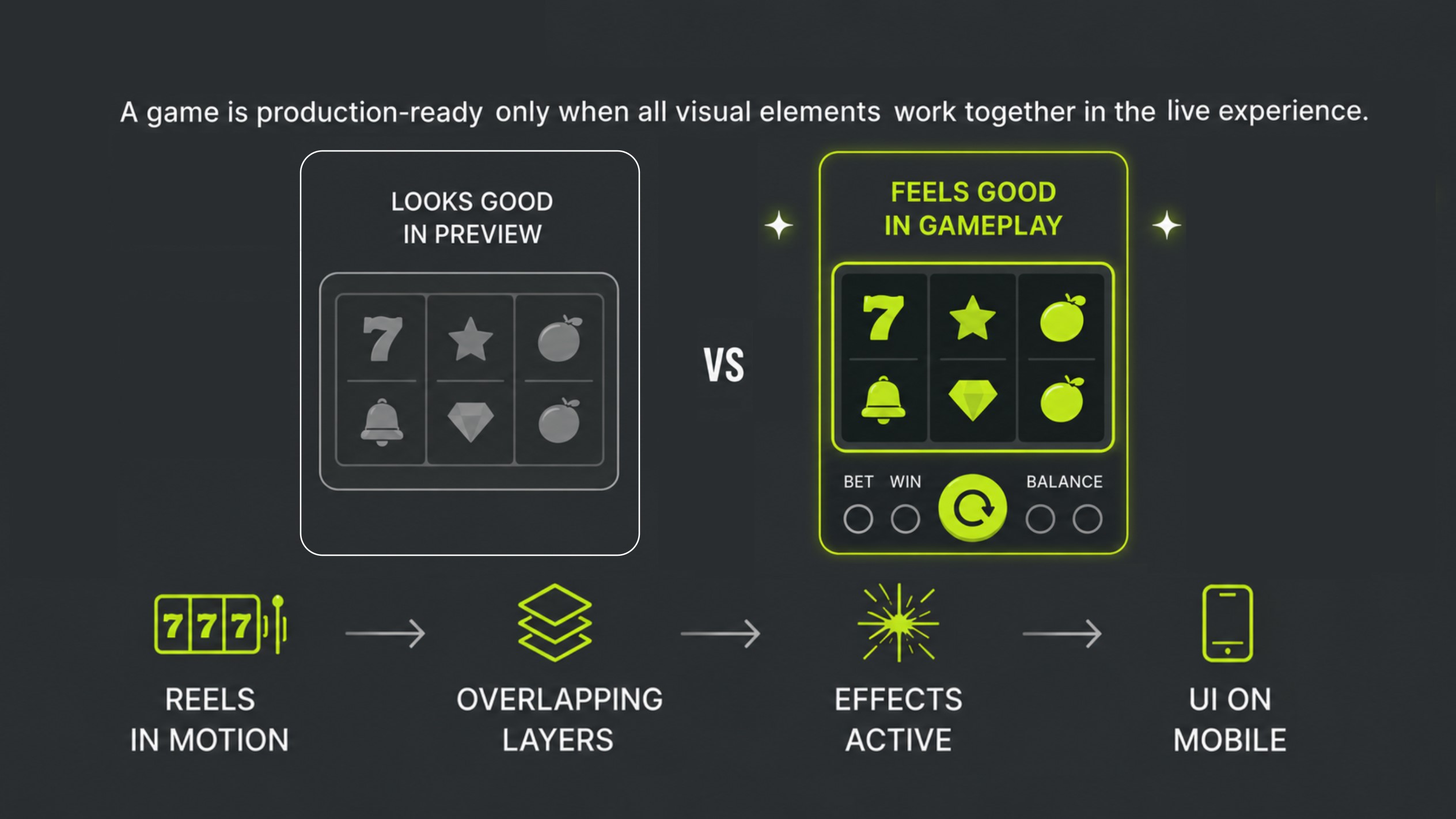
One of the biggest misconceptions in production is assuming that finished assets automatically mean a game is production-ready.
In reality, launch readiness depends on how all visual elements behave together inside the live experience.
An interface may look good in static previews but feel overloaded during gameplay. Symbols may appear clear in large format but lose readability on mobile devices. Animation may feel smooth individually but chaotic when combined across the full screen.
The closer the game gets to release, the more important these interactions become.
The Goal Is Not Perfection — It’s Stability
No slot game launches completely without compromise.
The purpose of a launch checklist is not to endlessly polish every asset. It is to ensure that the player experience feels stable, readable, and consistent across the entire game.
Strong production teams understand that the final stage is less about creating new visuals and more about reducing friction.
The question changes from:
“Does this asset look good?”
to:
“Does the entire game feel smooth to play?”
Readability Should Be Checked in Real Conditions
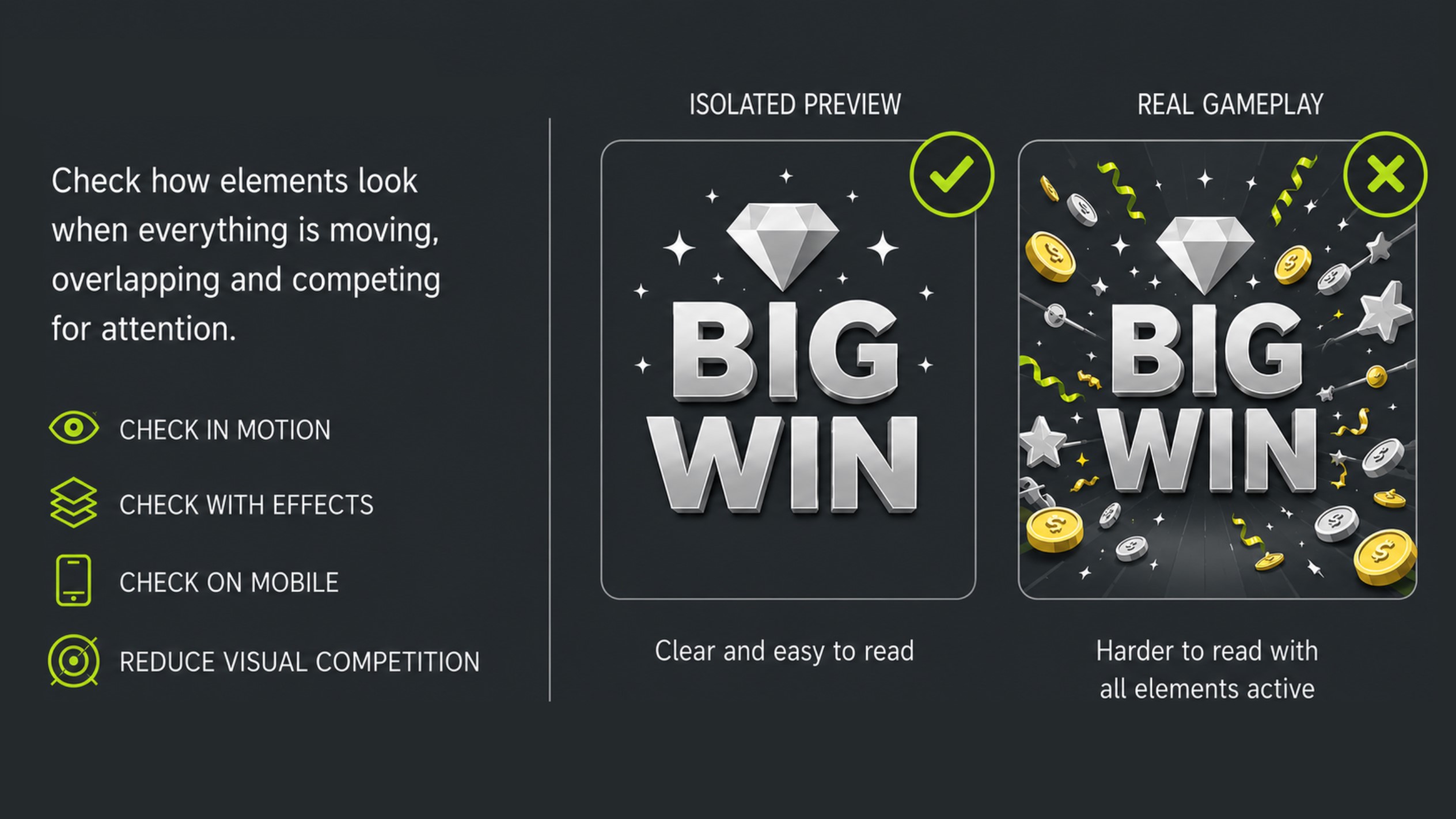
One of the most common late-stage problems appears when assets are tested in their actual gameplay environment for the first time.
Elements that looked clear during production may become difficult to read once:
- reels start moving
- animation layers overlap
- effects activate simultaneously
- UI compresses on mobile devices
This is why readability should never be validated only through isolated asset previews.
The game needs to be reviewed in motion, under realistic gameplay conditions.
In many cases, the issue is not visual quality itself, but visual competition. Too many focal points appear at the same time, reducing clarity and weakening the player’s ability to process information quickly.
UI Consistency Matters More Than Most Teams Expect
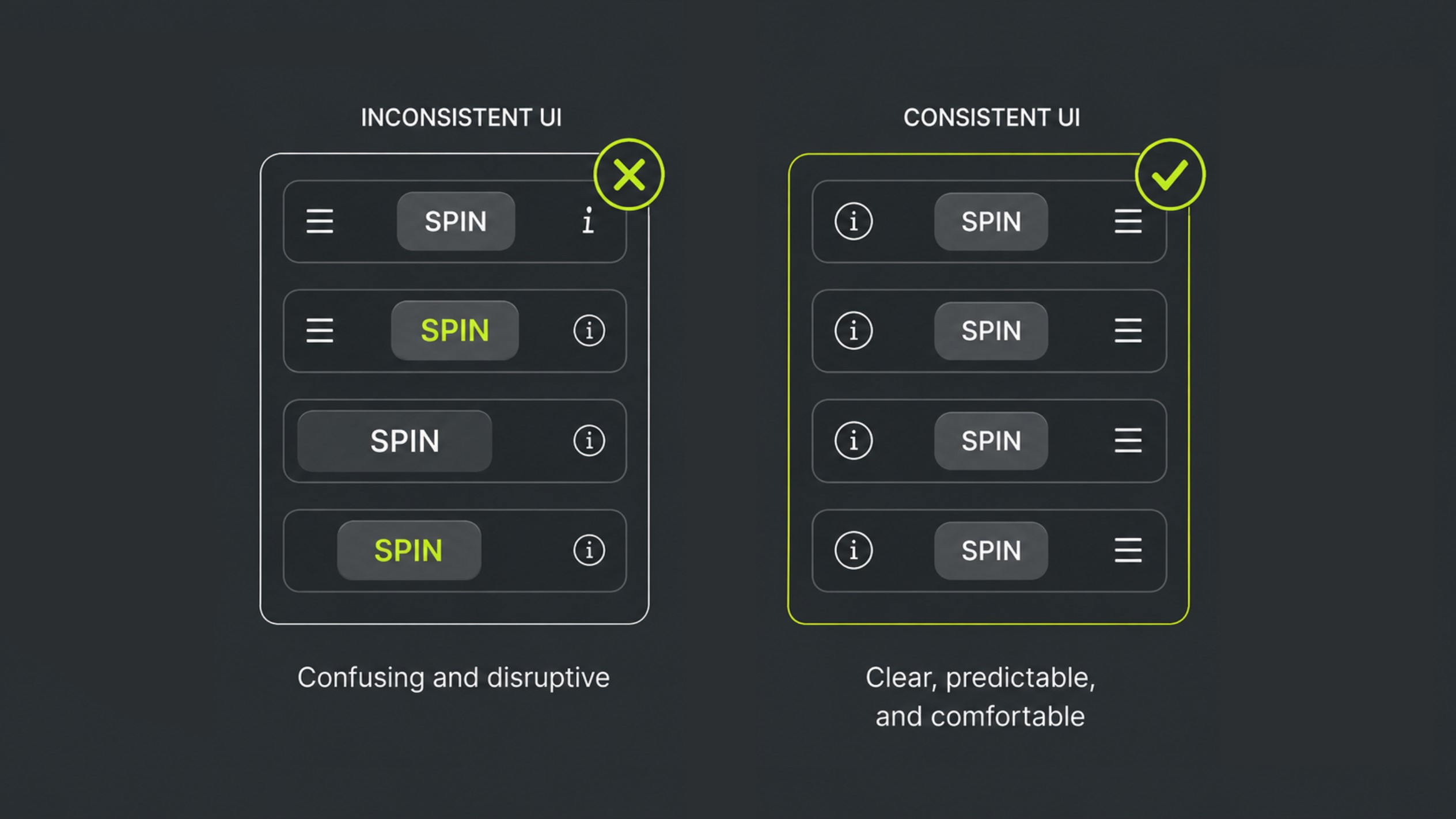
Players adapt to interface behavior extremely quickly.
Once they understand where information is located and how controls behave, they begin interacting almost automatically. Small inconsistencies interrupt this flow immediately.
Buttons shifting position between states, inconsistent spacing, unclear win displays, or unstable visual hierarchy can make the game feel less polished even if the player cannot consciously explain why.
This is especially important during longer sessions, where small UX issues become more noticeable over time.
Strong launch reviews focus heavily on consistency because consistency reduces cognitive effort.
Animation Needs to Be Evaluated as a System
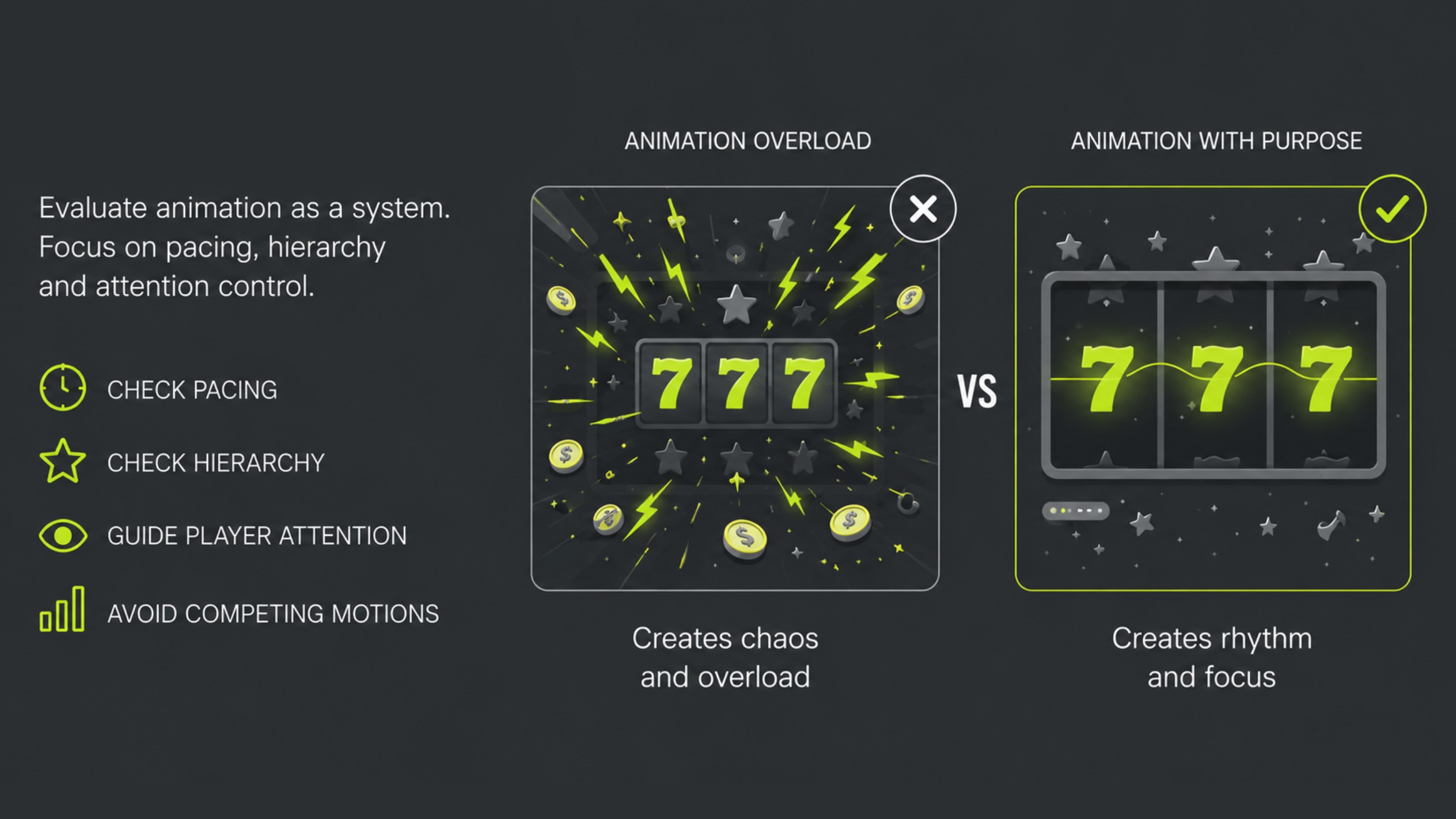
Animation is rarely experienced individually.
Players see multiple animated elements simultaneously:
- reels
- UI reactions
- FX
- symbol states
- background loops
An animation that feels strong on its own may become distracting once combined with everything else happening on screen.
This is why animation review should focus on pacing and hierarchy rather than just visual quality.
The key question is not:
“Does this animation look impressive?”
It is:
“Does this animation help guide player attention correctly?”
Strong slot games create rhythm. Weak ones create overload.
Mobile Validation Is No Longer Optional
Many slot games still look acceptable on desktop while feeling noticeably weaker on mobile devices.
The issue is not only screen size. Mobile changes the entire way players process visual information. Sessions are faster, focus shifts more aggressively, and interfaces compete for attention in a much smaller space.
Elements that feel balanced on desktop can quickly become crowded on mobile.
This is why launch validation should always include:
- readability at reduced scale
- touch interaction comfort
- UI spacing
- contrast visibility
- animation intensity on smaller screens
Mobile optimization is no longer a secondary pass. It is part of core release quality.
Technical Readiness Directly Affects Visual Quality
Visual quality is not only determined by art direction.
Technical execution plays a major role in how polished the game actually feels during gameplay.
Late-stage issues often include:
- texture compression artifacts
- animation performance drops
- incorrect scaling
- inconsistent exports
- loading problems
Even strong artwork can lose impact if technical implementation introduces instability.
This is why production-ready slot art must be reviewed both visually and technically before launch.
Audio-Visual Synchronization Matters More Than Expected
One area many teams underestimate is synchronization between animation and sound.
Players react emotionally to timing.
Even small mismatches between:
- win effects
- reel stops
- anticipation moments
- reward feedback
can make the experience feel weaker.
Good synchronization makes interactions feel responsive and satisfying. Poor synchronization creates subtle friction, even when players do not consciously notice it.
The Final Question: Does the Game Feel Cohesive?
At launch stage, individual assets matter less than the overall experience.
Players do not separate:
- UI
- symbols
- animation
- sound
- gameplay feedback
They experience all of it as one system.
This is why the final review should focus on cohesion.
Does the game feel visually stable?
Does attention flow naturally?
Does the reward feedback feel satisfying?
Does anything create confusion or hesitation?
These questions are often more valuable than reviewing isolated assets one by one.
What Strong Production Teams Usually Check Before Launch
Experienced teams tend to validate the same critical areas before release:
- symbol readability during gameplay
- UI clarity across resolutions
- animation pacing and hierarchy
- mobile usability
- visual consistency between features
- performance during heavy effects
- alignment between sound and animation
- clarity of reward feedback
Interestingly, most launch issues are not dramatic failures. They are accumulations of small inconsistencies that reduce overall polish.
Why Launch Validation Impacts Retention
Players form impressions extremely quickly.
If the interface feels confusing, if visuals feel unstable, or if feedback lacks clarity, players often disengage before deeper retention systems have time to work.
This means launch readiness directly affects:
- first-session quality
- perceived polish
- trust in the product
- overall engagement
In modern iGaming, polish itself becomes a competitive advantage.
Conclusion
A slot game art checklist is not just a production formality.
It is a way to evaluate whether the full player experience feels clear, cohesive, and stable before launch.
The strongest slot games are not necessarily the ones with the most complex visuals. They are the ones where every visual system works together smoothly under real gameplay conditions.
Because before players evaluate features, RTP, or mechanics, they react to how the game feels.
And that feeling is shaped by the quality of the final experience.


.svg)


