






Delays Often Start Before Production Begins
Many teams assume delays happen during production.
In reality, they often begin much earlier.
A vague concept, incomplete brief, or unclear scope can create uncertainty that follows the project for months. Teams move forward without fully aligned expectations, and critical decisions get postponed until later stages.
This creates a chain reaction.
Questions that should have been answered at the start eventually need answers during production, when changes become significantly more expensive.
The earlier clarity is established, the more stable the timeline becomes.
Poor Briefing Creates Expensive Revisions
One of the most common causes of production delays is an incomplete project brief.
At first, this may not seem like a serious issue. The team feels they understand the vision well enough to start.
However, as assets are produced, different interpretations begin to emerge.
The art team imagines one direction. Product managers expect another. Developers make assumptions based on technical constraints.
The result is additional review cycles and rework.
Every revision adds time. And when revisions affect multiple assets, the impact grows quickly.
This is why strong briefing is one of the most cost-effective investments a studio can make.
Scope Expansion Happens Gradually
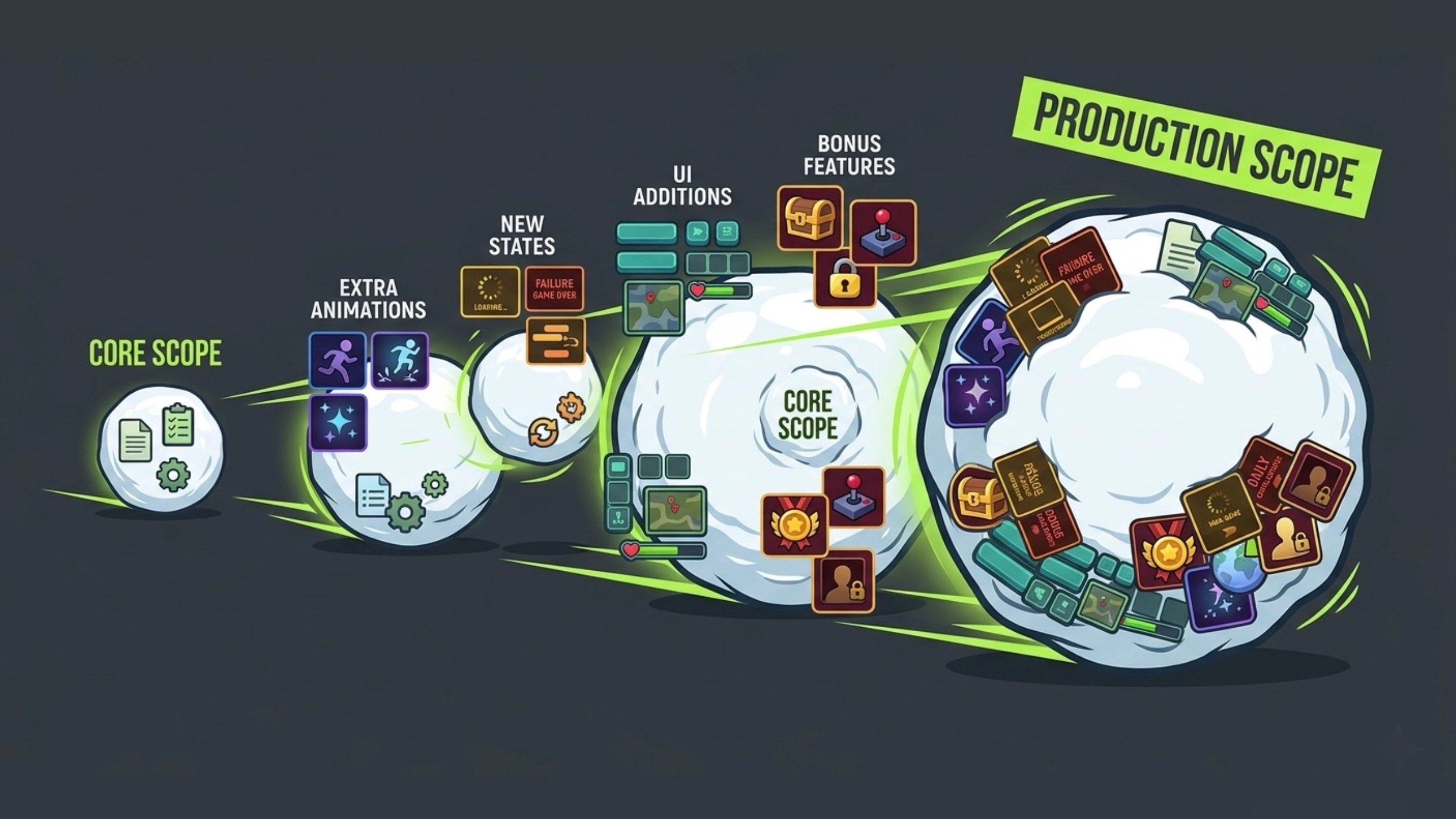
Very few projects fail because someone suddenly doubles the scope.
More often, scope expands through dozens of small decisions.
A bonus feature gets added. New symbol states are requested. Additional animations seem necessary. UI behavior evolves. Marketing requirements appear late in production.
Individually, none of these changes feel significant.
Collectively, they can add weeks to a schedule.
This is often referred to as scope creep, but the underlying issue is usually not the changes themselves. It is the lack of a process for evaluating how those changes affect timelines and budgets.
Animation Is Frequently Underestimated
Many teams estimate static art accurately.
Animation is another story.
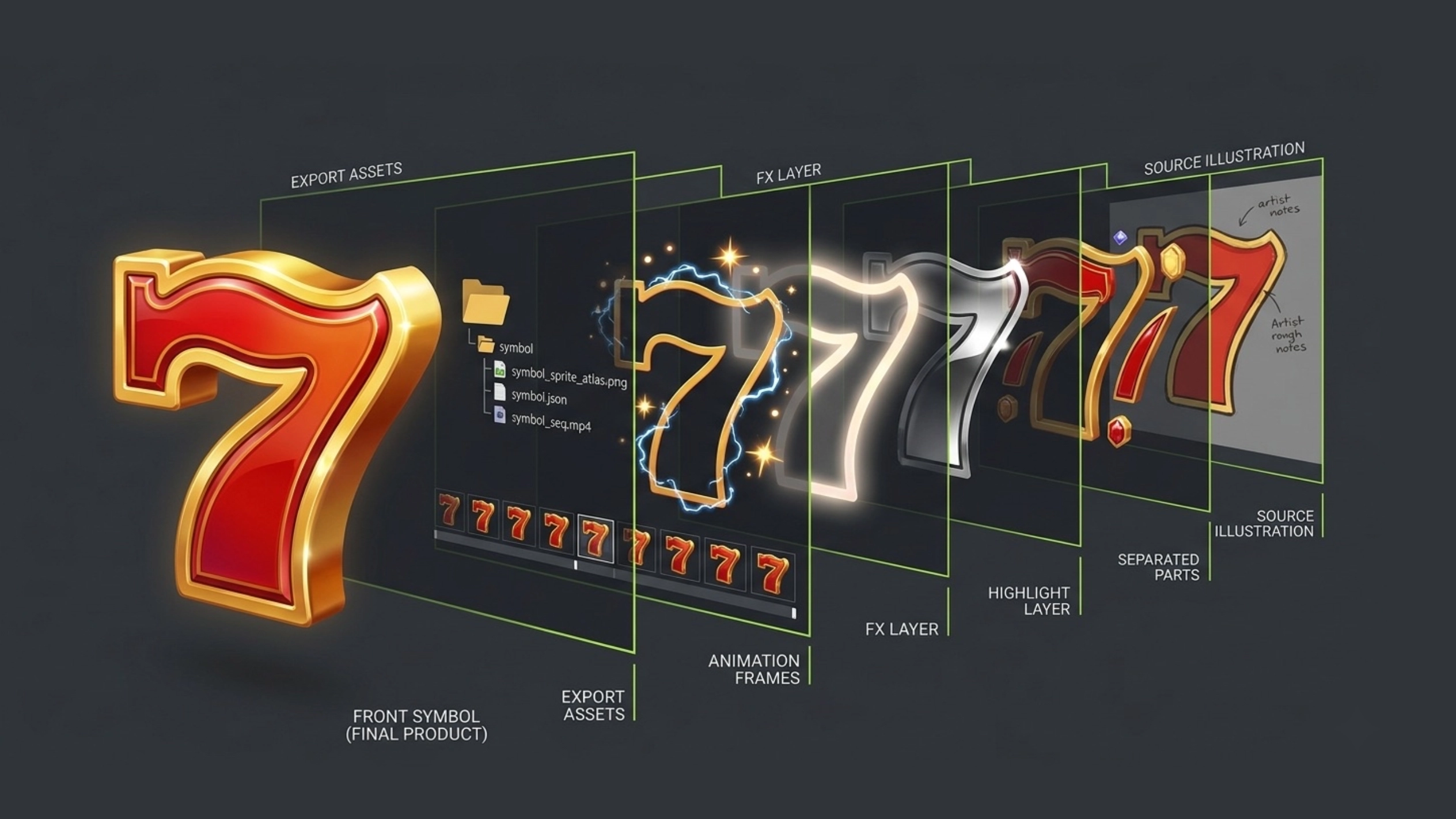
A symbol that takes one day to illustrate may require additional preparation, layering, rigging, and animation work before it is production-ready.
Animation also introduces dependencies.
Assets need to be structured correctly. Technical limitations need to be considered. Timing must align with gameplay events.
When animation planning is delayed until later stages, rework becomes almost inevitable.
This is one reason why animation frequently becomes a production bottleneck.
Technical Constraints Appear Too Late
Another common source of delays occurs when art and technical implementation evolve separately.
The art team creates visually strong assets, but integration reveals problems:
- file sizes are too large
- animations are too heavy
- layouts don't adapt properly to mobile devices
- performance issues appear during gameplay
At that point, assets need adjustment.
The earlier technical requirements are integrated into the creative process, the fewer surprises emerge later.
Too Many Decision-Makers Slow Everything Down
Feedback is essential.
Too much feedback can become a problem.
Projects often slow down when approvals require input from too many stakeholders. Every review cycle introduces additional opinions, new requests, and competing priorities.
Sometimes the issue isn't disagreement.
It's simply the time required to gather responses and make decisions.
The most efficient production pipelines establish clear approval ownership early and avoid unnecessary review layers.
Inconsistent Art Direction Creates Rework
Without strong art direction, teams often spend excessive time refining assets that should have been aligned much earlier.
Artists create work based on one interpretation of the project. Stakeholders envision something different. Feedback becomes subjective rather than strategic.
As a result, revisions multiply.
Strong art direction reduces this uncertainty by creating clear visual standards before large-scale production begins.
It doesn't eliminate feedback.
It makes feedback more efficient.
Mobile Requirements Are Often Treated as a Final Step
Many projects are still designed primarily for desktop and adapted to mobile later.
This approach frequently creates delays.
Elements that work well on large screens may become difficult to read on smaller devices. UI spacing changes. Animation intensity feels different. Touch interaction requires adjustments.
When mobile optimization becomes a late-stage task, the project often requires additional iterations that could have been avoided through mobile-first planning.
Communication Problems Compound Quickly
Production pipelines rely on communication.
When information moves slowly between teams, delays become difficult to avoid.
A developer waits for updated assets. Artists wait for technical feedback. Producers wait for approvals.
Each individual delay may seem minor.
Combined across a project, they create substantial schedule drift.
This is why strong communication systems are often more valuable than additional production resources.
The Cost of "We'll Fix It Later"
One of the most expensive phrases in production is:
"We'll fix it later."
Later usually means:
- during animation
- during integration
- during QA
- shortly before launch
At that point, every change affects more systems and requires more coordination.
Problems are rarely cheaper to solve later.
In most cases, they become significantly more expensive.
How Successful Studios Reduce Delays

The studios that consistently hit deadlines tend to share several habits.
They define scope clearly before production starts.
They align on visual direction early.
They plan animation from the beginning rather than treating it as a separate phase.
They involve technical stakeholders throughout the process.
Most importantly, they recognize that preventing delays is easier than recovering from them.
Production Stability Is a Competitive Advantage
In modern iGaming, speed matters.
Studios that can reliably deliver projects on time gain a significant advantage over teams that constantly fight schedule problems.
Reliable production improves:
- time-to-market
- portfolio growth
- forecasting accuracy
- team morale
- client relationships
This is why production efficiency should be viewed as a strategic capability rather than a purely operational concern.
Conclusion
Most slot game production delays are not caused by major failures.
They come from unclear scope, incomplete planning, underestimated animation, technical surprises, and delayed decision-making.
The good news is that many of these issues are preventable.
With stronger briefing, earlier alignment, clearer processes, and better communication, studios can dramatically reduce production risk and deliver games more predictably.
Because the fastest projects are rarely the ones that work harder.
They're the ones that encounter fewer obstacles along the way.


.svg)


