






Separate Trust From Technical Detail
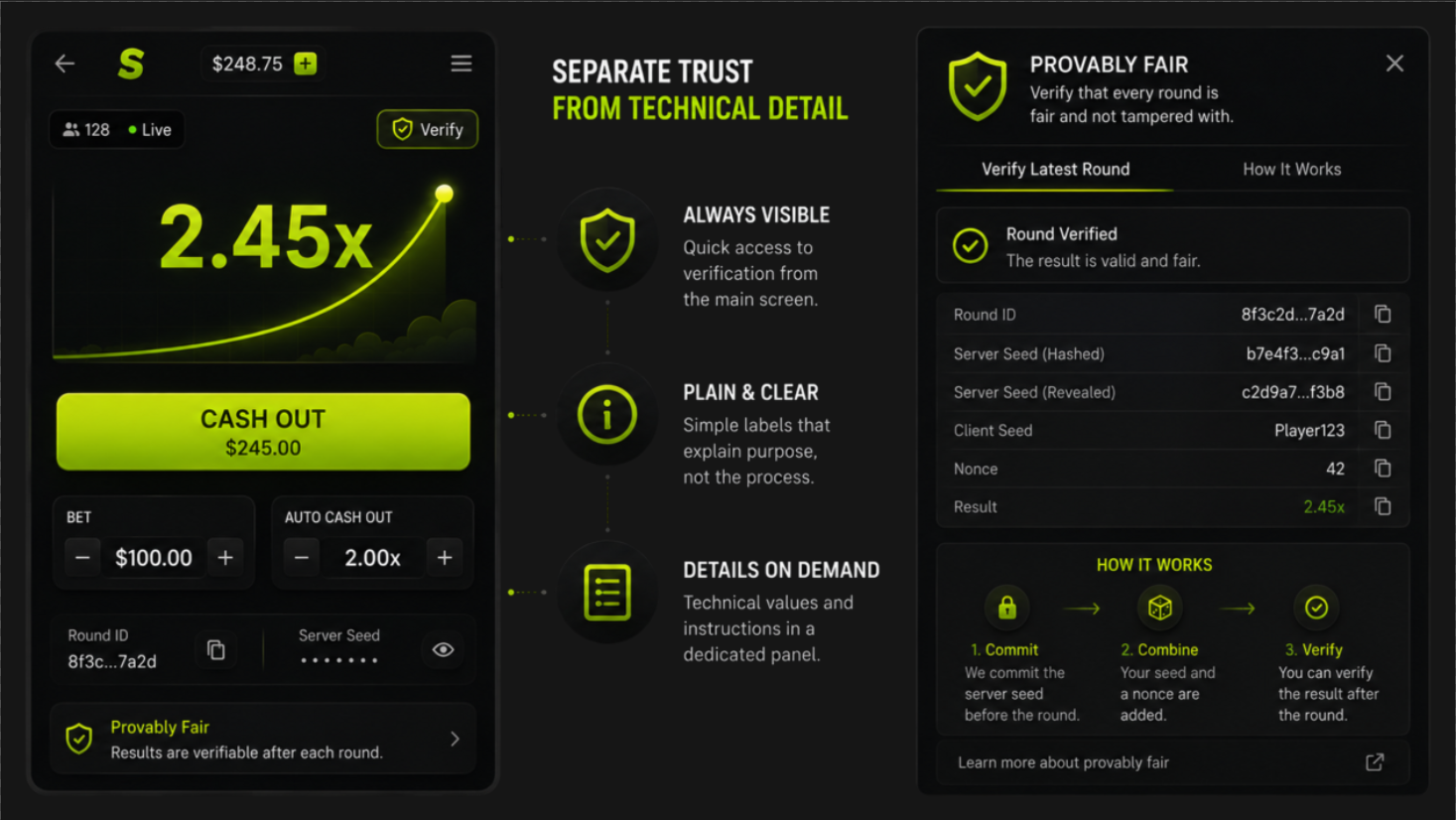
The main game screen should communicate status, not explain the entire algorithm. Show that verification is available, provide a stable access point and use plain labels. Move detailed values and instructions into a dedicated panel.
This progressive disclosure respects two audiences: players who want a fast round and players who want to inspect the process. Both paths should feel intentional rather than one being hidden behind support documentation.
Stake’s Provably Fair Overview describes a commitment scheme that combines operator and player inputs with cryptographic hashing. Product copy should translate that into purpose: inputs are committed before the result and can be checked afterward.
Map the Verification Journey
Design the journey as a sequence: locate fairness information, identify the current client and server seed state, rotate or update a seed when appropriate, choose a past round and verify the result.
At each step, state what the player is seeing and what action is safe. Long hashes need copy controls, truncation for display and full-value access. Dates, round IDs and game names should help the player connect a record to a real session.
A simple step indicator can reduce cognitive load, but avoid turning verification into a promotional carousel. The player came for evidence, so keep the interface direct.
Make Seed States Visually Distinct
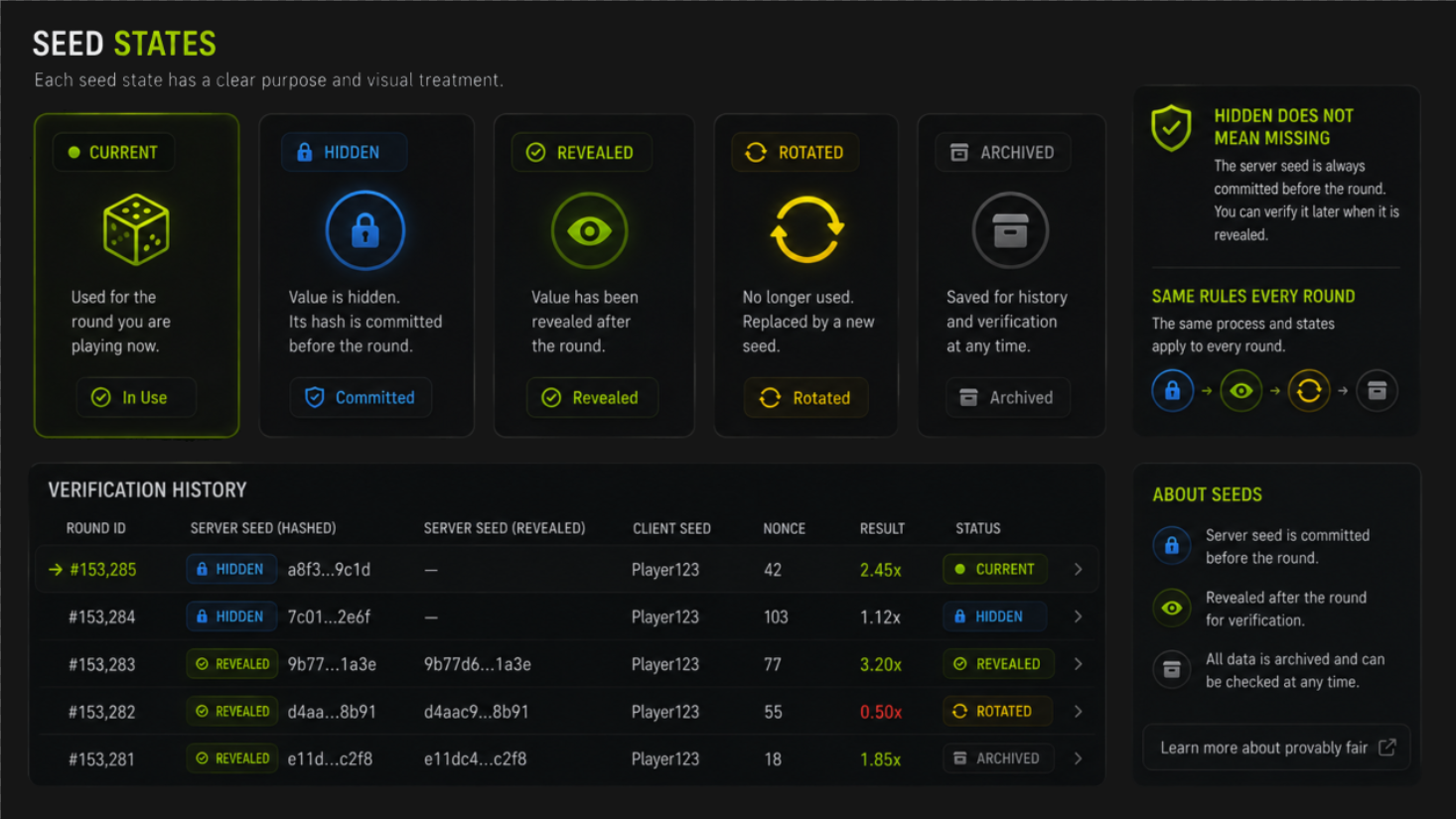
Current, hidden, revealed, rotated and archived are different states and should not share one visual treatment. Use clear labels, restrained color coding and explanatory microcopy.
Never imply that a hidden server seed is missing. Explain that its hashed commitment is visible before play and the underlying value is revealed later for verification. The distinction matters more than decorative security icons.
Use status chips consistently across the game and verification history. A repeated visual language helps the user understand that the same rules apply to each round.
Design Copy, Values and Controls for Accuracy
Technical values should use a readable monospaced style, wrap safely and remain selectable. Copy buttons need immediate confirmation such as “Copied,” but that message should not cover another field.
Avoid vague actions such as “Change” when the operation is actually “Rotate seed” or “Reveal and create new pair.” If an action affects future rounds but not past results, say so directly.
The clarity principles in Slot Game UI Design for Casino Games are especially important here: labels, hierarchy and feedback must carry meaning without relying on decoration.
Connect Verification to Round History
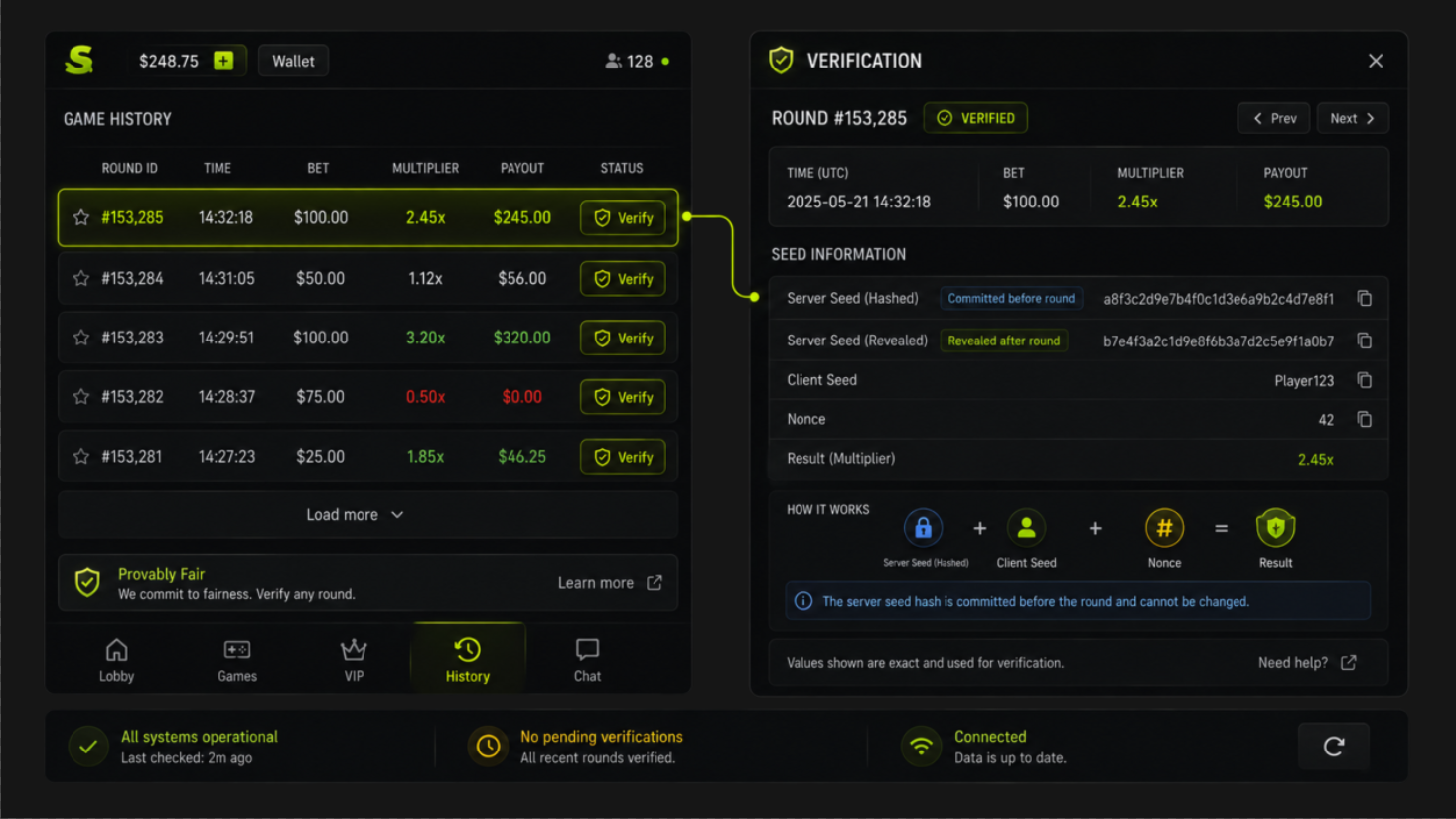
A verification tool becomes much more credible when it opens with the relevant round already selected. Add a fairness or verify action to each eligible history row and preserve the user’s context when they return.
Use the same outcome values, identifiers and timestamps in both views. Even a harmless formatting mismatch can create doubt. If values are rounded in the game interface, give access to the precision used in verification.
Empty, pending and failed-to-load states require careful wording. A network error must never resemble a failed fairness check.
Protect the Core Gameplay Hierarchy
A trust feature should be discoverable but not visually louder than the primary action. A small, persistent entry near game information or history is usually more useful than a large badge inside the play field.
During a round, keep fairness controls inactive if an action would interrupt or confuse the state. After the result, allow the player to move directly from outcome to evidence.
Review the scan behavior described in How Players Actually Read Slot Game Interfaces. The primary path should remain bet, action, result and next decision; verification is a deliberate secondary path.
Test for Comprehension, Not Recognition
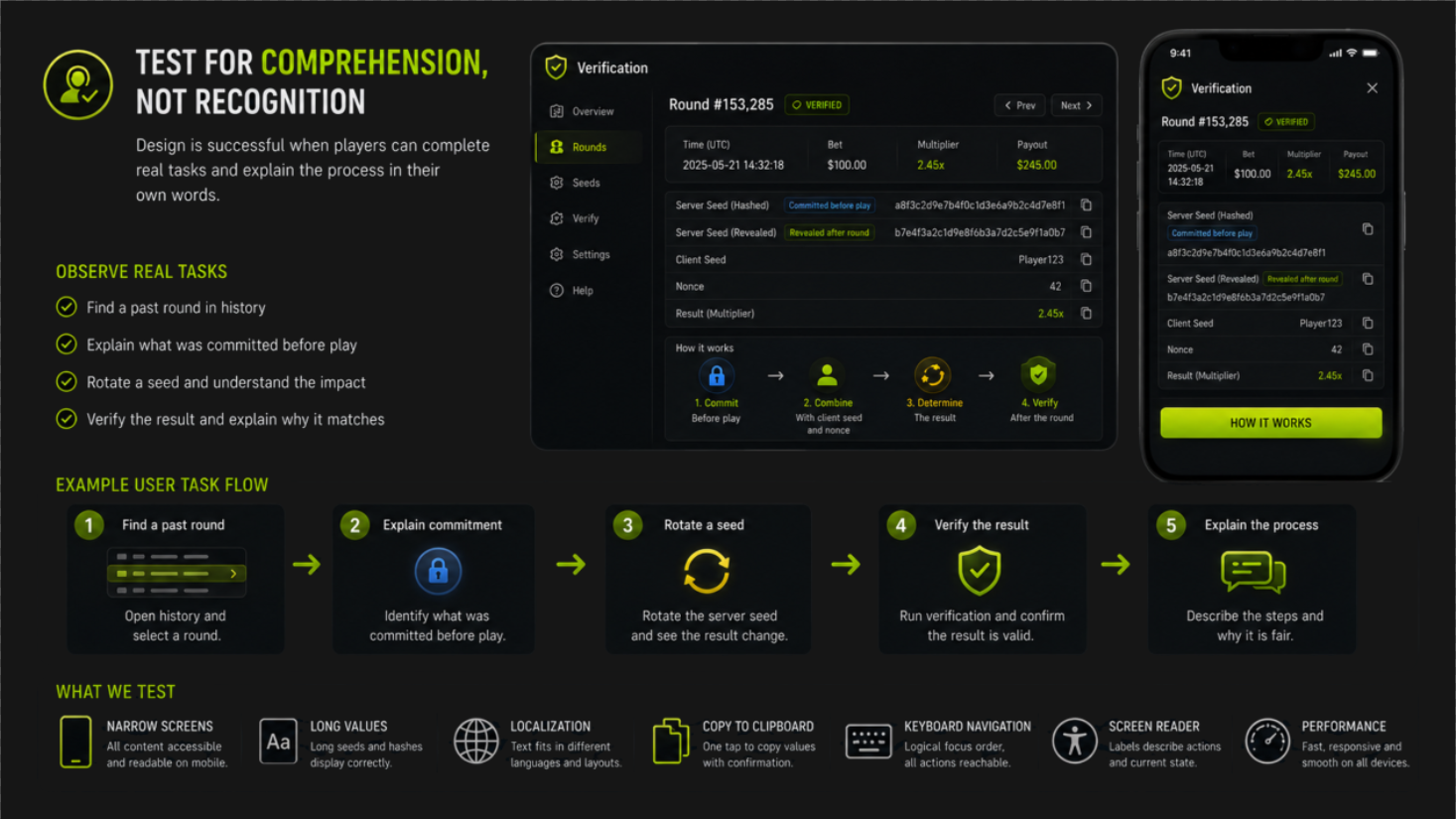
Do not ask testers whether the screen “looks secure.” Ask them to find a past round, explain what was committed before play, rotate a seed and verify a result. Observation reveals whether labels and steps actually work.
Include narrow screens, long seed values, localization, keyboard navigation and copy-to-clipboard behavior in QA. Verify that focus order and screen-reader labels describe the action rather than the icon.
Use the technical checks in Technical Requirements for Slot Game Graphics to keep the verification layer responsive and performant across HTML5 and mobile environments.


.svg)


