






Define What LiveOps Is Allowed to Change
Separate the product into immutable, flexible and campaign-specific layers. Core controls, outcome readability and regulated information should remain stable. Background accents, frames, selected effects and promotional surfaces can be flexible.
Write these boundaries into the style guide. A designer should know whether a holiday treatment can change button colors, symbol costumes, win effects or only decorative framing.
A controlled system protects familiarity. The framework in Slot Game Art Style Guide helps define which visual rules must survive every campaign.
Build a Seasonal Reskin Kit

Create replaceable slots for background overlays, border ornaments, icon accents, particles, loading art and lobby tiles. Use consistent anchor points and export dimensions so content can be swapped without layout changes.
Design the kit with a contrast budget. Snow, confetti, lights and animated decorations can easily reduce the visibility of values and controls. Establish exclusion zones around gameplay information.
Include a default fallback for every optional asset. If a campaign file fails to load, the game should return to the stable base presentation rather than display an empty layer.
Distinguish Events From Cosmetic Themes
A cosmetic theme changes atmosphere. An event changes player context by adding a goal, schedule, collection or reward layer. The interface should make that difference explicit.
For events, create a compact visual grammar for progress, completion, expiration and eligibility. Reuse it across the lobby, game and results so the player does not need to relearn the campaign at each step.
Do not imply a gameplay change when only the visuals have changed. Accurate framing protects trust and reduces support questions.
Design Tournament Information as a System
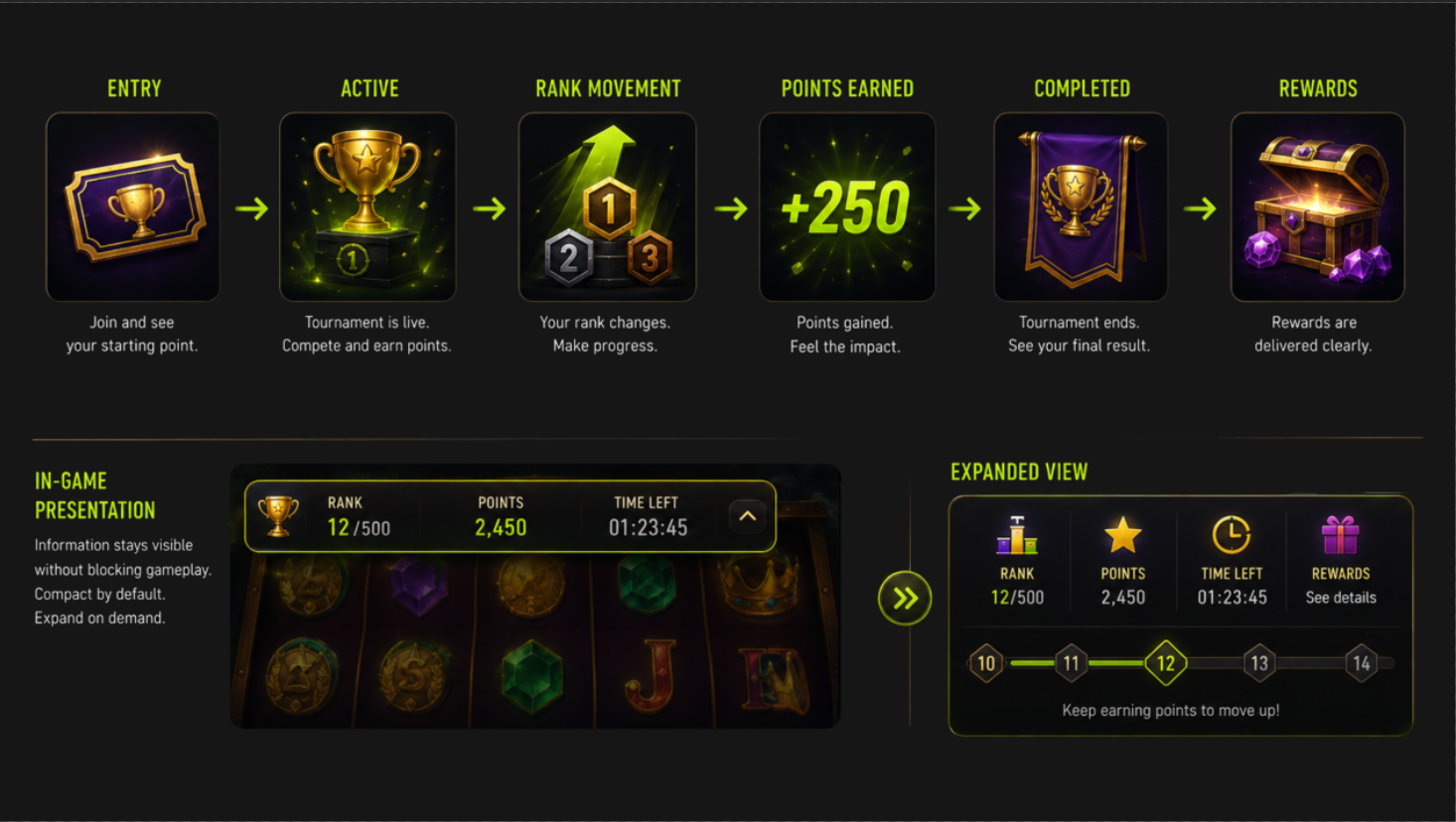
Tournament art needs more than a leaderboard skin. Plan entry state, active state, rank movement, points earned, time remaining, completed state and reward communication.
Rank and points should remain readable during gameplay without covering essential controls. Use a compact dock or collapsible panel, then reserve expanded presentation for intentional pauses.
Animate meaningful changes - such as a rank update - rather than keeping the entire widget in motion. Persistent animation becomes background noise and can compete with game outcomes.
Create a Calendar That Respects Production Reality
Map campaigns by concept approval, art production, integration, localization, QA, deployment and removal. The removal date matters: expired content can create broken offers and inconsistent branding.
Use reusable campaign families rather than inventing a new visual system every month. A spring, summer, autumn and winter framework can support smaller variations while retaining predictable scope.
The modular approach in How to Build a Scalable Slot Game Art System allows teams to estimate reuse honestly and avoid treating every reskin as a full redesign.
Control Technical Weight
LiveOps assets are additional payload. Set file-size, texture and animation budgets before campaign production. Prefer shared atlases, lightweight overlays and code-driven transitions where they fit the art direction.
Preload only what the first view needs. Optional event detail can load after the core game is ready. A seasonal campaign should never make the base experience feel slower.
Test weaker mobile devices and unstable connections. Verify the fallback state when one or more event assets are unavailable.
QA the Full Lifecycle
Test before, during and after the scheduled event window. Confirm correct assets, copy, time zones, progress states, responsive layouts and return to the default theme.
Review every outcome tier because campaign effects can obscure existing animations. Include localization expansion and right-to-left layouts where relevant.
Finish with Slot Game Art Checklist Before Launch, adding campaign activation, expiration and fallback checks to the standard visual QA list.
Conclusion
Effective LiveOps art is a system, not a sequence of decorative emergencies. Define stable and replaceable layers, build reusable campaign slots, design event states completely and test the transition back to the base game. Freshness creates value only when clarity and performance remain intact.


.svg)


