





Why Technical Requirements Matter in Slot Game Art
In modern iGaming development, art must function within:
- browser-based HTML5 environments
- mobile performance limitations
- game engine constraints (Unity, Cocos, proprietary engines)
- strict memory and loading budgets
Ignoring these factors can lead to:
- performance drops
- slow loading times
- visual bugs
- rework during integration
Professional slot art is not just visually strong — it is production-ready.
Core Technical Requirements for Slot Game Graphics
1. Resolution & Aspect Ratios
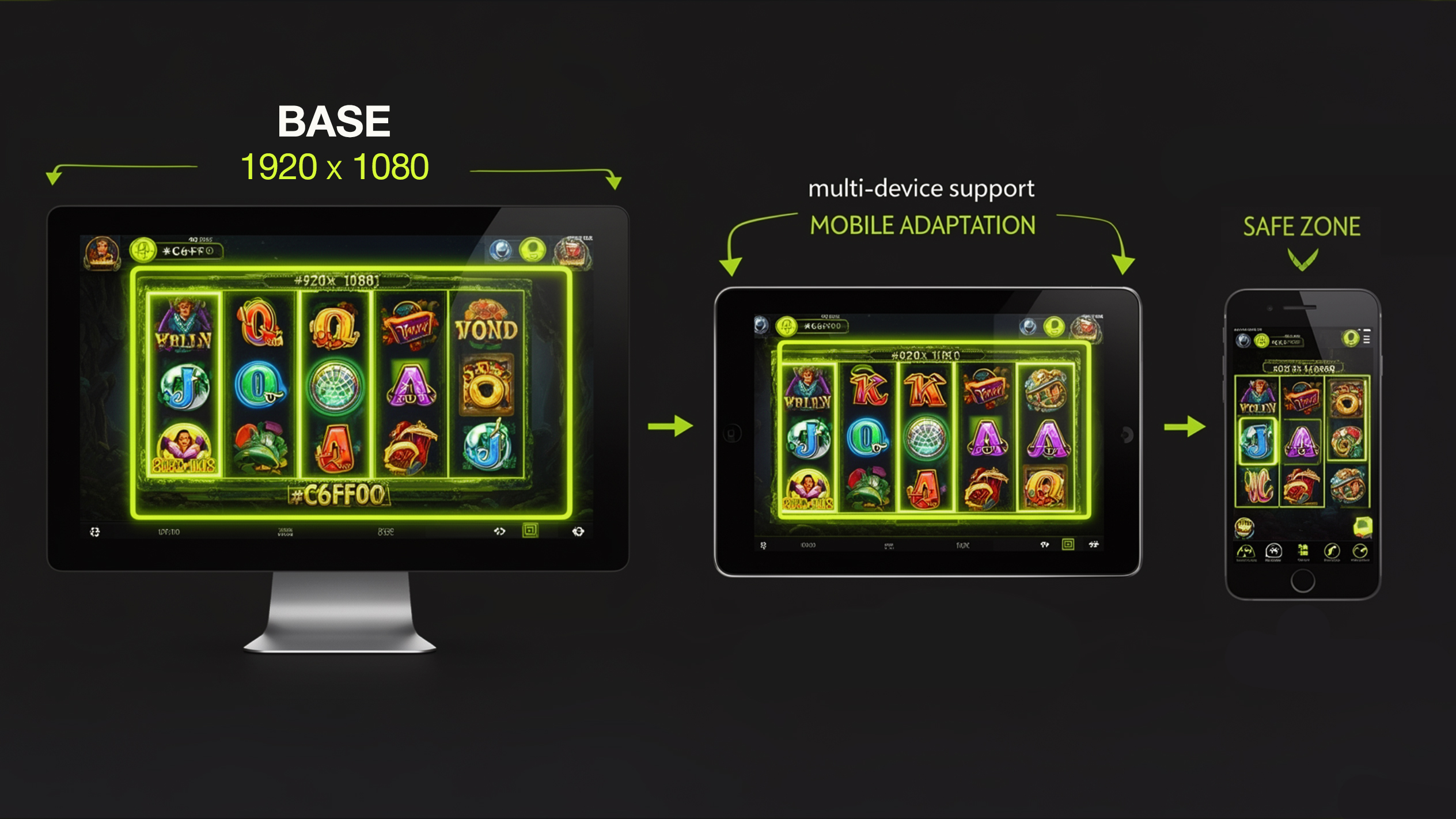
Slot games must support multiple devices and screen sizes.
Common Standards:
- Base resolution: 1920×1080 (Full HD)
- Alternative: 2048×1152 or higher for scaling
- Mobile-first safe zones required
Best Practices:
- Design with flexible aspect ratios
- Keep critical elements within safe zones
- Avoid placing key visuals near edges
Related: Slot Game Background Design
2. Mobile Safe Zones
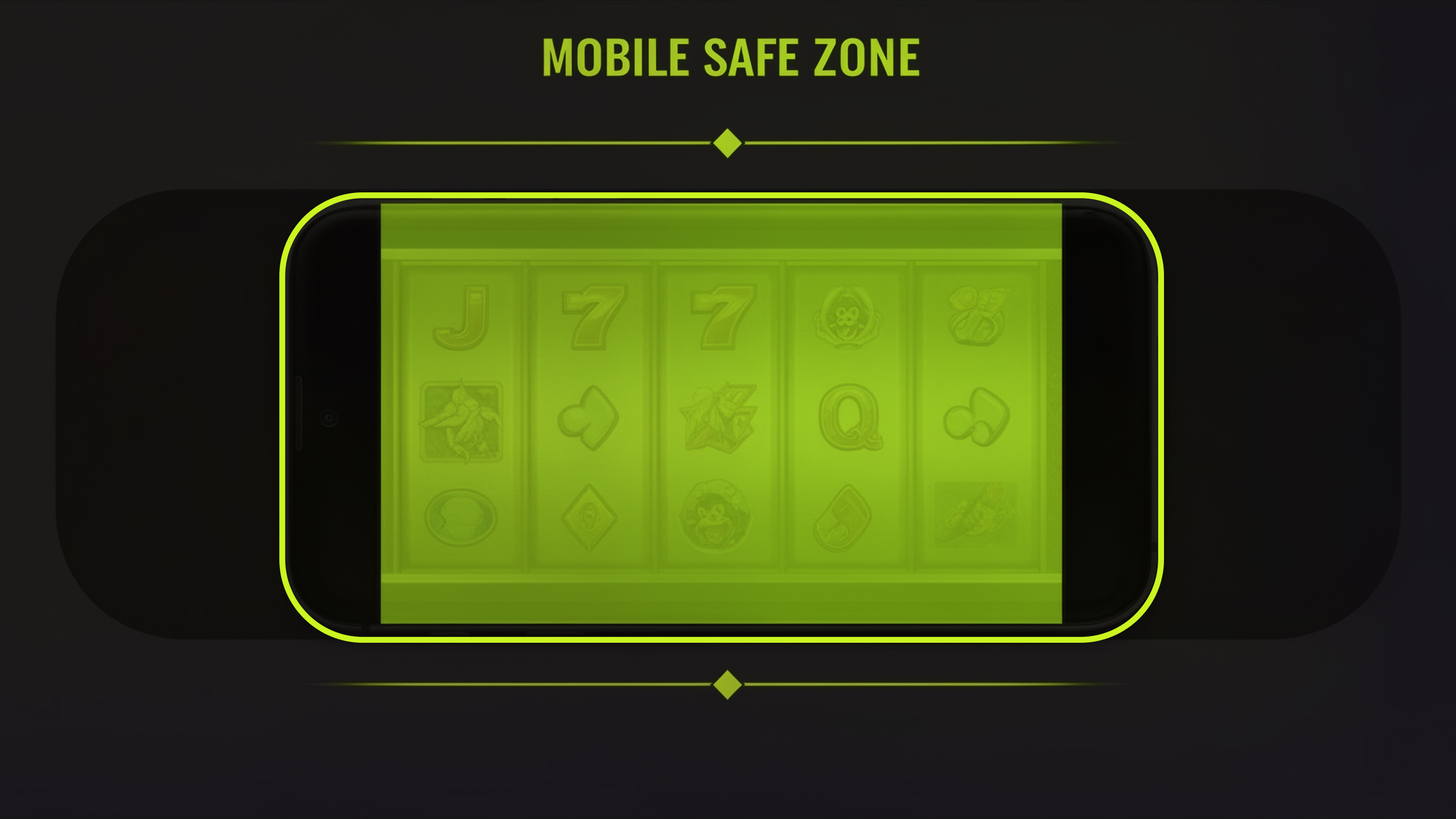
Mobile devices introduce UI overlays and screen cropping.
Requirements:
- Define safe zones for reels and UI
- Keep symbols and text within central areas
- Test layouts on multiple aspect ratios
Ignoring safe zones leads to broken layouts on real devices.
3. File Formats for Slot Game Art
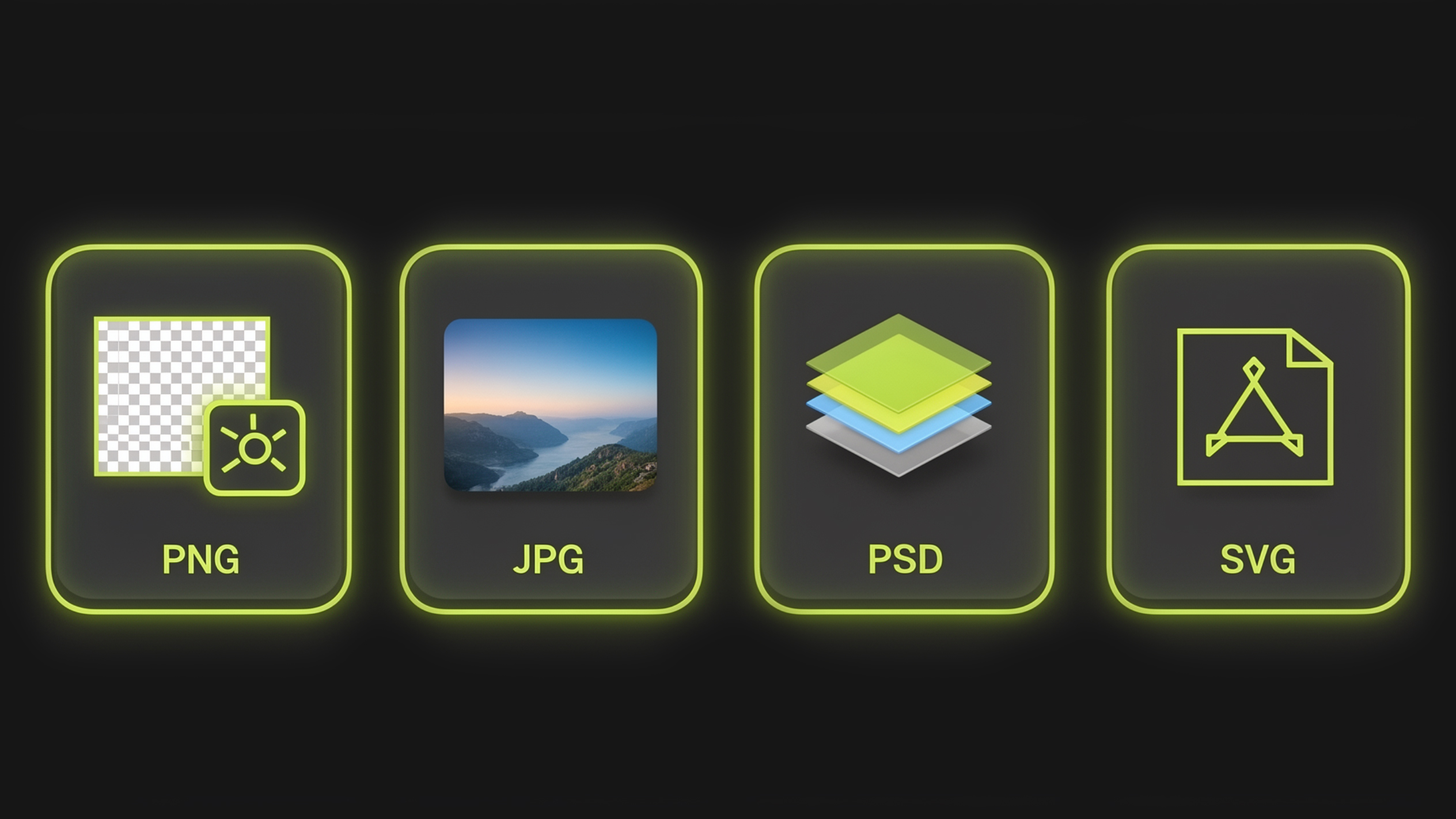
Different asset types require specific formats.
Common Formats:
- PNG → symbols, UI elements (with transparency)
- JPEG → backgrounds (when transparency is not needed)
- PSD → source files with layers
- SVG (sometimes) → UI elements in scalable systems
Best Practices:
- Keep source files organized
- Separate export files from working files
- Maintain consistent naming conventions
4. Sprite Sheets & Asset Atlases
In HTML5 slot games, performance depends heavily on how assets are packed.
Sprite Sheet Benefits:
- reduces draw calls
- improves performance
- speeds up rendering
Requirements:
- group related assets into atlases
- optimize texture sizes
- avoid unnecessary empty space
Related: Slot Game Animation Pipeline Explained
5. File Size & Memory Optimization
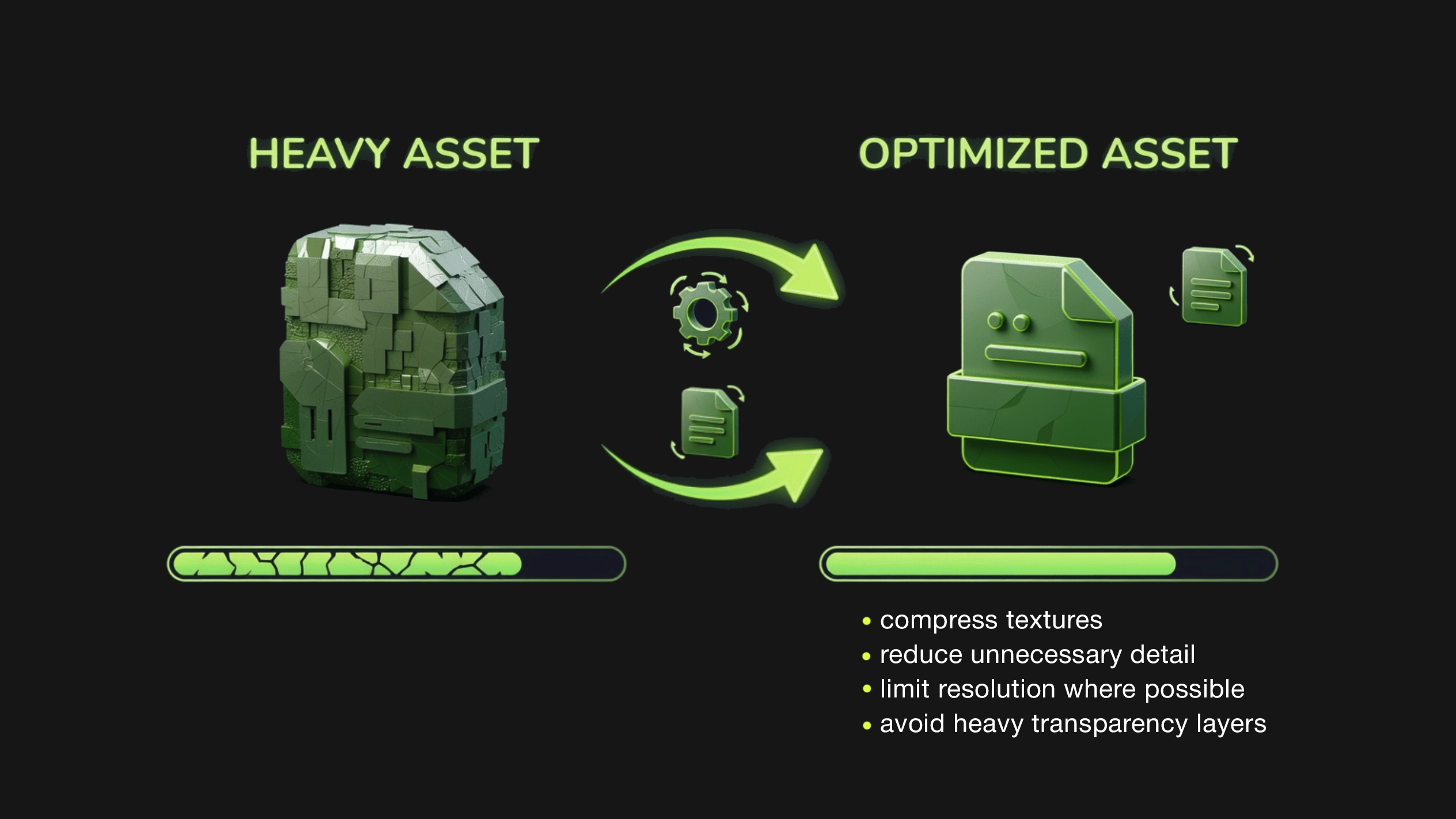
Mobile slot games must load quickly and run smoothly.
Typical Constraints:
- strict memory budgets
- fast initial load times
- minimal asset weight
Best Practices:
- compress textures
- reduce unnecessary detail
- limit resolution where possible
- avoid heavy transparency layers
Large assets are one of the most common causes of performance issues.
6. Layer Structure & Asset Preparation
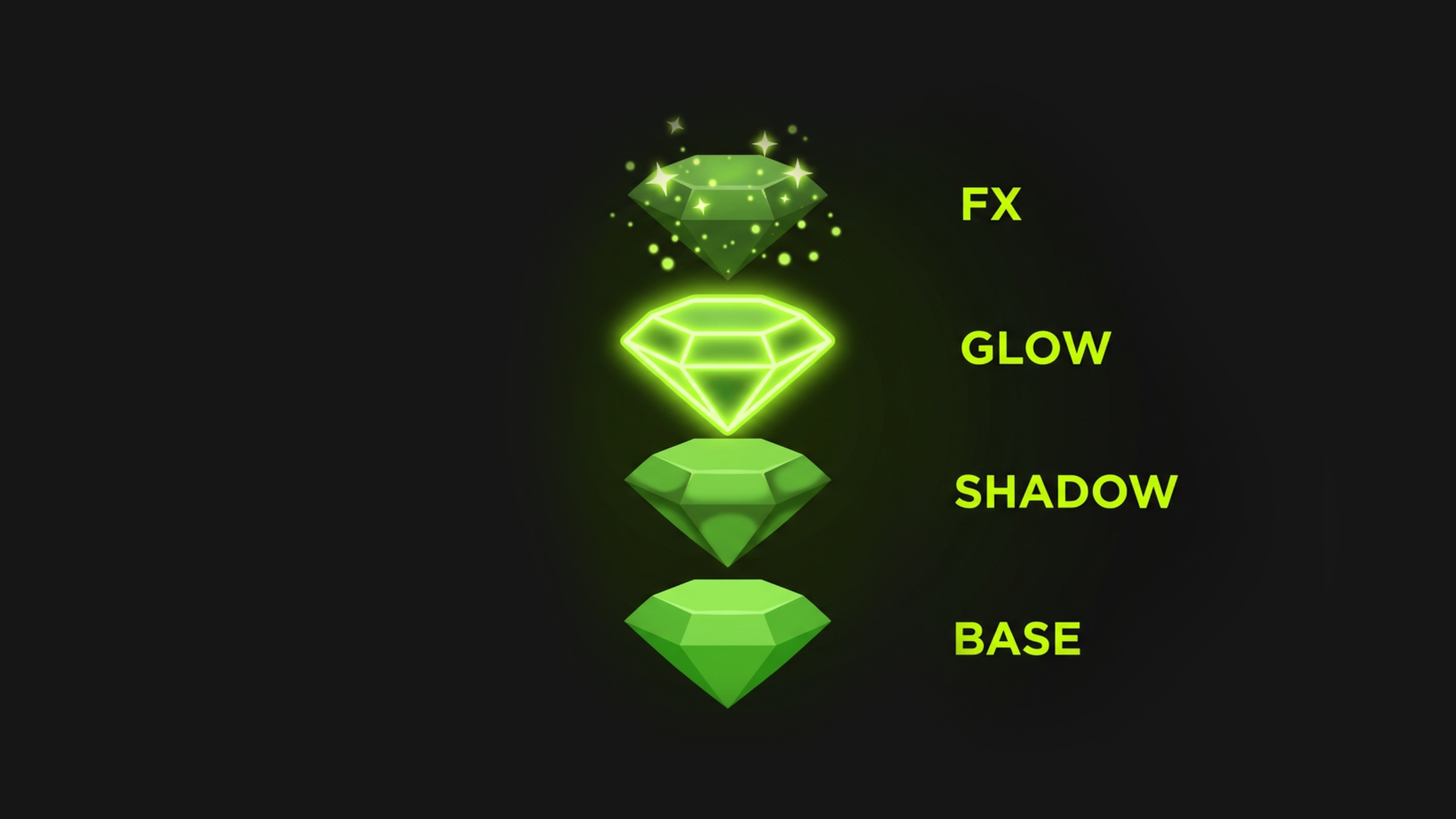
Well-prepared files are essential for animation and integration.
Requirements:
- separate layers for animation (glow, FX, highlights)
- avoid flattened assets when animation is needed
- keep clean grouping in PSD files
Naming Conventions:
- clear, consistent naming
- avoid generic names like “layer1”
- follow engine-specific naming rules
Poor file structure leads to rework and confusion.
7. Animation Constraints
Animation must be optimized for performance.
Key Considerations:
- limit frame count where possible
- optimize sprite sheet size
- avoid excessive particle effects
- ensure smooth performance on mobile
Common Formats:
- sprite sheet animation
- Spine (skeletal animation)
- engine-based animation
Animation should enhance gameplay — not overload it.
8. UI & Typography Requirements
UI elements must remain readable across devices.
Requirements:
- high contrast text
- scalable UI elements
- consistent spacing
- readable number formatting
Typography must be tested on small screens.
Related: Slot Game UI Design
9. Engine Compatibility

Different engines have different constraints.
Common Engines:
- HTML5 frameworks
- Unity
- Cocos
Requirements:
- compatible texture formats
- proper atlas structure
- animation system alignment
Art teams must understand the target engine before production begins.
10. Integration Testing
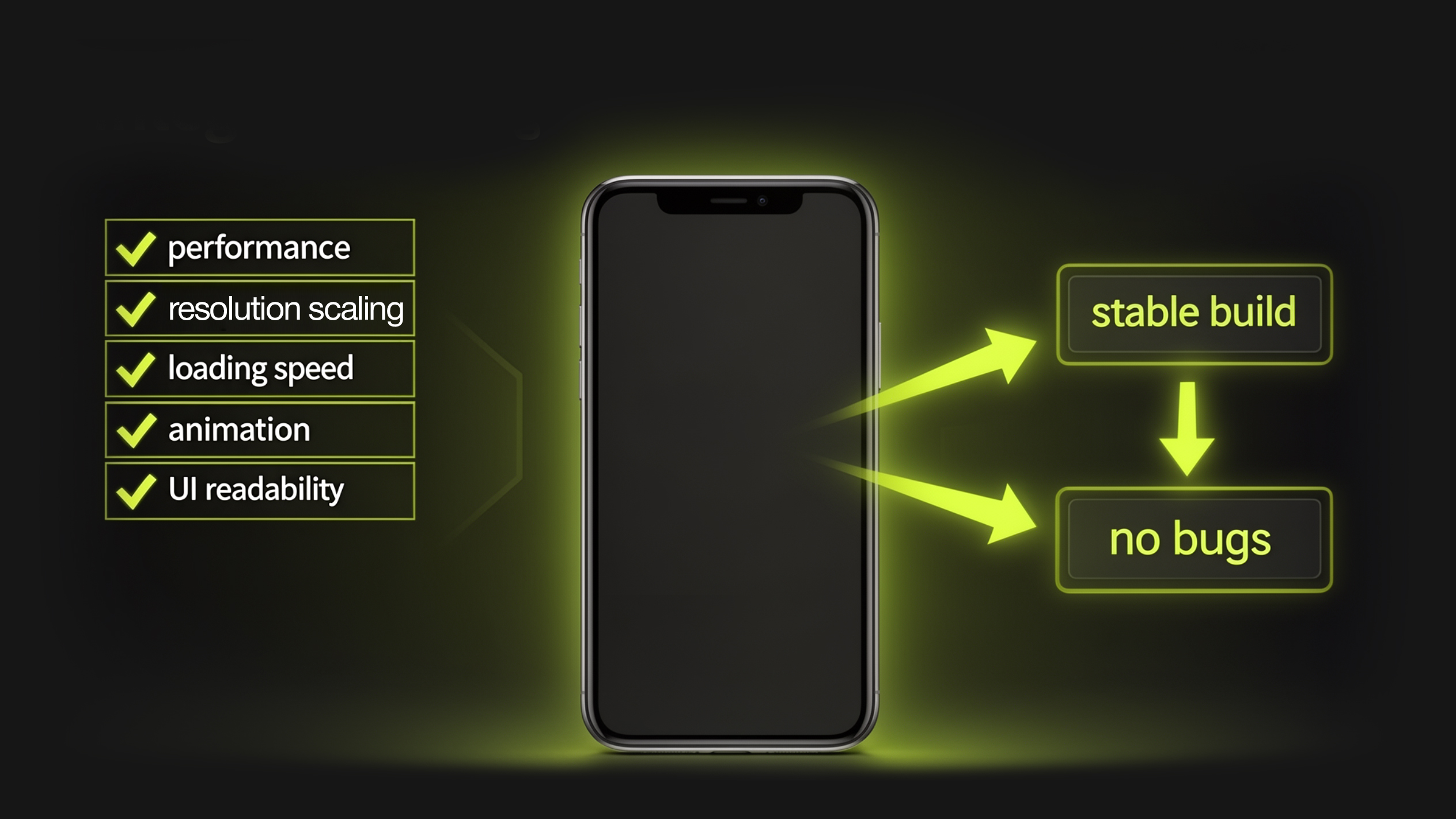
Technical validation must happen before final delivery.
Testing Includes:
- mobile performance
- loading speed
- animation timing
- UI readability
- resolution scaling
Many issues only appear during integration.
Common Technical Mistakes in Slot Game Art
❌ Oversized Textures
Leads to performance issues and long load times
❌ No Safe Zones
Breaks layouts on mobile
❌ Poor Layer Organization
Prevents animation and slows down integration
❌ Ignoring Engine Constraints
Causes compatibility issues
❌ Overuse of Effects
Heavy glow and particles reduce performance
How Technical Requirements Fit Into the Production Pipeline
Technical requirements should be defined early — not after art is completed.
They are typically documented in a Slot Game Graphics Technical Brief
This ensures that:
- artists know the constraints
- developers receive ready-to-use assets
- production runs smoothly
Why Technical-Ready Art Reduces Production Costs
When assets meet technical requirements from the start:
- fewer revisions are needed
- integration is faster
- QA issues are reduced
- production timelines are shorter
This directly impacts cost and delivery speed.
Related: How Much Does Slot Game Art Cost
Conclusion
Understanding the technical requirements for slot game graphics is essential for modern iGaming production.
High-quality slot art must:
- work across mobile devices
- meet performance budgets
- align with engine constraints
- support animation and UI systems
Studios that combine strong visual design with solid technical preparation produce games faster, with fewer issues, and better player experience.


.svg)


