




Why Slot Art Production Often Goes Wrong
Slot games require multiple interconnected systems:
- symbols
- UI
- background environments
- animation
- technical integration
When these systems are not aligned early, production becomes unpredictable.
The biggest issues usually come from:
- lack of documentation
- unclear scope
- weak communication
- ignoring technical constraints
1. Starting Without a Technical Brief
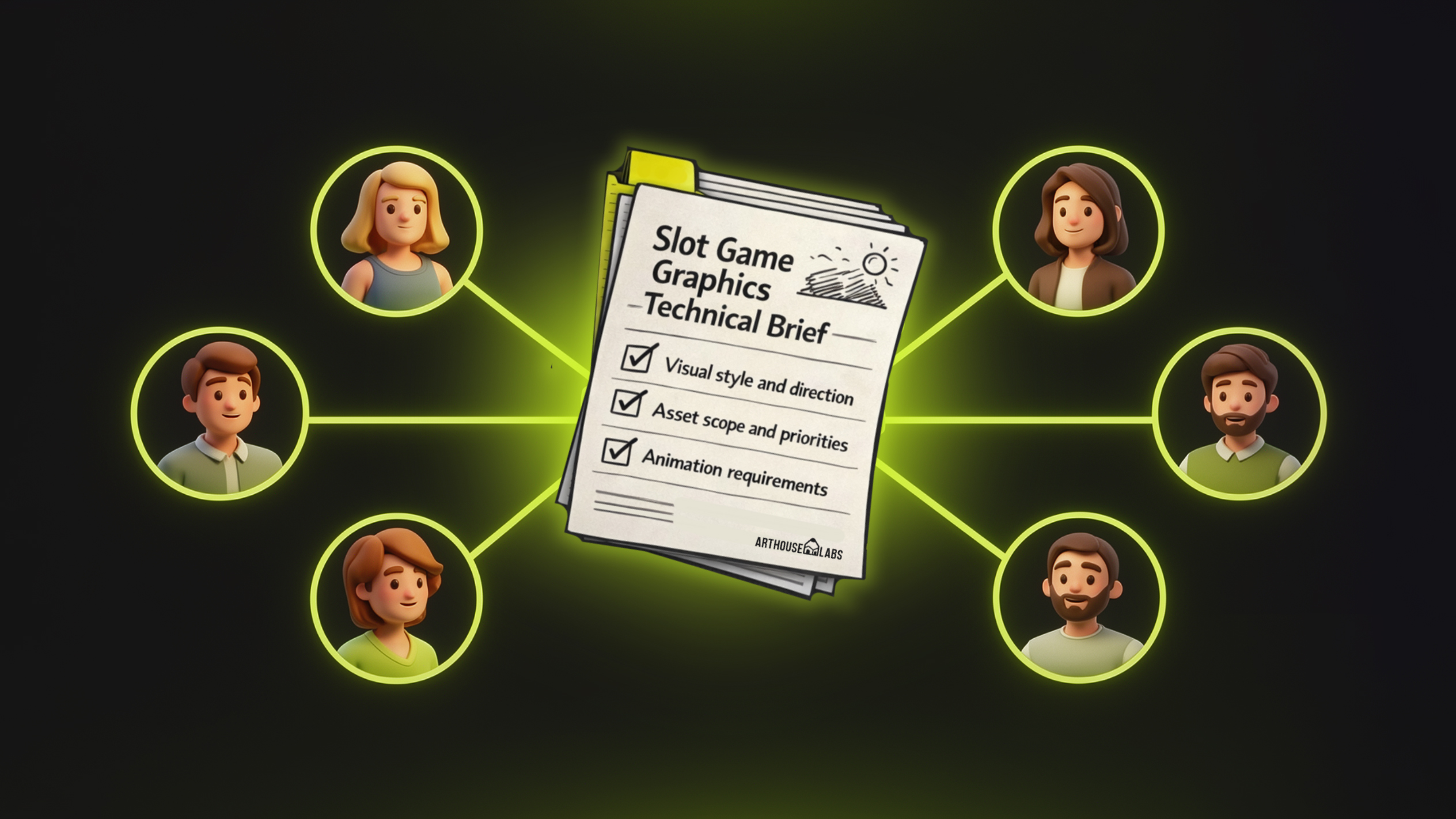
This is the most common and most expensive mistake.
Without a slot game graphics technical brief, teams don’t have:
- clear asset lists
- technical requirements
- animation scope
- resolution standards
As a result:
- artists guess
- developers adjust
- producers chase fixes
Related: Slot Game Graphics Technical Brief
How to avoid it:
Define a structured brief before production starts.
2. Weak Art Direction
Vague direction like:
- “make it premium”
- “make it more engaging”
leads to subjective feedback and multiple revisions.
Without clear direction:
- each artist interprets style differently
- visual consistency breaks
- approval cycles increase
Related: Slot Game Art Style Guide
How to avoid it:
Use a defined style guide with clear examples and rules.
3. Overcomplicating Slot Symbols
One of the most frequent design mistakes.
Problems include:
- too much detail
- weak silhouette
- poor contrast
- unclear hierarchy
This leads to:
- poor readability on mobile
- weak gameplay clarity
Related: Slot Game Symbol Design
How to avoid it:
Design for readability first, detail second.
4. Ignoring Mobile-First Design
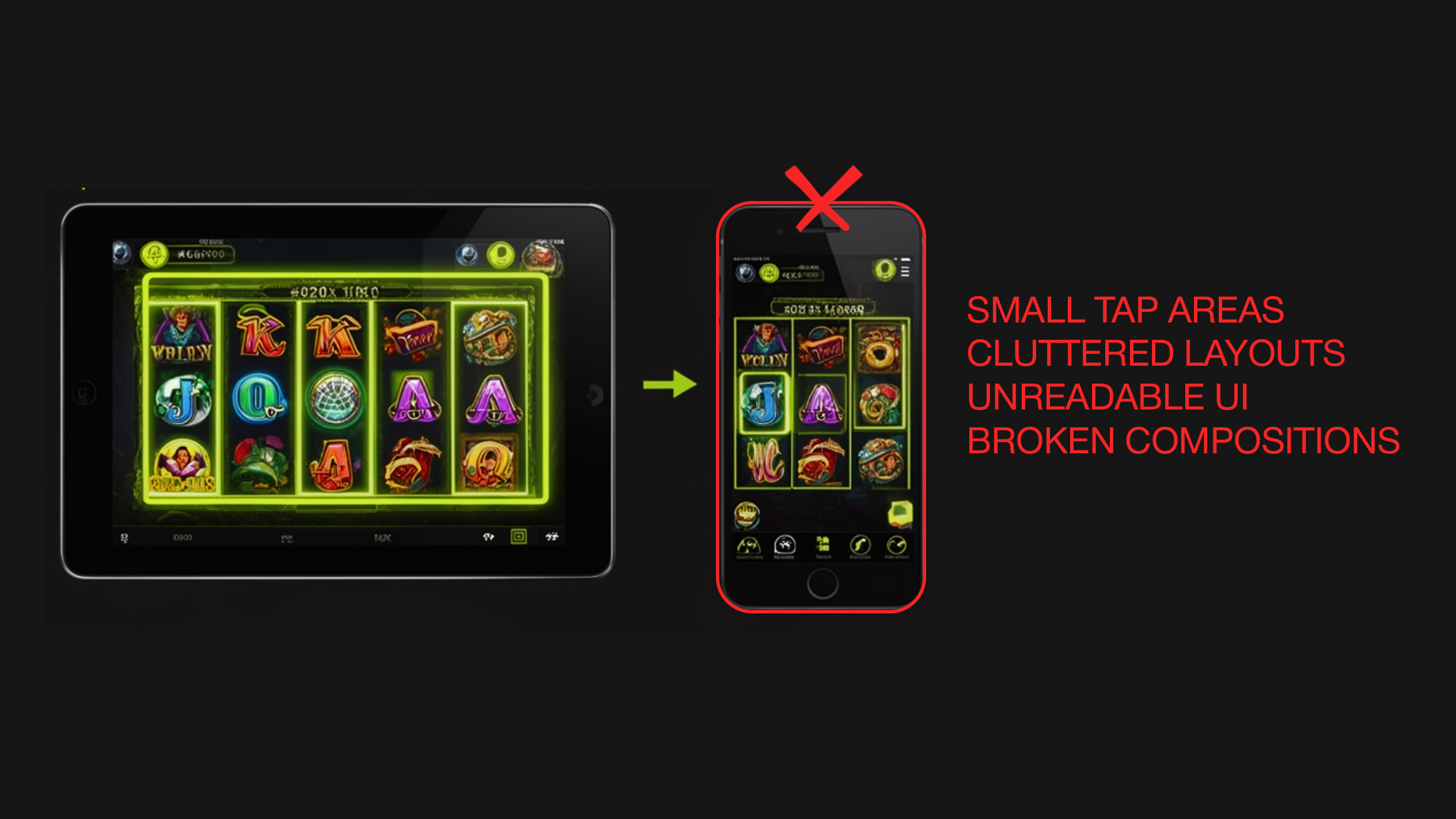
Many slots are still designed desktop-first.
This creates:
- small tap areas
- cluttered layouts
- unreadable UI
- broken compositions
Given that most players are on mobile, this is a critical issue.
Related: Slot Game UI Design
How to avoid it:
Always validate designs at reduced scale and mobile aspect ratios.
5. Poor UI Hierarchy
UI often becomes overly decorative instead of functional.
Common issues:
- spin button not prominent
- too many competing elements
- weak contrast in key areas
This reduces usability and engagement.
How to avoid it:
Design UI as a hierarchy system, not just a visual layer.
6. Over-Animating Everything
Animation is powerful — but overuse creates problems.
Issues include:
- visual noise
- performance drops
- unclear gameplay feedback
If everything moves, nothing stands out.
Related: Slot Game Animation Pipeline Explained
How to avoid it:
Define animation hierarchy and pacing early.
7. Ignoring Technical Constraints
This is where many projects break during integration.
Common problems:
- oversized textures
- wrong formats
- missing layers
- incompatible assets
These lead to:
- rework
- delays
- developer bottlenecks
Related: Technical Requirements for Slot Game Graphics
How to avoid it:
Align art with engine constraints before production starts.
8. No Structured Production Workflow
Without a defined workflow:
- tasks overlap
- feedback is inconsistent
- deadlines slip
A typical structured pipeline includes:
1. concept
2. approval
3. production
4. animation
5. integration
6. QA
Related: Slot Game Art Production Workflow
How to avoid it:
Define clear stages and approval checkpoints.
9. Poor Communication With External Teams
Outsourcing without structure leads to:
- mismatched expectations
- inconsistent quality
- repeated revisions
Related: Outsourcing Slot Art
How to avoid it:
Provide clear documentation, references, and feedback cycles.
10. Underestimating Production Scope
Many studios underestimate:
- number of assets
- animation complexity
- integration time
This results in:
- missed deadlines
- budget overruns
- rushed quality
Related: How Long It Takes to Create Slot Game Art
How to avoid it:
Break production into clear phases and estimate realistically.
The Real Pattern Behind These Mistakes
Most of these issues come down to one thing:
lack of production structure
Not lack of talent.
Not lack of creativity.
When pipelines are structured:
- fewer revisions happen
- assets integrate smoothly
- timelines become predictable
How to Build a Strong Slot Art Production System
Studios that avoid these mistakes typically:
- use a clear technical brief
- maintain a style guide
- define animation scope early
- align art with technical requirements
- structure production into stages
This turns slot art production into a repeatable system, not a chaotic process.
Conclusion
Slot game art production problems are rarely random.
They are usually the result of:
- unclear documentation
- weak pipelines
- lack of alignment between teams
By avoiding these common mistakes, studios can:
- reduce production time
- improve quality
- scale output
- avoid costly rework
In modern iGaming, success comes not just from great art — but from how that art is produced.


.svg)


