






Why a Slot Game Art Style Guide Matters
In professional iGaming production, teams often work across multiple game releases, asset sets, and production partners. Without a documented visual system, each new slot can drift in quality, tone, and execution.
A clear slot game art style guide helps studios:
- maintain visual consistency across games
- align artists, animators, and UI designers
- reduce subjective feedback and revisions
- onboard external partners faster
- build a stronger brand identity
Studios planning to scale content output benefit the most from a style guide because it turns visual direction into a reusable production system.
What Is a Slot Game Art Style Guide?
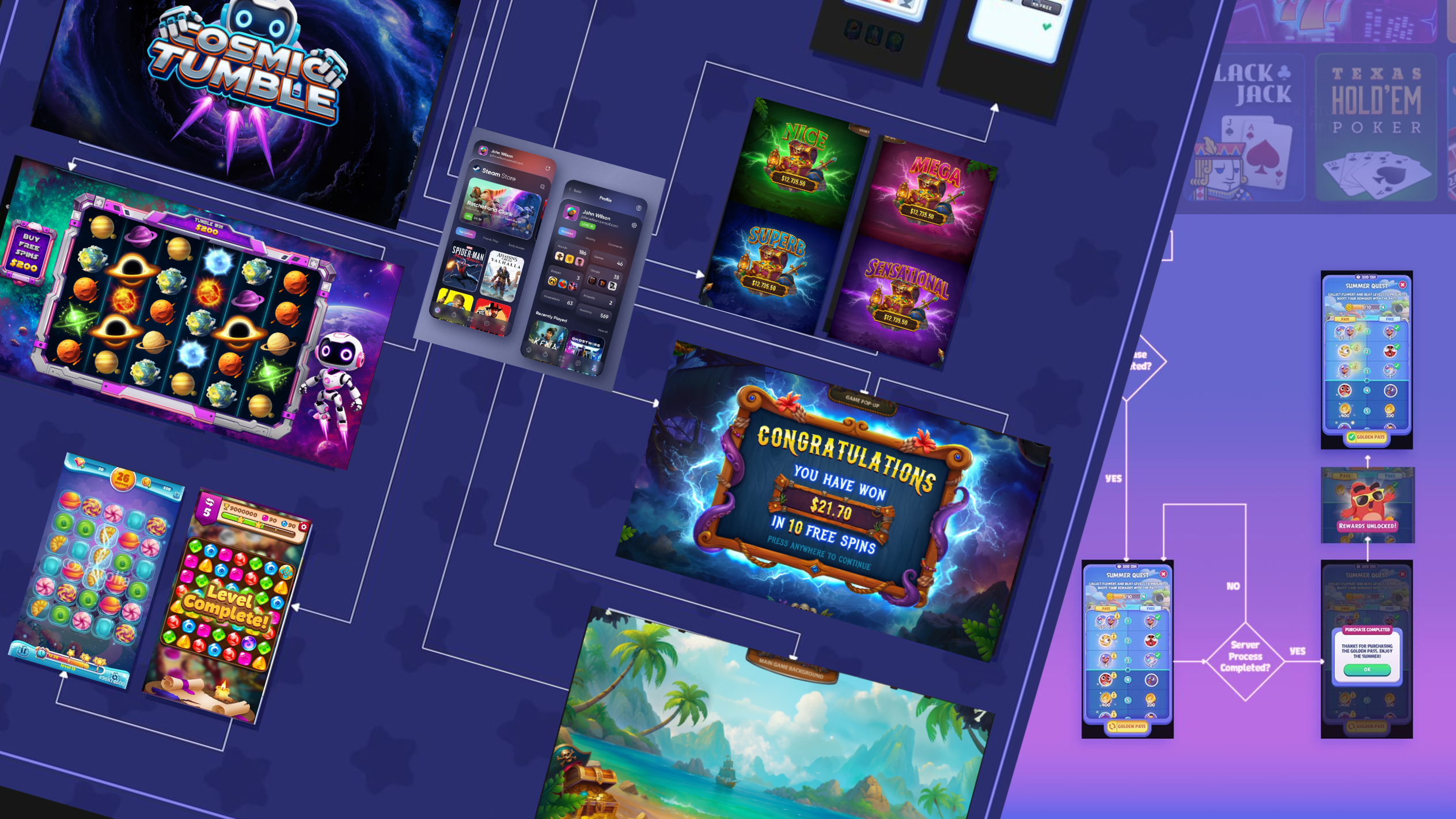
A slot game art style guide is a structured document that defines the visual rules of a slot game or a broader slot portfolio.
It typically includes:
- color palette rules
- symbol style principles
- UI design standards
- background art guidelines
- animation tone and behavior
- lighting and rendering direction
- file preparation standards
Unlike a mood board, a style guide is not just inspiration. It is a practical production document used to keep teams aligned.
When Studios Need a Style Guide
Not every single slot project needs a full portfolio-level style guide. But studios usually benefit from one when:
- they are releasing multiple slot games per year
- several artists or teams work on the same project
- art production is outsourced
- UI and symbol systems are reused across games
- the studio wants a recognizable visual identity
If production is growing, the absence of a style guide quickly becomes expensive.
Related: Outsourcing Slot Art
Core Elements of a Slot Game Art Style Guide
A useful style guide must be specific enough to support production, but flexible enough to allow creativity within the game’s theme.
1. Visual Tone and Art Direction
Start by defining the overall visual direction.
Examples:
- casual and colorful
- dark fantasy
- premium luxury
- comic-style
- realistic adventure
This section should describe how the game should feel visually, not just how it should look.
Include:
- target mood
- reference themes
- emotional tone
- level of realism or stylization
2. Color Palette Rules
Color consistency is one of the fastest ways to improve visual cohesion.
Your style guide should define:
- primary palette
- accent colors
- highlight colors
- forbidden or limited colors
- contrast rules for gameplay zones
This is especially important when different artists work on symbols, UI, and backgrounds separately.
3. Slot Symbol Design Standards
Symbols are the most visible assets in the game, so their style must stay consistent.
Define:
- silhouette rules
- outline and edge treatment
- shading style
- material rendering approach
- relative detail level between low-value and premium symbols
A style guide should also clarify how Wild, Scatter, and Bonus symbols should differ visually from standard symbols.
Related: Slot Game Symbol Design
4. UI Design Principles
Slot UI should feel like part of the same visual world as the symbols and background.
Define:
- frame shape language
- button style
- text treatment
- information panel styling
- spacing and padding logic
- glow and highlight behavior
Consistent UI systems are especially important when studios want to reuse frameworks across multiple titles.
Related: Slot Game UI Design
5. Background Art Guidelines
Backgrounds often vary the most between games, but they still need consistent design logic.
Your guide should include:
- depth and layering rules
- focal point placement
- contrast rules behind reels
- lighting behavior
- environmental detail density
This helps keep gameplay readable while allowing strong visual storytelling.
Related: Slot Game Background Design
6. Animation Style and Motion Language
Animation should match the art direction.
A style guide should define:
- overall motion intensity
- win animation tone
- idle loop behavior
- FX density
- transition speed
- exaggeration level
For example, a premium luxury slot may use smooth, elegant transitions, while a comic-style game may use more punchy and exaggerated motion.
Related: Slot Game Animation Pipeline Explained
7. Typography and Number Styling
Typography is often overlooked in slot game art systems, but it directly affects usability and polish.
Define:
- number style for wins and balance
- font tone
- stroke and glow usage
- contrast rules
- readability requirements on mobile
Typography must support the theme without reducing clarity.
8. Technical Art Preparation Rules
Style consistency breaks down quickly if files are delivered in different formats or naming systems.
A production-ready style guide should include:
- file naming conventions
- layer organization rules
- PSD structure
- export formats
- resolution standards
- safe zone requirements
This makes it much easier to work across multiple artists and studios.
Related: Slot Game Graphics Technical Brief
How a Style Guide Helps During Outsourcing
When external teams join production, the style guide becomes one of the most valuable documents in the pipeline.
It helps outsourced artists understand:
- how polished assets should look
- how detailed symbols should be
- how UI should behave visually
- what “approved quality” means for the studio
Without a style guide, outsourcing usually depends too much on subjective interpretation.
Common Mistakes in Slot Game Art Style Guides
A weak style guide often causes almost as many problems as having none at all.
Common mistakes include:
Too vague
Descriptions like “make it premium” or “make it bright” are not enough.
Too reference-heavy
References help, but the guide should define rules, not just show examples.
No technical section
A style guide must support production, not just visual inspiration.
Ignoring animation and UI
Studios often focus only on symbols and forget that UI and motion also define style.
No update process
Style guides should evolve as production systems mature.
How to Build a Slot Game Art Style Guide
A practical workflow usually looks like this:
1. define visual direction
2. collect approved references
3. create examples for symbols, UI, and backgrounds
4. define technical standards
5. document animation behavior
6. turn everything into a reusable internal production document
The style guide should then work alongside the broader slot game art production workflow.
Related: Slot Game Art Production Workflow
Why Style Guides Improve Production Speed
Many teams assume documentation slows things down. In practice, a good style guide usually does the opposite.
It speeds up production by:
- reducing revision rounds
- making approvals faster
- keeping asset quality consistent
- helping new artists onboard faster
- lowering communication overhead
The more games a studio produces, the more valuable this becomes.
Conclusion
A strong slot game art style guide is not just a branding document. It is a production tool that helps studios build consistent, scalable, and recognizable iGaming visuals.
When properly structured, a style guide improves:
- visual consistency
- outsourcing efficiency
- production predictability
- approval speed
- long-term portfolio quality
Studios that want to scale slot production without losing visual coherence should treat the style guide as part of the core pipeline — not an optional extra.


.svg)


