





Define One Promise for the Entire Entry Journey
Write a short promise that covers theme and behavior - for example, a rapid risk ladder in a neon workshop. The lobby image, loading art and first interactive screen should express that same idea with increasing detail.
If the thumbnail promises a character-driven adventure but the game opens on an abstract grid, the player experiences a disconnect. Consistency matters more than visual complexity.
The evaluation criteria in What Makes a Slot Game Look Premium are useful here: cohesion, controlled detail and material consistency signal quality before the player understands the rules.
Design the Thumbnail at Actual Size
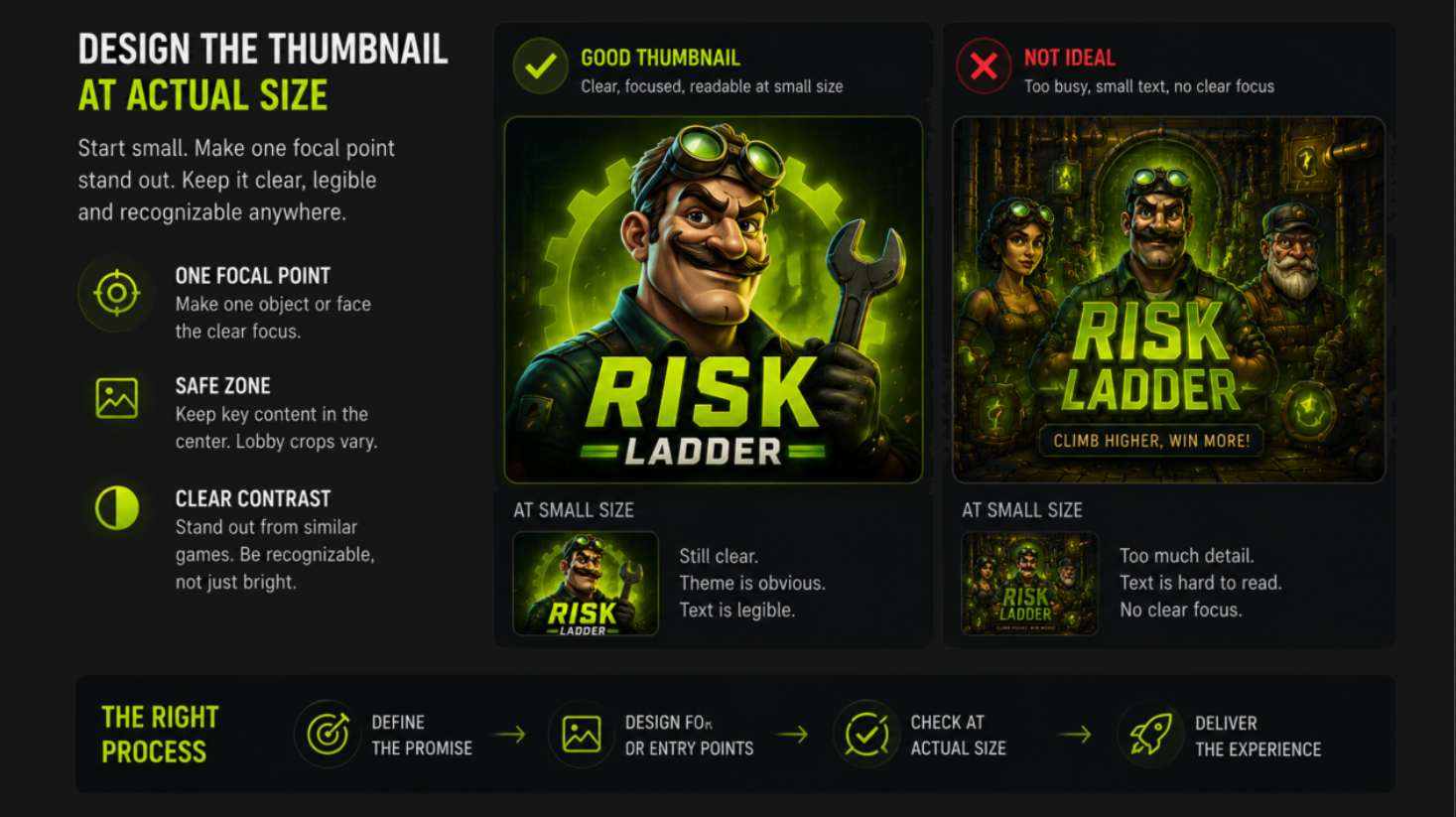
Begin with the smallest likely display size, not a full-screen painting. Choose one focal object or face, one supporting shape and a background that creates separation. Squint testing should still reveal the theme.
Keep essential content inside a central safe zone because lobby crops may vary. Avoid small typography, thin props and several equal-sized characters. If the title is part of the image, make sure it remains legible without depending on a glow.
Use contrast strategically. The goal is not to be the brightest tile in every row; it is to be recognizable beside games with similar palettes and themes.
Create a Flexible Promotional Asset Set
Prepare source art that can adapt to landscape, square and portrait placements. Separate character, logo, foreground effects and background depth into editable layers. This reduces destructive cropping and last-minute repainting.
Export named variants with clear safe areas and version control. Include a clean artwork option without text when the platform or campaign adds its own labels.
The conversion principles in How Slot Game Art Affects Casino Lobby Conversion help teams evaluate theme clarity, focal hierarchy and differentiation before launch.
Turn Loading Time Into Orientation
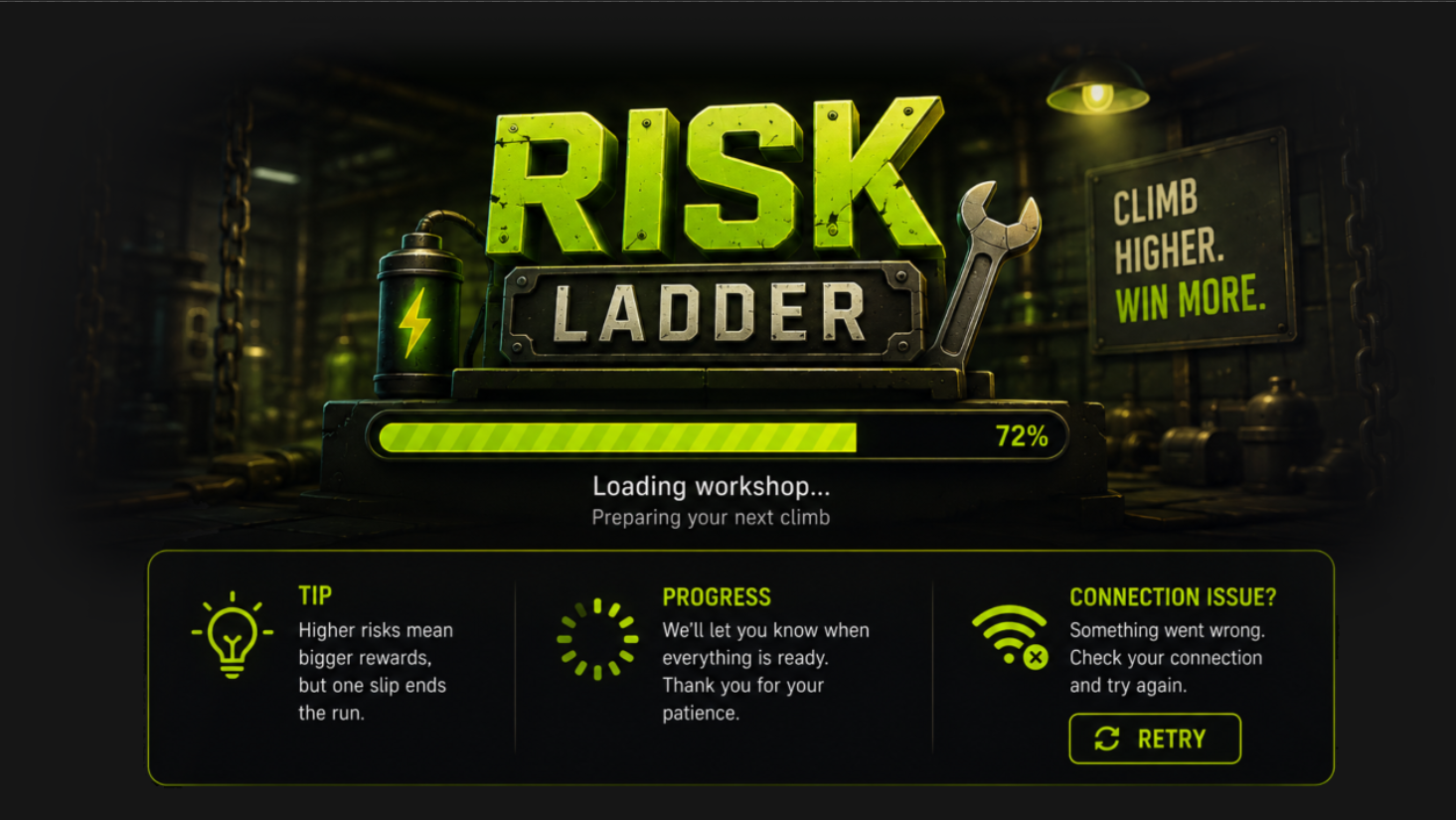
The loading screen should preserve recognition from the lobby and provide honest progress feedback. Use the same key color, logo treatment and hero object, but simplify motion so it does not compete with performance.
If a game needs a short rule, show one actionable sentence rather than a rotating manual. A progress indicator should communicate activity without promising false precision.
Design a recoverable error state with a retry action and plain explanation. A frozen logo or endlessly looping animation makes a technical delay look like a broken game.
Make the First Screen Self-Explanatory
On first load, the player should locate the stake control, main action, outcome area and game information quickly. Avoid opening with several modals, promotions and tooltips competing for the same attention.
Use contextual guidance only where behavior is unfamiliar. One focused callout is more effective than dimming the entire game behind a six-step tour. Let the player dismiss help and find it again.
Apply the scanning patterns from How Players Actually Read Slot Game Interfaces: stable anchors and meaningful values should appear before decorative narrative.
Choreograph the First Round
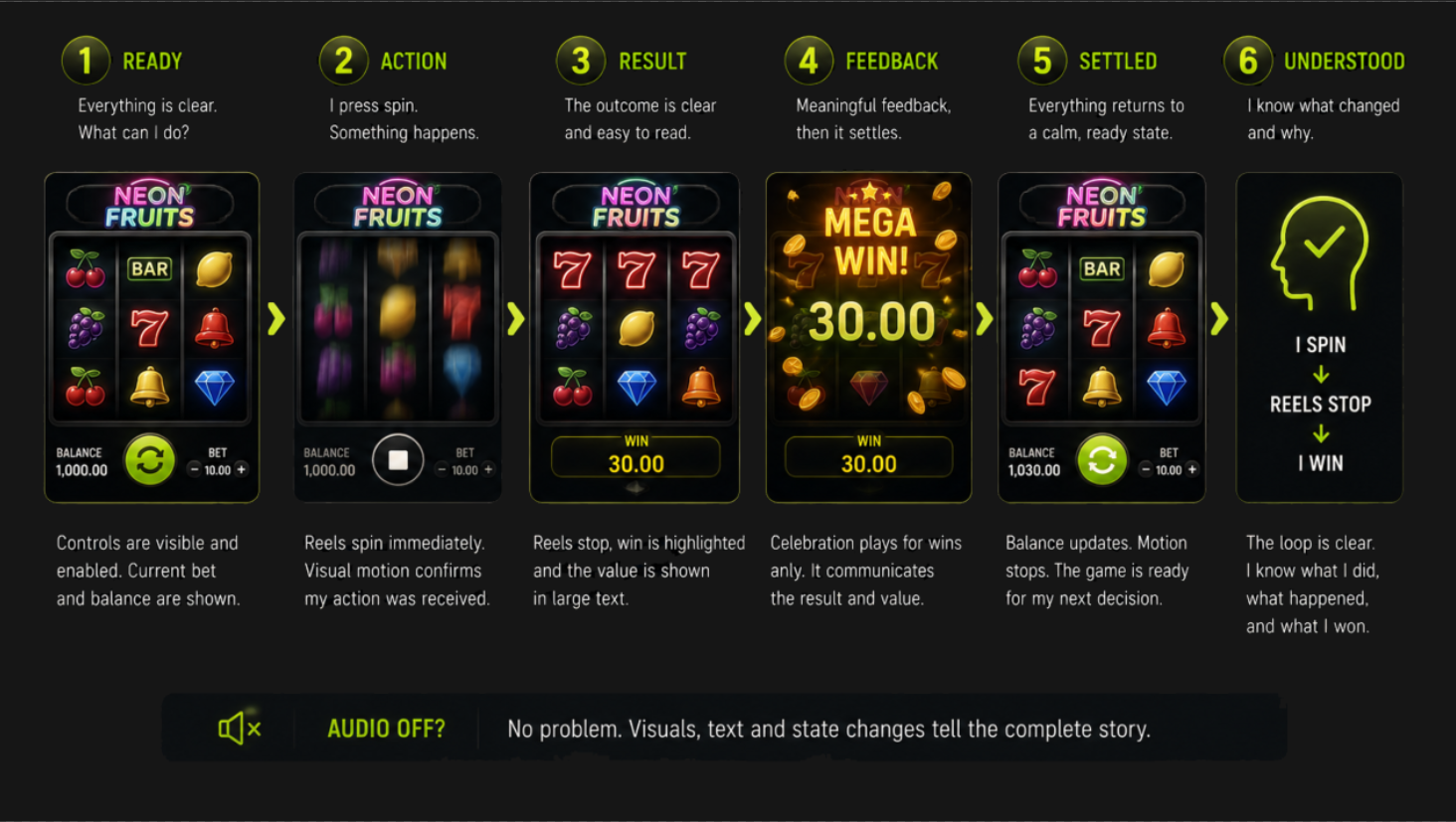
The first round teaches through timing. Controls should respond immediately, the gameplay object should move or reveal clearly, the result should settle before the next action becomes dominant and the player should understand what changed.
Reserve the biggest celebration for a genuinely meaningful outcome. Over-rewarding the first ordinary event makes later feedback harder to scale and can obscure the rules.
Sound may be unavailable or muted, so motion, text and state changes must carry the complete explanation. Test the first round with audio off and on a narrow screen.
Review the Package as One Funnel
Evaluate the sequence in order: lobby impression, click expectation, loading recognition, first-screen comprehension and completed first round. Ask testers what they expected at each transition.
Track where visual promises break. A strong tile with a confusing game screen is not a successful asset; neither is a clear game that no one recognizes in the lobby.
Stake Engine is designed to move games from development toward direct publishing, according to the official Stake Engine overview. Packaging should therefore be planned alongside the build, not treated as a separate campaign after development.
Conclusion
A lobby tile is not a poster detached from the product. It is the first state of the product. Build a consistent journey from thumbnail to loading screen to first round, and test every asset at the scale and crop where players will encounter it. That continuity improves recognition, confidence and the chance that the first click becomes a completed session.


.svg)


