



Why Players Leave Slot Games
Before understanding how art improves retention, it’s important to understand why players drop off.
Common reasons include:
- unclear gameplay feedback
- visual overload
- poor UI clarity
- weak emotional response to wins
- lack of immersion
Many of these issues are not related to math or mechanics. They are design and art problems.
How Slot Game Art Affects Player Retention
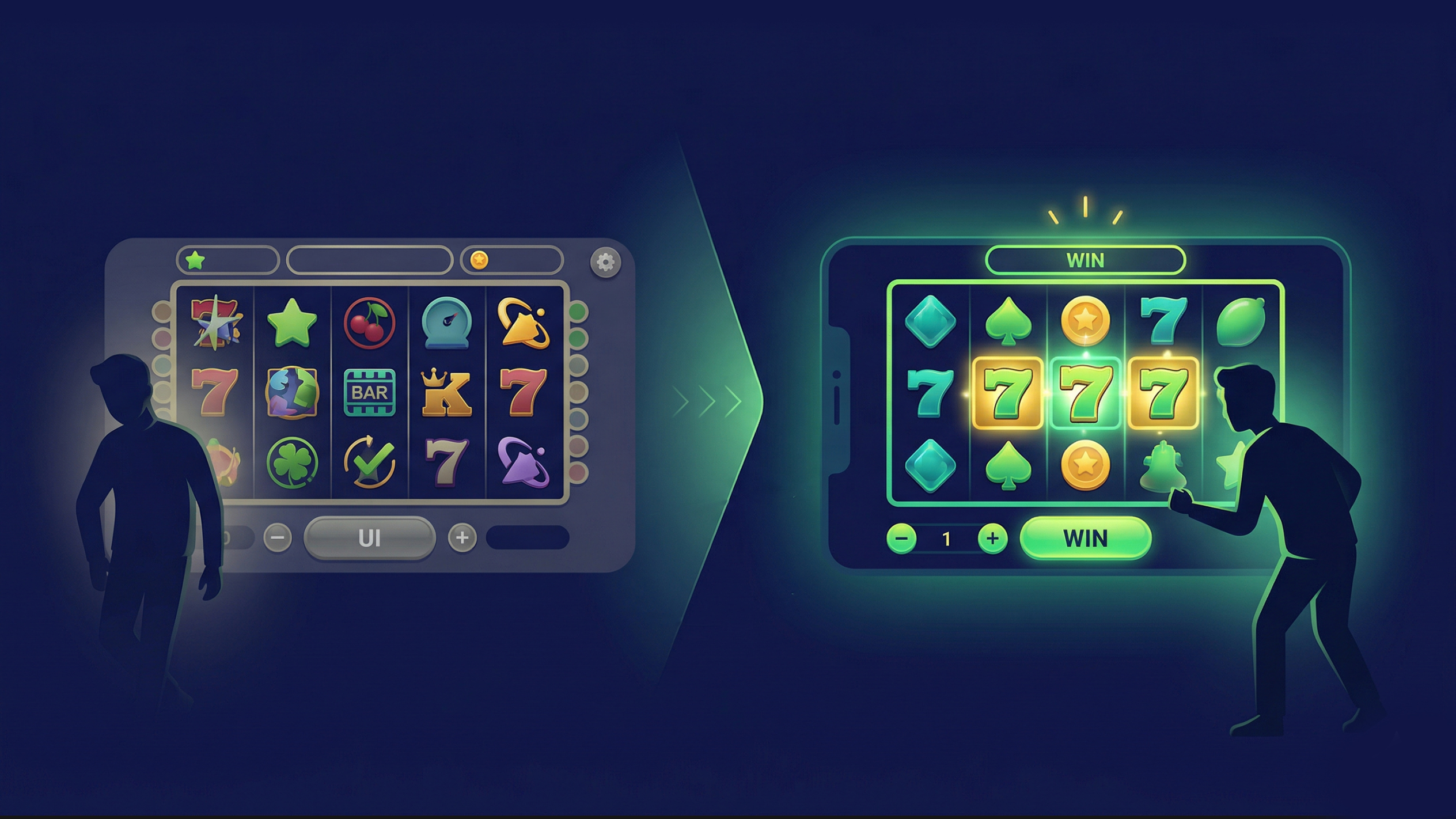
1. Symbol Readability = Faster Engagement
Players need to understand the game instantly.
If symbols are:
- too detailed
- poorly contrasted
- visually inconsistent
players take longer to process outcomes.
This slows down gameplay and reduces engagement.
Clear slot symbol design improves:
- decision speed
- gameplay flow
- player confidence
Related: Slot Game Symbol Design
2. UI Clarity Reduces Friction
Slot UI controls the player experience.
If players struggle to:
- read their balance
- understand bet size
- identify wins
they lose trust in the game.
Strong slot game UI design ensures:
- clear hierarchy
- intuitive controls
- readable information
Related: Slot Game UI Design
3. Animation Drives Emotional Feedback
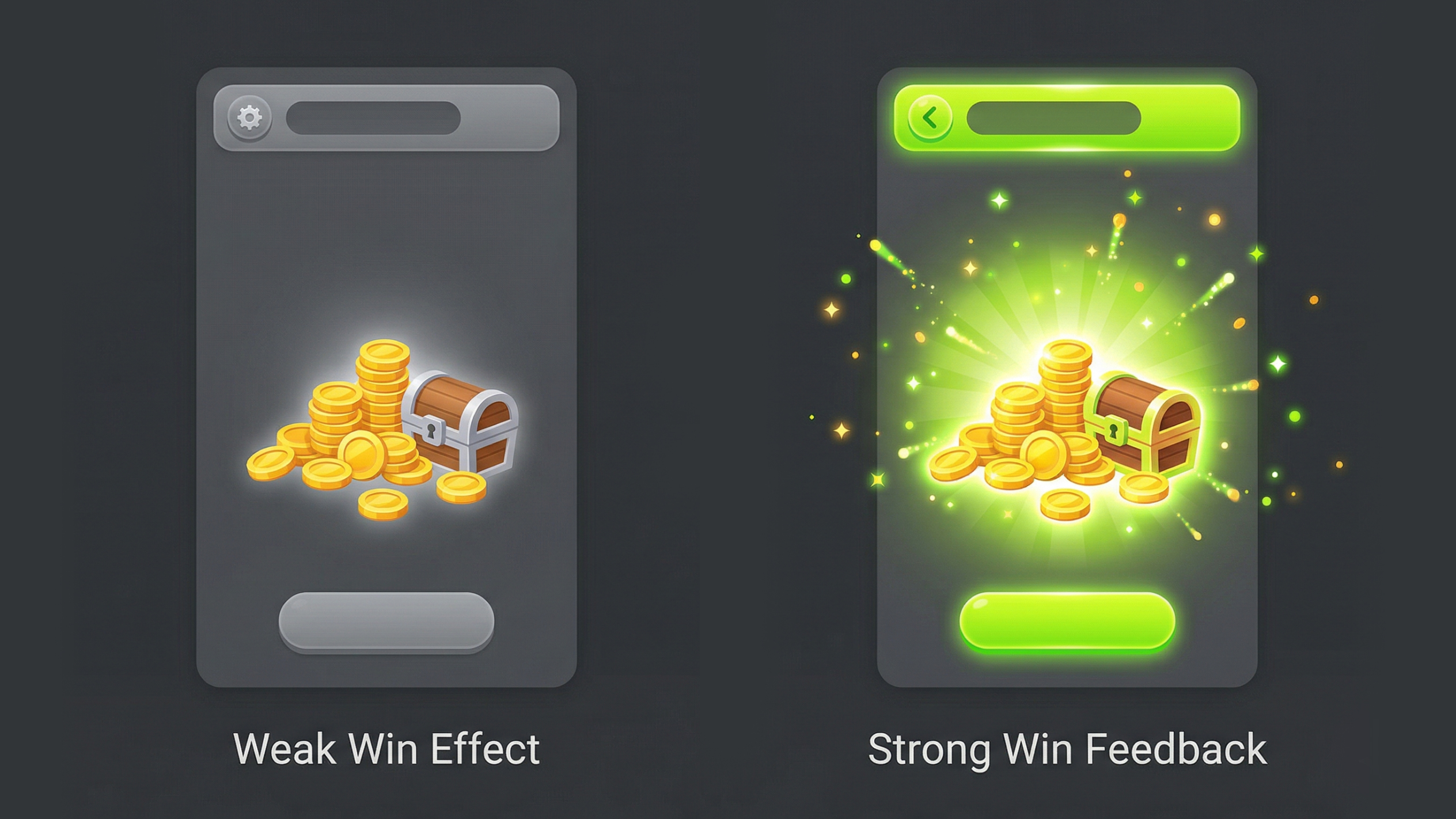
Animation is where engagement becomes emotional.
Well-designed animation:
- builds anticipation (spin phase)
- amplifies reward (win moments)
- creates rhythm in gameplay
Weak animation makes wins feel insignificant.
Over-animation creates noise.
The balance is critical.
Related: Slot Game Animation Pipeline Explained
4. Background Design Supports Immersion
Backgrounds create context, but they must not interfere with gameplay.
Strong slot background design:
- supports theme
- adds depth
- enhances atmosphere
Weak backgrounds either:
- distract from gameplay
- or feel generic and forgettable
Related: Slot Game Background Design
5. Visual Consistency Builds Trust
Inconsistent visuals reduce perceived quality.
When symbols, UI, and animation feel disconnected:
- the game feels less polished
- players disengage faster
A consistent visual system improves:
- trust
- brand perception
- long-term retention
Related: Slot Game Art Style Guide
The Psychology Behind Slot Game Design

Slot games are built around emotional pacing.
Anticipation
- reel spin
- near wins
- delayed reveals
Art supports anticipation through:
- timing
- motion
- visual focus
Reward
- win animations
- sound + visual feedback
- UI highlights
Stronger feedback = stronger perceived reward.
Clarity
Players should always understand:
- what happened
- why they won
- what to do next
Confusion breaks engagement.
Common Design Mistakes That Reduce Retention
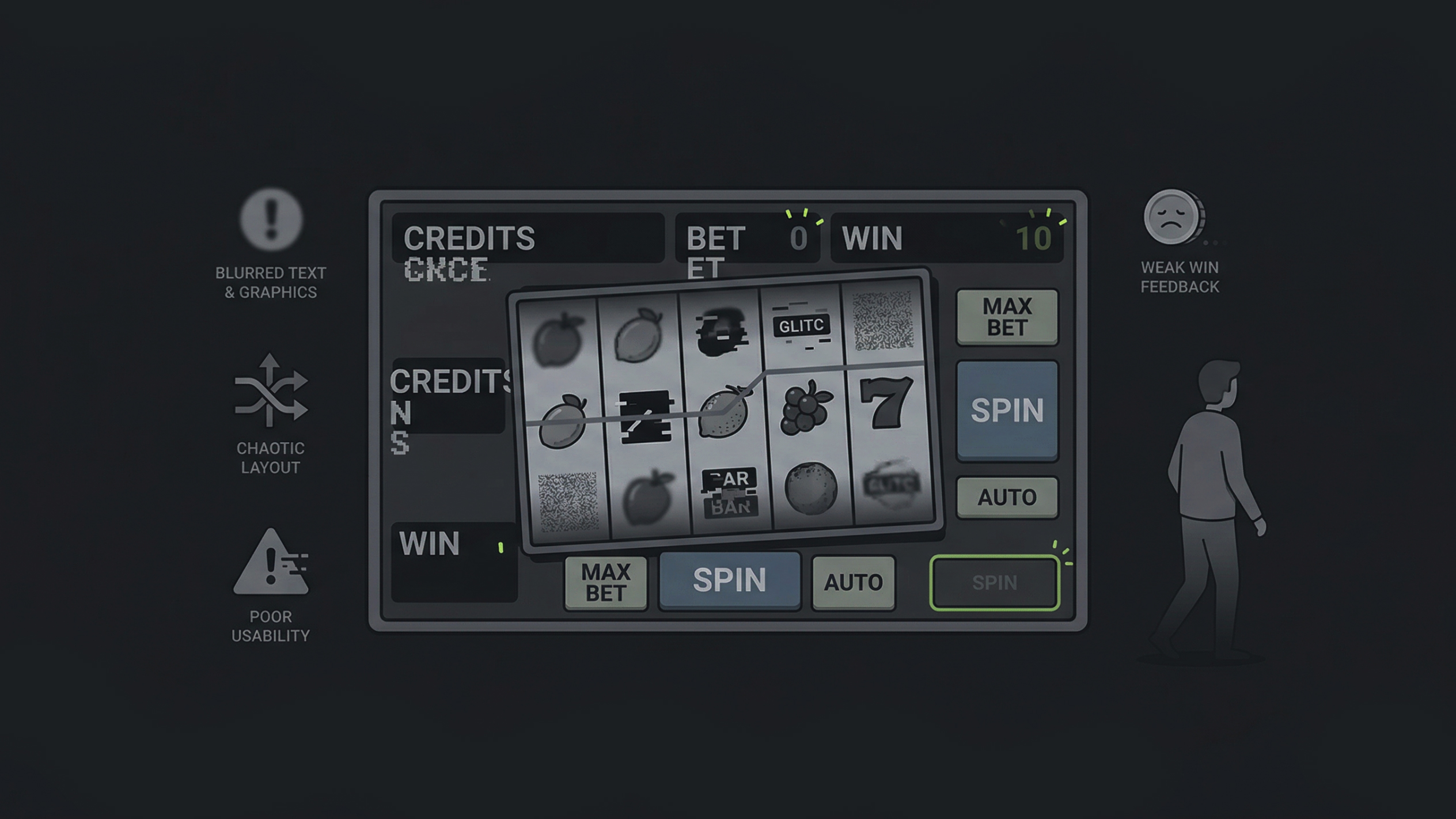
❌ Poor UI Hierarchy
Players don’t know where to look
❌ Over-Animation
Everything moves, nothing stands out
❌ Weak Win Feedback
Wins feel flat and unrewarding
❌ Low Readability
Symbols and UI are hard to parse
❌ Inconsistent Visual Style
The game feels fragmented
Related: Common Mistakes in Slot Game Art Production
Art vs Performance: The Real Balance
One of the biggest misconceptions in slot development:
“Better art = better performance”
In reality:
- over-detailed art can reduce clarity
- heavy assets can hurt performance
- excessive effects can overwhelm players
Effective slot art is not just beautiful — it is functional and optimized.
How to Align Slot Art With Business Metrics
Studios that connect art to performance focus on:
Retention
- clear visuals
- smooth gameplay
- consistent experience
Session Length
- engaging animation
- emotional pacing
- low friction UI
Replay Value
- memorable visuals
- strong thematic identity
- satisfying feedback loops
Where Production Pipelines Matter
Retention issues are often rooted in production.
Without a structured pipeline:
- art and animation don’t align
- UI is inconsistent
- assets don’t integrate cleanly
Related:
Conclusion
Slot game art is not just about aesthetics.
It directly impacts how players feel, behave, and engage with the game.
Strong visual design:
- improves retention
- increases session time
- enhances perceived value
- supports scalable production
Studios that treat art as part of the product — not just decoration — consistently perform better.


.svg)


